

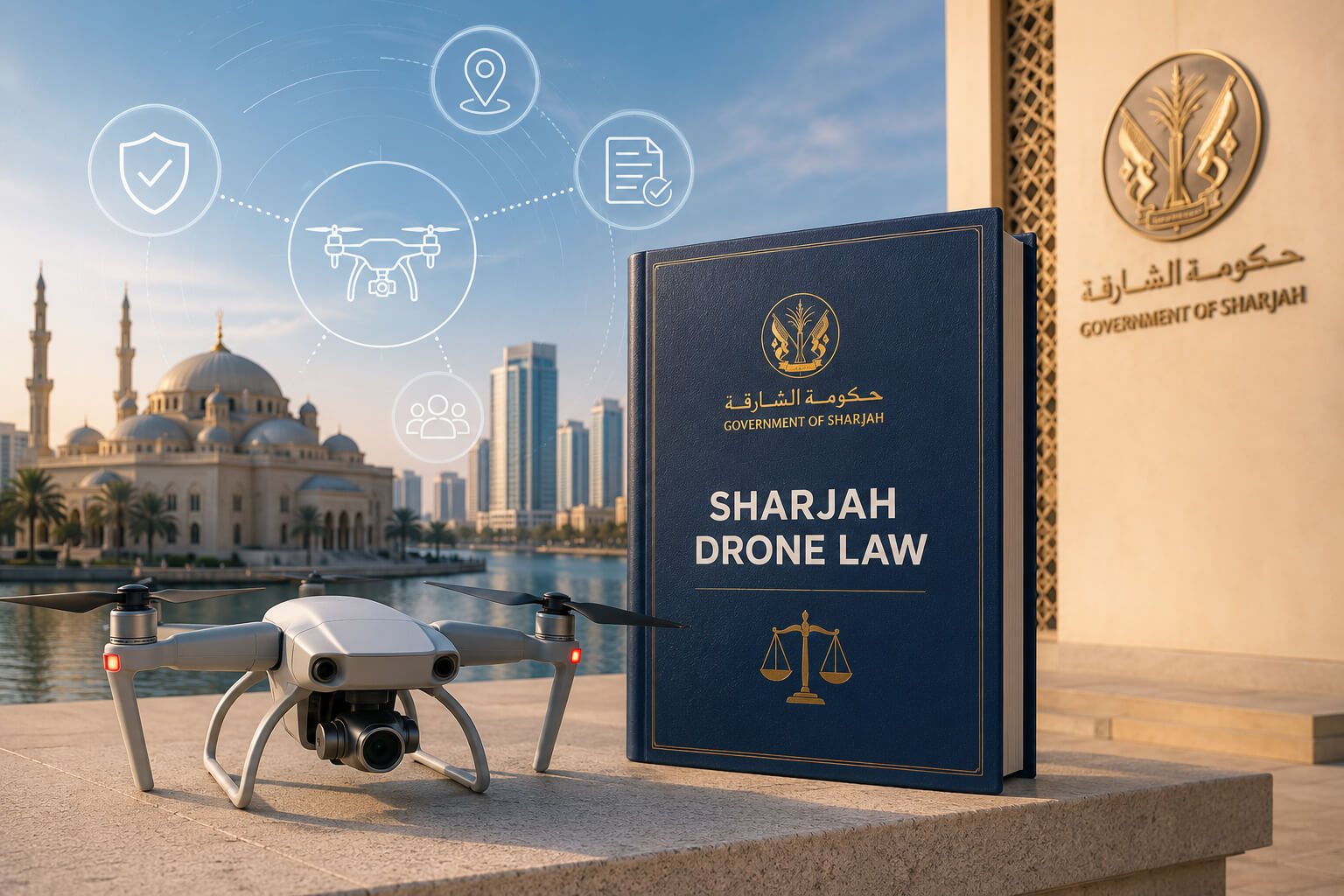
Sharjah has taken a major step toward strengthening aviation safety and supporting advanced technology. It did so by introducing a new law to regulate the drone sector across the emirate.
The new Sharjah drone law establishes a legal framework for the use of unmanned aerial vehicles. Specifically, it covers drone registration, permitted flying zones, altitude limits, operating requirements, and user responsibilities. The move reflects the emirate’s efforts to keep pace with the rapid growth of drone technology. At the same time, it ensures safe and organised airspace.
New Framework for Drone Operations in Sharjah
The law applies to drones of different types and uses, including commercial, recreational, technical, and specialised operations. It is designed to regulate how drones are registered, classified, operated, and monitored within Sharjah.
Under the framework, authorities will define the areas where drones may be flown and the maximum permitted altitudes. They will also specify the technical requirements that operators must follow. Furthermore, the law addresses operational controls, legal obligations, and the use of designated landing areas.
Strengthening Airspace Safety and Oversight
One of the main objectives of the Sharjah drone law is to enhance air navigation safety. As drone usage continues to expand across sectors such as logistics, media, surveying, inspections, security, and smart city services, clearer regulations are needed. These regulations help protect public safety and prevent airspace risks.
The law gives regulatory authorities a stronger basis to supervise drone activity across the emirate. It also supports better coordination between government entities involved in civil aviation, public safety, and technology regulation.
Supporting Innovation and Future Business Opportunities
Beyond safety, the new law is expected to support innovation in Sharjah’s emerging technology sector. By creating clear rules for drone operations, the emirate can encourage responsible investment in drone-related services and applications.
This could benefit companies working in aerial photography, infrastructure inspection, mapping, delivery solutions, agriculture, environmental monitoring, and advanced mobility. For free zone businesses and investors, the law may provide more clarity. It will show how drone-based services can operate within the emirate’s legal and aviation framework.
What Drone Users Should Expect
Drone users in Sharjah should expect stricter compliance requirements as the law is implemented. Operators may need to follow official procedures for registration, classification, permissions, approved flight locations, and operating conditions.
Businesses using drones should also review their internal procedures to ensure compliance with safety, licensing, and operational requirements. This is especially important once detailed implementing regulations are issued.
Sharjah’s Push Toward Regulated Smart Technology
The Sharjah drone law forms part of a broader move to regulate advanced technologies while supporting economic development. With drones becoming increasingly important in commercial and public-sector operations, the emirate is positioning itself to manage innovation responsibly.
By setting clear rules for the drone sector, Sharjah aims to balance growth, investment, airspace safety, and public protection across the emirate.
Conclusion
The new Sharjah drone law marks an important development for the emirate’s aviation and technology landscape. It introduces a structured framework for drone registration, flight controls, permitted zones, safety standards, and operator obligations.
For businesses, investors, and drone users, the law signals the need for greater compliance. Meanwhile, it also creates a clearer path for responsible drone innovation in Sharjah.
