

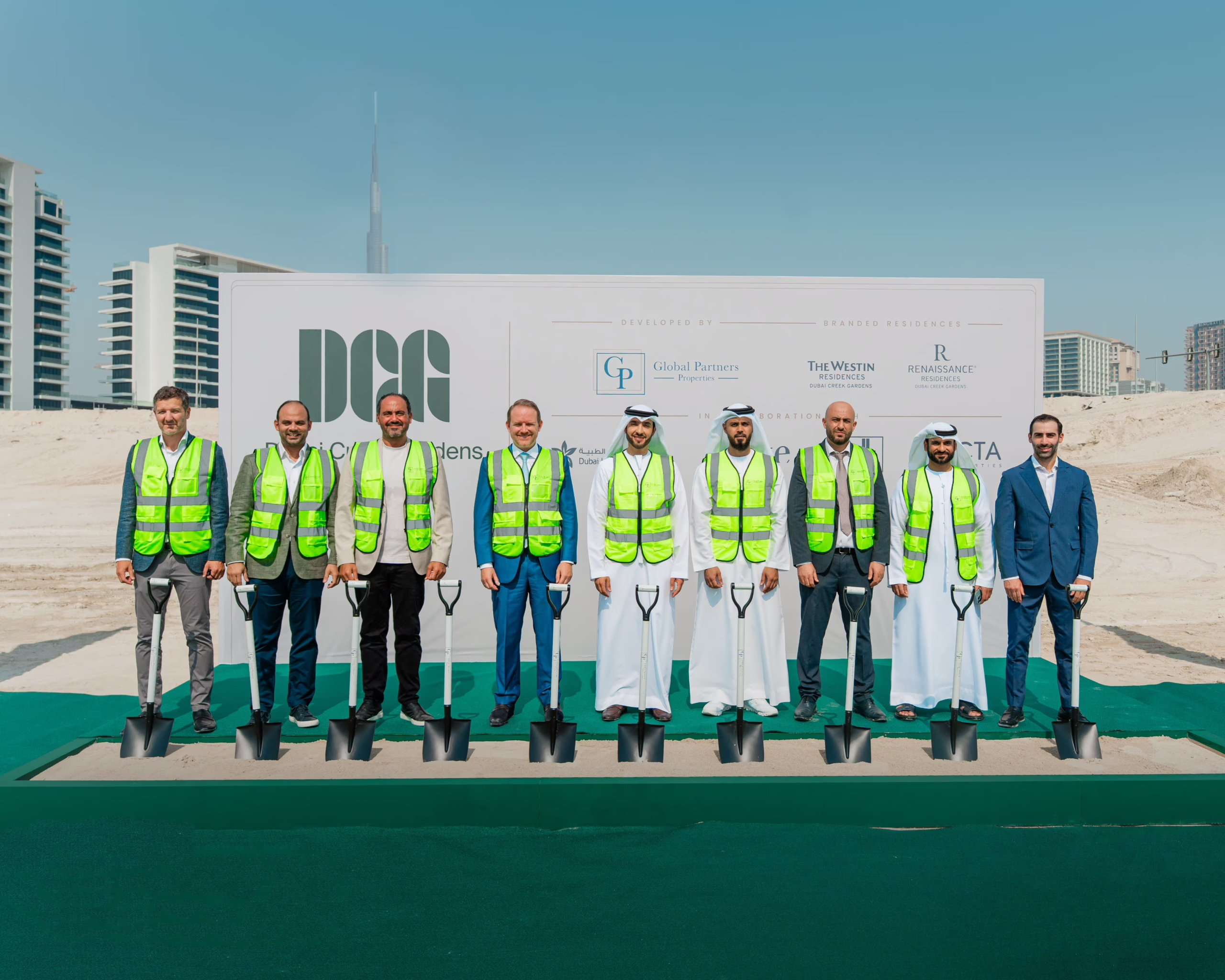
Dubai Healthcare City has broken ground on Dubai Creek Gardens, an AED3 billion residential development. This will add more than 1,400 homes to the second phase of the healthcare and wellness district.
Developed by Global Partners Ltd, the project will span more than 127,000 square metres along Dubai Creek. Around 70% of the site will be dedicated to gardens, parks, sports facilities and wellness-focused open spaces. As a result, the development has a noticeably lower-density feel compared with many large residential projects in Dubai.
The launch also marks another significant investment in Dubai Healthcare City Phase 2. The district continues to grow beyond its traditional healthcare base. The wider plan now blends healthcare, residential living, hospitality, retail and wellness. This helps form a more connected community.
AED3 Billion Investment Strengthens DHCC Phase 2
The groundbreaking brings a major AED3 billion investment into Dubai Healthcare City Phase 2. It also reinforces the district’s growing appeal to developers and institutional investors.
Dubai Healthcare City Authority has also become a founding shareholder in Global Partners Property Fund II, creating a closer link between the authority and the project’s long-term investment strategy. Rather than functioning as an isolated residential scheme, Dubai Creek Gardens forms part of a broader effort. This aims to develop DHCC into a more complete healthcare and lifestyle destination.
Issam Galadari, CEO of Dubai Healthcare City Authority, said the investment reflects continued confidence in the district. It also highlights its potential to evolve into an integrated destination combining healthcare, wellness, living and business activity.
More Than 1,400 Residences Planned at Dubai Creek Gardens
Dubai Creek Gardens will introduce more than 1,400 residential units. They will be supported by selected retail and dining concepts designed to serve residents and visitors within the community.
What stands out is the amount of land being reserved for open areas. Around 70% of the development will be allocated to landscaped gardens, parks, sports amenities and other wellness-focused spaces. That puts outdoor living at the centre of the project. It does not treat it as an additional feature around the residential buildings.
Bader Saeed Hareb, Executive Chairman of Global Partners Property Fund II, described the development as an alternative to the density-driven approach seen in many urban projects. The aim is to create a residential environment where green space, recreation and quality of life play a larger role in the overall design.
Westin and Renaissance Branded Residences Join the Project
Dubai Creek Gardens will also feature the UAE’s first Westin and Renaissance branded residences through a collaboration with Marriott International.
The addition brings a hospitality element into the development while expanding Dubai’s growing branded-residence market. Residents are expected to have access to hospitality-inspired services and dedicated amenities. Additionally, they will have a lifestyle environment designed around comfort, wellness and convenience.
The involvement of two globally recognised Marriott brands also strengthens the project’s appeal to international buyers and investors. These investors are increasingly looking for professionally managed residential properties tied to established hospitality names.
Green Space Sits at the Centre of the Development
Green space is not being treated as decoration at Dubai Creek Gardens. It is one of the project’s core selling points.
With around 70% of the site reserved for gardens, open spaces, sports areas and recreational facilities, the development is placing greater emphasis on walkability and outdoor living. That approach reflects a broader shift in Dubai’s property market. Developers are paying more attention to liveability and community design.
The concept also aligns with the Dubai Quality of Life Strategy 2033 and the Dubai 2040 Urban Master Plan. Both of these promote more sustainable communities, accessible public spaces and people-focused urban development.
For Dubai Healthcare City, that direction makes sense. Wellness is already part of the district’s identity, so building residential communities around green spaces and active lifestyles creates a natural extension of the free zone’s existing positioning.
Dubai Healthcare City Expands Beyond Medical Services
Dubai Healthcare City has traditionally been recognised for hospitals, clinics, healthcare companies and medical professionals. Phase 2 is gradually broadening that identity.
Residential projects such as Dubai Creek Gardens can help create a district where people do more than work or access medical services. They can live nearby, use local retail and hospitality offerings, spend time outdoors and access wellness facilities within the same wider area.
That can also make DHCC more attractive to healthcare companies seeking to recruit international talent. Professionals considering a move to Dubai may see greater value in working inside a district that also provides residential and lifestyle options close to their workplace.
The shift reflects a wider trend across Dubai’s specialised economic zones, where business districts are increasingly becoming mixed-use destinations. They are no longer purely commercial clusters.
Dubai’s Population Growth Supports Demand for New Communities
Dubai’s continued population growth creates another reason for large residential developments such as Dubai Creek Gardens.
The emirate expects its population to reach around 5.8 million residents by 2040. That growth will increase demand for housing, healthcare, transportation, schools, retail and community infrastructure across the city.
Projects that combine residential living with nearby employment and essential services may become increasingly attractive as Dubai expands. Dubai Creek Gardens sits within an established healthcare district, giving residents access to a wider ecosystem. In contrast, it does not place them in an isolated residential development.
That connection between housing, healthcare, wellness and employment could become one of the project’s strongest long-term advantages.
Dubai Creek Gardens Targets 2030 Completion
Dubai Creek Gardens is expected to be completed in 2030.
Once finished, the development will add a major residential and lifestyle component to Dubai Healthcare City Phase 2. It will also expand the district’s waterfront offering along Dubai Creek.
The AED3 billion investment is significant on its own, but the larger story is how Dubai Healthcare City is changing. The district is gradually becoming more than a destination for medical treatment and healthcare companies.
With residential communities, hospitality brands, retail concepts and wellness-focused public spaces becoming part of the mix, DHCC Phase 2 is moving toward a more complete live-work-wellness environment.
Dubai Creek Gardens is one of the clearest signs of that transition so far.
Sources
Government of Dubai Media Office — Dubai Healthcare City breaks ground on AED3 Billion Dubai Creek Gardens Development:
https://www.mediaoffice.ae/en/news/2026/september/10-10/dubai-healthcare-city-breaks-ground-on-aed3-billion-dubai-creek-gardens-development
