

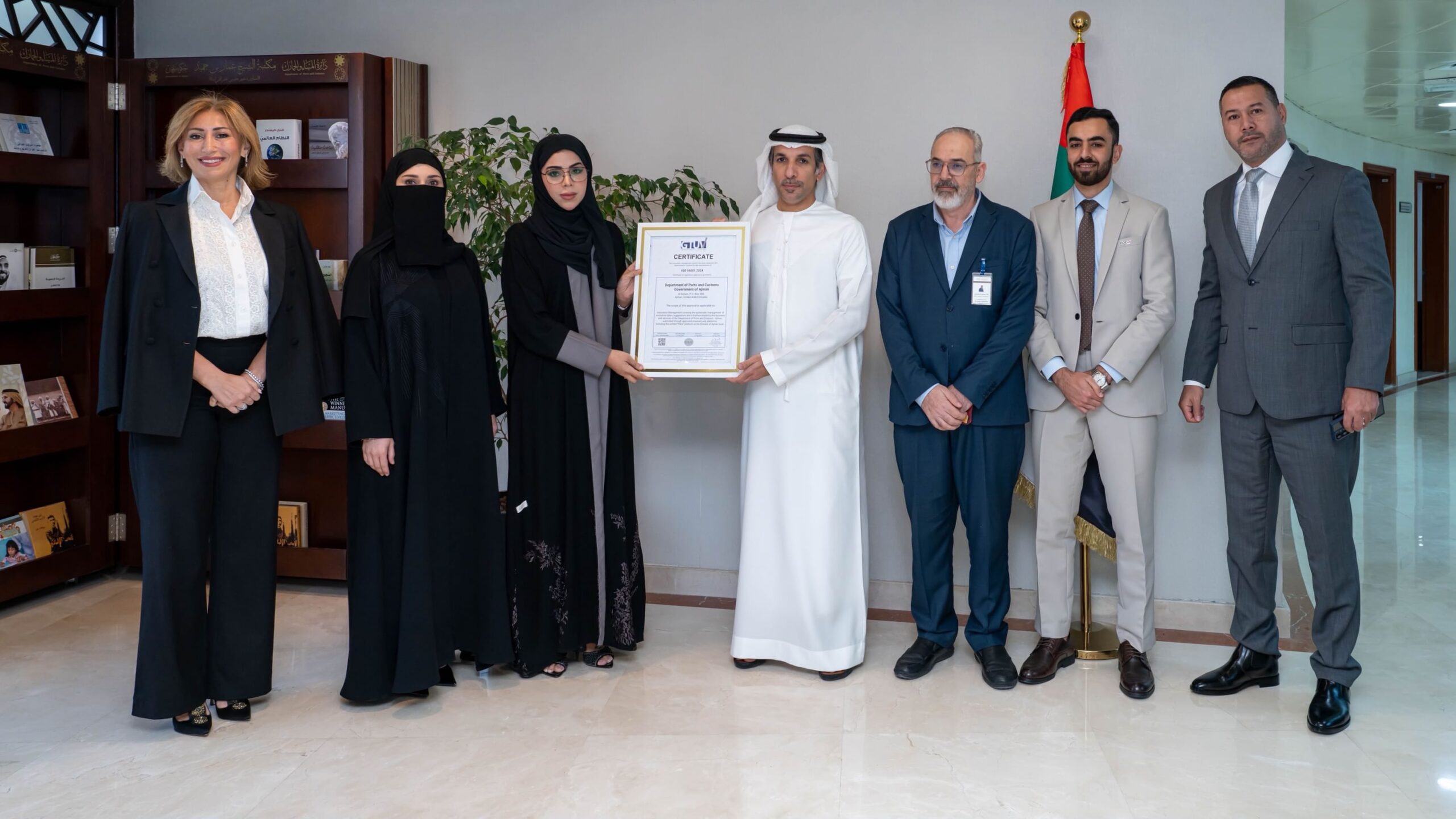
Ajman Port and Customs Department has secured ISO 56001:2024 certification for its innovation management system, adding another international standard to its push for smarter government services and more efficient trade-related operations in the emirate.
The certification was awarded by Global Business Bureau Certification (GBBC) and recognizes the department’s work in building a structured approach to innovation rather than treating new ideas as isolated projects.
For Ajman, the achievement carries a wider business message. Ports and customs operations sit directly in the path of importers, exporters, logistics companies and businesses operating across the emirate’s commercial and free zone ecosystem. Better processes here can have a practical effect well beyond the government department itself.
ISO 56001:2024 Puts Innovation Into a Formal System
The new certification covers the department’s innovation management system and reflects its effort to place innovation inside a defined institutional framework. Rather than relying on individual projects or one-off digital initiatives, the standard gives the department a more structured way to develop ideas, assess opportunities and turn innovation into measurable improvements.
Ajman Port and Customs said the approach supports stronger services, higher operational efficiency and a workplace culture that encourages employees to contribute practical ideas. That matters in customs operations, where even small improvements in systems, procedures and coordination can influence how quickly businesses move goods through the emirate.
Ajman Port and Customs Links Innovation With Government Services
Sheikh Sultan bin Mohammed Al Nuaimi, Director General of Ajman Port and Customs Department, described the certification as an important milestone in establishing an integrated innovation management system within the department.
The wider aim is to make innovation part of everyday government work rather than a separate initiative. Ajman Port and Customs intends to continue supporting new ideas and practices that respond to changing customer expectations, operational demands and government priorities. For businesses dealing with port and customs procedures, this could eventually translate into smoother services, better digital tools and fewer unnecessary steps.
Certification Builds on Ajman’s Existing ISO Track Record
The latest certification builds on a broader portfolio of international standards already adopted by Ajman Port and Customs. The department has previously obtained certifications covering quality management, environmental management, occupational health and safety, information security, business continuity, risk management and customer satisfaction.
Adding ISO 56001:2024 strengthens that framework by focusing specifically on how innovation is managed. It also shows that the department is treating innovation as part of institutional governance rather than simply as a technology issue. The certification brings a more formal process to how new ideas are evaluated, developed and applied across operations.
Digital Transformation Has Already Been Taking Shape
Ajman Port and Customs has been developing digital services and automation initiatives for several years, including projects designed to simplify customs procedures and improve internal efficiency. Systems such as digital customs platforms and automated operational tools have already formed part of that modernization effort.
The new ISO certification gives those initiatives a broader management structure. Instead of looking at technology projects individually, the department can now connect digital transformation, service design and operational improvement under one innovation system. That can help create more consistency as future projects are introduced.
Why This Matters for Ajman’s Business and Free Zone Economy
Customs and port efficiency directly affect companies involved in imports, exports, logistics and regional distribution. Businesses operating from Ajman need predictable clearance processes, reliable digital services and government procedures that do not create unnecessary administrative delays.
That makes innovation at Ajman Port and Customs relevant to the emirate’s wider commercial environment. Companies based in Ajman’s free zones or trading through the emirate rely on government agencies that can keep pace with growing business activity. Faster processes and more efficient systems can make a noticeable difference for firms managing shipments, supply chains and cross-border trade.
Stronger Customs Services Support Ajman’s Investment Appeal
Ajman has been working to strengthen its position as a business and logistics destination, and customs services are part of that wider picture. Investors often look beyond licensing costs and office space when choosing a location. They also consider how easily goods can move, how predictable government processes are and whether digital services reduce time spent on administration.
An internationally recognized innovation management system can support that environment by encouraging Ajman Port and Customs to keep reviewing and improving its services. The effect may not always be dramatic, but steady improvements in processing, digital access and customer experience can make the emirate more practical for companies that depend on trade.
Ajman Port Is Preparing for Larger Trade Volumes
The certification also comes during a period of broader development around Ajman’s port infrastructure. Hutchison Ports Ajman and the Department of Ports and Customs previously announced a major investment programme aimed at expanding port capacity and improving operational performance over the coming years.
Infrastructure growth places more pressure on customs systems, digital platforms and government services. Larger cargo volumes require processes that can scale without creating longer delays or heavier administrative burdens. A formal innovation framework can help the department identify where systems need to change as the port handles more activity.
Innovation Becomes Part of Ajman’s Trade Infrastructure
The importance of the ISO 56001:2024 certification will ultimately depend on how it shapes day-to-day operations. The certificate itself is only the starting point. The real value will come from how the department uses the framework to improve customs services, introduce better digital processes and make operational decisions more efficiently.
For businesses in Ajman, those improvements can become part of the emirate’s wider trade infrastructure. A port may provide the physical gateway, but customs systems determine how smoothly goods actually move through it. Bringing structured innovation into that process could support Ajman’s efforts to become a more competitive and business-friendly trading hub.
Conclusion
Ajman Port and Customs earning ISO 56001:2024 certification adds another layer to the emirate’s ongoing push toward smarter government services and more efficient trade operations. The new standard gives the department a structured way to manage innovation while building on its existing quality, security and operational management systems.
For companies in Ajman’s free zones and wider business community, the significance lies in what follows. Better digital services, faster procedures and more adaptable customs systems can have a direct effect on how easily businesses operate. As Ajman’s port infrastructure expands, that institutional focus on innovation could become increasingly important.
Sources
Emirates News Agency (WAM)
https://www.wam.ae/en/article/c2epfja-ajman-port-and-customs-earns-iso-innovation
Ajman Port and Customs Department
https://www.apcd.ae/en/press-center/news/ajman-customs-obtains-10-certificates-for-international-standards/
CK Hutchison – Sphere
https://sphere.ckh.com.hk/eng/business/
