
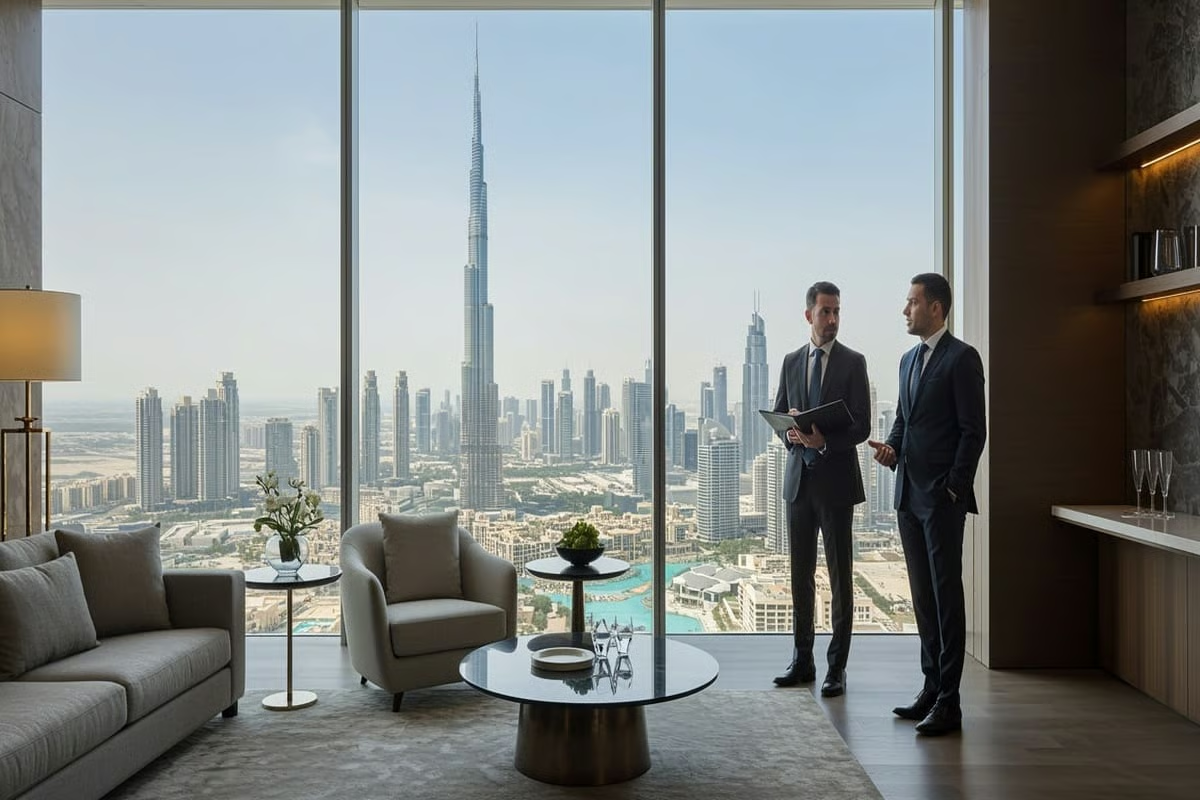
The UAE real estate market is not slowing down quietly. It is getting bigger, more digital, and more attractive to investors who are looking at the country as more than just a luxury property destination.
According to Statista Market Insights, the UAE real estate market is projected to reach AED2.98 trillion, or about $811.4 billion, by 2031. That is a huge number, but it also fits what has been happening across Dubai, Abu Dhabi, Sharjah, Ras Al Khaimah, and other fast-growing areas of the country. Demand is no longer coming from only one side of the market. Residential, commercial, and mixed-use developments are all playing a role in the wider expansion.
UAE Property Demand Keeps Building
The UAE has become one of the most watched real estate markets in the region, and not by accident. Population growth, foreign investment, long-term residency options, business expansion, and major infrastructure projects have all helped push demand higher.
Dubai still gets most of the global attention, especially for luxury homes and branded residences. But the wider UAE market is also changing. Abu Dhabi continues to attract institutional and long-term investors. Ras Al Khaimah is gaining attention through tourism-linked developments. Sharjah remains active for families, affordability-focused buyers, and cultural lifestyle projects.
That mix matters. The UAE real estate market is no longer just about high-rise towers or waterfront villas. It is about communities, offices, logistics hubs, retail spaces, hospitality projects, and integrated districts built around how people actually live and work.
Technology Is Becoming a Bigger Real Estate Driver
One of the more interesting parts of this growth story is technology. The UAE property sector is becoming more dependent on digital tools, not just for marketing homes, but for planning, selling, managing, and visualizing entire developments.
Developers are using smarter design systems, virtual walkthroughs, data-backed pricing, AI-supported customer targeting, and digital property platforms to improve how projects reach buyers. For investors outside the country, that makes the buying process less confusing. A buyer can study a project, compare locations, view layouts, check nearby infrastructure, and sometimes complete large parts of the transaction online.
This is especially important for overseas investors. Many are not walking into a sales office in person. They are watching the UAE market from London, Mumbai, Riyadh, Singapore, Moscow, or elsewhere. Better digital tools make the market feel more accessible.
And honestly, that changes buyer behavior.
A market with clearer data, easier visualization, and faster communication is easier to trust. Not perfect. Not risk-free. But easier to understand.
Investor Confidence Remains Strong
The projected growth to 2031 reflects strong investor confidence and sustained demand across multiple property segments, according to reports citing Statista Market Insights. Residential, commercial, and mixed-use developments are expected to remain central to the sector’s expansion.
That confidence is being supported by several factors. The UAE has positioned itself as a global business hub. Free zones, investor-friendly regulations, tax advantages, global connectivity, and lifestyle appeal continue to bring entrepreneurs, companies, and high-net-worth individuals into the country.
For Emirates free zones, this matters directly. More companies entering the UAE means more demand for office space, staff housing, warehouses, retail units, and serviced commercial facilities. Real estate growth and business formation are tightly connected. When one expands, the other usually feels it.
Free Zones and Real Estate Growth Are Linked
The UAE’s free zones have become one of the country’s strongest business magnets. Entrepreneurs can set up companies in sectors such as technology, trading, media, logistics, consulting, manufacturing, and e-commerce. As these companies grow, their real estate needs grow too.
A startup may begin with a flexi-desk license. Later, it may need a private office. Then a warehouse. Then staff accommodation. Then a showroom or regional headquarters.
That journey feeds the property market.
It also explains why mixed-use developments are becoming more important. Businesses do not only want office towers anymore. They want access to transport, housing, retail, hotels, and lifestyle services. Employees want shorter commutes. Founders want flexible leases. Investors want projects that can serve more than one type of tenant.
The UAE has understood this better than many markets in the region.
Dubai Still Leads, But the Opportunity Is Wider
Dubai remains the most visible real estate story in the UAE. Its international branding is strong, its property market is liquid, and global buyers know the city well. But the national picture is wider than Dubai alone.
Abu Dhabi is investing heavily in planned communities, cultural districts, and sustainable urban development. Ras Al Khaimah is becoming more visible as a tourism and residential investment destination. Sharjah continues to attract buyers who want family-oriented communities and comparatively accessible pricing.
This wider spread could help the UAE market remain more balanced over the long term. Instead of relying only on one emirate or one type of buyer, growth is being supported by several locations and several property categories.
The Big Question: Can Supply Keep Up With Demand?
A fast-growing real estate market always brings one uncomfortable question. Can supply and demand stay balanced?
Too much supply can cool prices. Too little supply can push rents and sale prices beyond what businesses and residents can afford. The UAE has seen property cycles before, so developers, regulators, and investors are watching this carefully.
The difference now is that the market has more data, better planning tools, and stronger links to long-term population and business growth. Technology may not remove risk, but it can help developers understand demand earlier and plan projects more carefully.
That is where the next phase of the UAE real estate market may be decided.
Not just who builds the tallest tower.
Who builds the right property, in the right place, for the right buyer, at the right time.
UAE Real Estate Market Outlook
The UAE real estate market heading toward 2031 looks strong, but also more complex. Growth is being driven by investment, population expansion, business formation, and technology adoption. The market is still attractive, but buyers are becoming more selective.
For investors, free zone companies, developers, and property platforms, the opportunity is clear. The UAE is not only building more real estate. It is building a more connected property economy.
And if the $811.4 billion projection becomes reality, the biggest winners may not only be developers. Free zones, business setup providers, technology firms, brokers, facility managers, and service companies could all benefit from the next wave of property growth.
Source: https://economymiddleeast.com/
