

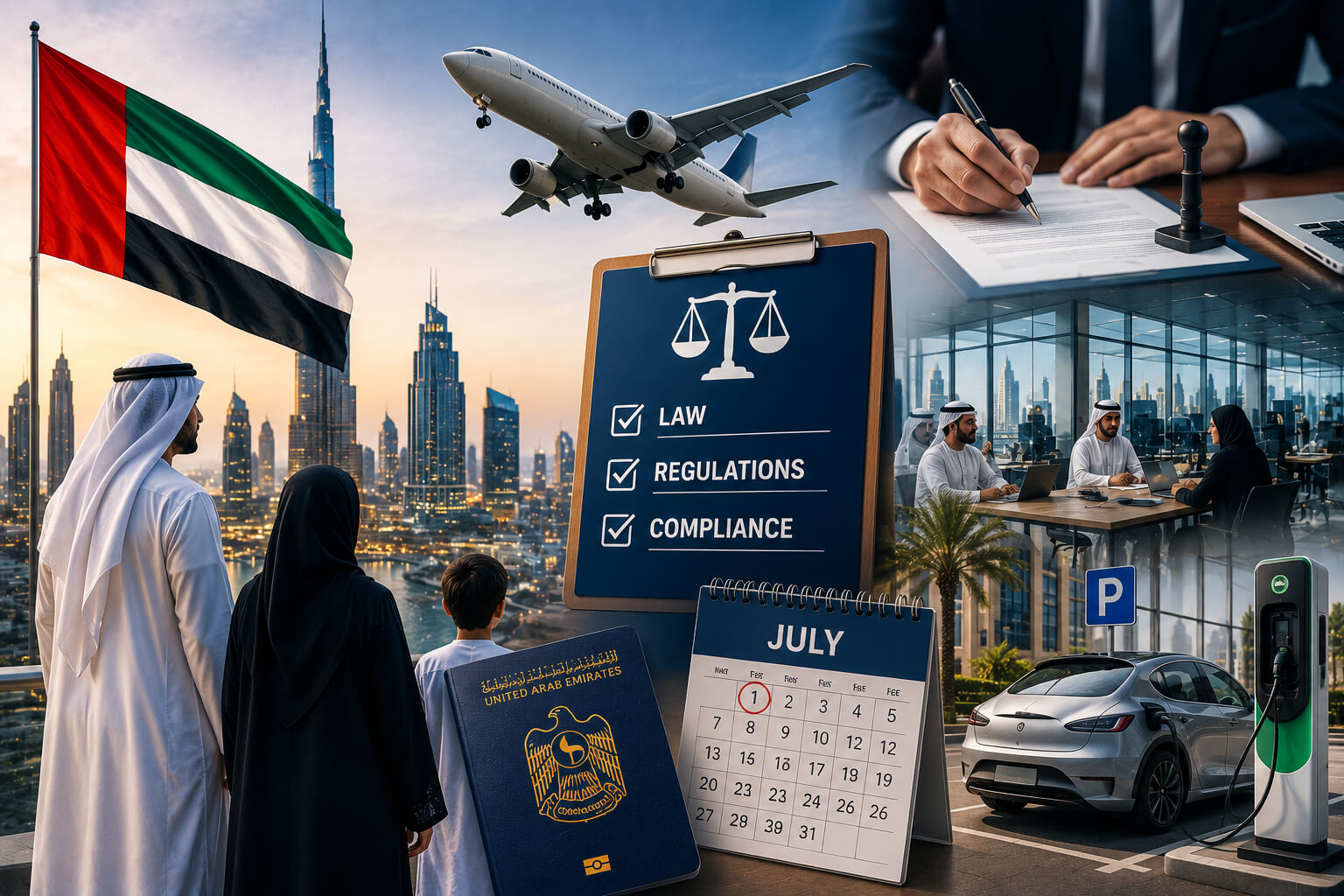
The UAE has entered July with a long list of changes, and not all of them are small administrative updates. Some affect businesses. Some hit residents directly. Others matter to travelers, families, commuters, and expats trying to keep their documents in order.
From e-invoicing pilots to new rail services and visa deadlines, July is shaping up as one of those months where people in the UAE need to pay closer attention than usual.
UAE Businesses Face New E-Invoicing Pilot
For companies, the biggest July shift is the start of the UAE’s e-invoicing pilot. The first phase began on July 1, with large businesses expected to be among the early participants, especially companies with annual revenues above Dh50 million.
This is more than a software update. It is part of the UAE’s wider move toward a fully digital tax and compliance system. Once expanded, e-invoicing is expected to improve reporting, reduce paperwork, and make business transactions easier to track.
For free zone companies, mainland firms, and corporate service providers, this is worth watching closely. The pilot may not cover every business immediately, but the direction is clear. Digital compliance is becoming normal, not optional.
Etihad Rail Passenger Services Start Early Operations
The UAE’s transport story also moved forward in July as Etihad Rail began limited passenger operations. Initial services connecting Abu Dhabi and Fujairah started in late June, with the journey taking around 1 hour and 45 minutes.
That may sound like a transport headline, but it has a business angle too. Better rail links can change how people move between emirates, how companies think about staff mobility, and how future commercial hubs develop outside the usual city centers.
Full network connectivity is expected by 2027, making the current rollout an early sign of how domestic travel in the UAE could look in the next few years.
Schools Begin Long Summer Break
Families across the UAE are also shifting into summer mode. Schools started their long summer holidays in early July, with private schools in Dubai closing around July 6 and public schools beginning their break earlier. The new academic year is scheduled to begin on August 31, 2026.
That gives many families nearly two months of travel, camps, childcare planning, and adjusted work routines. For businesses in tourism, retail, education services, transport, and hospitality, the summer break usually brings its own pattern of demand.
Some sectors slow down. Others get busier. July is rarely neutral in the UAE.
Sharjah Extends Paid Parking Hours
Sharjah has also changed its paid parking rules. From July 1, paid public parking now applies until midnight across major zones, including Kalba, Khorfakkan, and Al Dhaid.
For residents and business owners, this is a practical change that may affect daily costs. Shops, restaurants, offices, and service centers operating into the evening may see customers and employees paying closer attention to parking timings.
It also standardizes rules across different areas, making enforcement more consistent.
Dubai Summer Surprises Returns
Dubai Summer Surprises returned from July 2, bringing 60 days of retail offers, hotel deals, raffles, entertainment, dining campaigns, and prize giveaways.
The annual summer event has become one of Dubai’s strongest tools for keeping malls, hotels, restaurants, and tourist attractions active during the hotter months. For retailers and hospitality brands, it is not just a seasonal promotion. It is a commercial window.
This year’s edition includes discounts, concerts, food festivals, and prizes ranging from cars and gold to apartments and cash rewards.
Indian Expats Get New Consular Services Provider
A major administrative change also affects Indian nationals in the UAE. From July 1, Alhind Tours and Travels LLC became the sole outsourced service provider for passport and consular services, replacing previous providers.
The change covers 16 centers across all emirates and affects a large Indian expatriate community in the country. For companies employing Indian workers, especially in free zones and large business clusters, this may be relevant for HR teams handling passport renewals, documentation, and employee support.
UAE Visa Grace Period Ends July 9
Residents also need to watch the visa regularization deadline. The Federal Authority for Identity, Citizenship, Customs and Port Security extended a temporary grace period until July 9. After that date, affected residents are expected to comply with residency rules or face penalties.
This matters for individuals, employers, and business owners. Visa compliance is not something to leave until the last moment, especially when staff mobility, travel plans, and employment paperwork are involved.
Armenia Visa-Free Travel Ends for UAE Residents
Travel rules are changing too. A temporary agreement allowing UAE residents visa-free entry to Armenia expired on July 1. UAE nationals are not affected, but expatriates who previously used the short-stay visa-free arrangement will need to check updated entry requirements before traveling.
For travel agencies, corporate travel teams, and residents planning summer trips, this is one of those small changes that can quickly become a problem if missed.
Emirates Free Hotel Stay Offer Nears End
Emirates airline’s promotional offer for complimentary hotel stays in Dubai is also ending in July. Eligible travelers who booked before the mid-July deadline can still use the offer at selected premium hotels, including JW Marriott Marquis.
The promotion forms part of Dubai’s broader tourism push during the summer season, especially as airlines and hotels look for ways to keep inbound travel active.
Flexible Summer Work Hours Continue in Dubai
Dubai’s public sector is continuing its flexible summer hours initiative, which was introduced in late June. The program allows reduced working hours and a four-day workweek option for government employees during the peak summer period.
The idea is simple: keep productivity moving while recognizing the reality of UAE summer conditions. It also reflects a wider shift in how government workplaces are experimenting with flexibility, employee wellbeing, and seasonal work models.
July Shows How Fast the UAE Is Adjusting
July’s changes cut across nearly every part of daily and business life in the UAE. Companies are being pulled deeper into digital compliance. Residents are managing visa deadlines, parking costs, school holidays, and travel rule changes. Commuters are seeing the early shape of a national rail future.
None of this feels isolated. The UAE is tightening systems, improving mobility, pushing tourism, and digitizing business operations at the same time.
For free zone companies and investors, the main signal is clear: the UAE’s operating environment keeps moving. Businesses that track these changes early will find it easier to stay compliant, serve customers, and plan ahead.
