

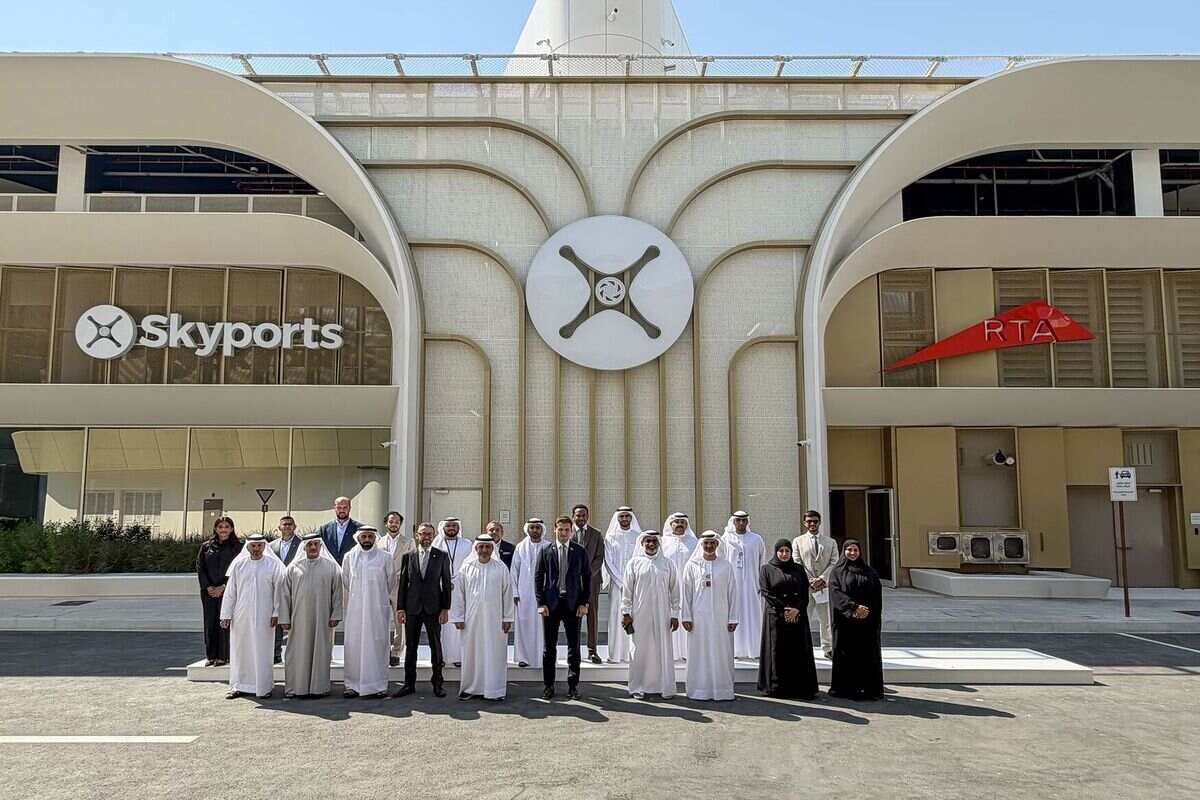
The UAE has taken another very Dubai-style step into the future of transport. Not a concept render. Not a flashy prototype sitting on a stage. This time, it is regulatory certification.
The General Civil Aviation Authority and Skyports Infrastructure have announced that VDX, the world’s first purpose-built commercial vertiport, has received certification for electric vertical take-off and landing aircraft operations. The facility is located beside Dubai International Airport and is expected to become the main hub for Dubai’s coming air taxi network.
VDX Gives Dubai’s Air Taxi Plan a Real Starting Point
Air taxis have been talked about for years. In many cities, they still feel like a transport idea stuck somewhere between science fiction and investor presentation.
Dubai is trying to make it operational.
VDX is not just a landing pad. It is a dedicated vertiport built for eVTOL aircraft, the electric aircraft designed to take off and land vertically. The certification means the site has passed a key regulatory step for future commercial air taxi services, which gives Dubai’s plans something more solid than ambition.
The vertiport is expected to serve as the first and primary hub in Dubai’s planned air taxi network. Three more vertiports are also under development, building out the early shape of a citywide aerial mobility system.
Why This Matters for Dubai’s Transport Future
Dubai has never been shy about building transport infrastructure before demand looks obvious. Metro. Smart roads. Airport expansion. Autonomous mobility targets. Now, air taxis are being pushed into that same category.
The bigger point is not only that people may one day fly from one part of the city to another. It is that Dubai wants to own the infrastructure layer early. Vertiports, charging systems, passenger flow, aviation approvals, aircraft operations, digital booking, safety procedures — all of that has to work before air taxis can become more than a demo flight.
That is why this certification matters. It moves the idea from “coming soon” into something closer to a regulated aviation service.
Built Beside Dubai International Airport
The location is important. VDX sits adjacent to Dubai International Airport, one of the world’s busiest aviation hubs. That gives the project immediate visibility and a practical use case: faster airport-linked movement across the city.
Earlier project details showed the vertiport spans around 3,100 square metres and is designed with take-off and landing zones, aircraft charging, an aerial taxi apron, and passenger facilities. It is expected to handle around 42,000 landings annually and serve about 170,000 riders per year.
That scale says a lot. Dubai is not treating this as a novelty attraction. It is being prepared as transport infrastructure.
Joby, Skyports and RTA Are Part of the Network
Dubai’s air taxi rollout brings together several major players. Skyports Infrastructure is developing the vertiport infrastructure. Joby Aviation is tied to the aircraft side of the service. Dubai’s Roads and Transport Authority is overseeing integration with the wider transport network.
That mix is important because air taxis cannot operate in isolation. They need to connect with roads, airports, passenger booking systems, and aviation regulation. A beautiful aircraft does not solve the harder part, which is making the service safe, reliable, and useful in a real city.
Dubai appears to understand that. The vertiport is the backbone, not the accessory.
Commercial Air Taxi Services Are Getting Closer
Dubai has been targeting commercial air taxi operations in 2026. The certification of VDX brings that timeline into sharper focus, although the actual launch will still depend on aircraft readiness, operational approvals, and network preparation.
Still, this is one of the clearest signs yet that Dubai’s air taxi plan is moving from testing into deployment.
The first routes are expected to connect key locations across the city, with VDX serving as the central aviation gateway. Once the other vertiports are ready, the network could give Dubai a new premium mobility option for airport transfers, business travel, tourism, and high-demand city routes.
UAE Strengthens Its Position in Advanced Aviation
For the UAE, this is also a regulatory achievement. Certifying the world’s first purpose-built commercial vertiport puts the country ahead in a new aviation category that many global cities are still studying.
That advantage could matter later. The first markets to build working vertiport rules, safety systems, and commercial operating models may help define how advanced air mobility develops elsewhere.
Dubai has done this before with aviation, logistics, tourism, and free zone-driven business infrastructure. Build early. Regulate fast. Invite global companies in. Then turn the project into a platform.
VDX fits that pattern.
A New Chapter for Urban Mobility in the UAE
Nobody should pretend air taxis will replace roads, metro lines, or taxis overnight. They will not. At least not soon.
But that is not the point.
The point is that Dubai is building the early infrastructure for a new transport layer. A small one at first. Likely premium. Probably limited by routes, aircraft capacity, and operating costs in the beginning.
Even so, the certification of VDX is a serious milestone. It gives Dubai the first certified purpose-built commercial vertiport in the world, and it gives the UAE another claim in the global race for future aviation.
Flying taxis still sound futuristic. In Dubai, the ground system for them is already taking shape.
