
Sharjah is looking to bring more international brands into its market while creating fresh investment opportunities across retail, real estate, hospitality and other major industries.
The Sharjah Chamber of Commerce and Industry (SCCI) has outlined plans to strengthen cooperation between businesses and government authorities, improve sector competitiveness and support the emirate’s long-term economic growth.
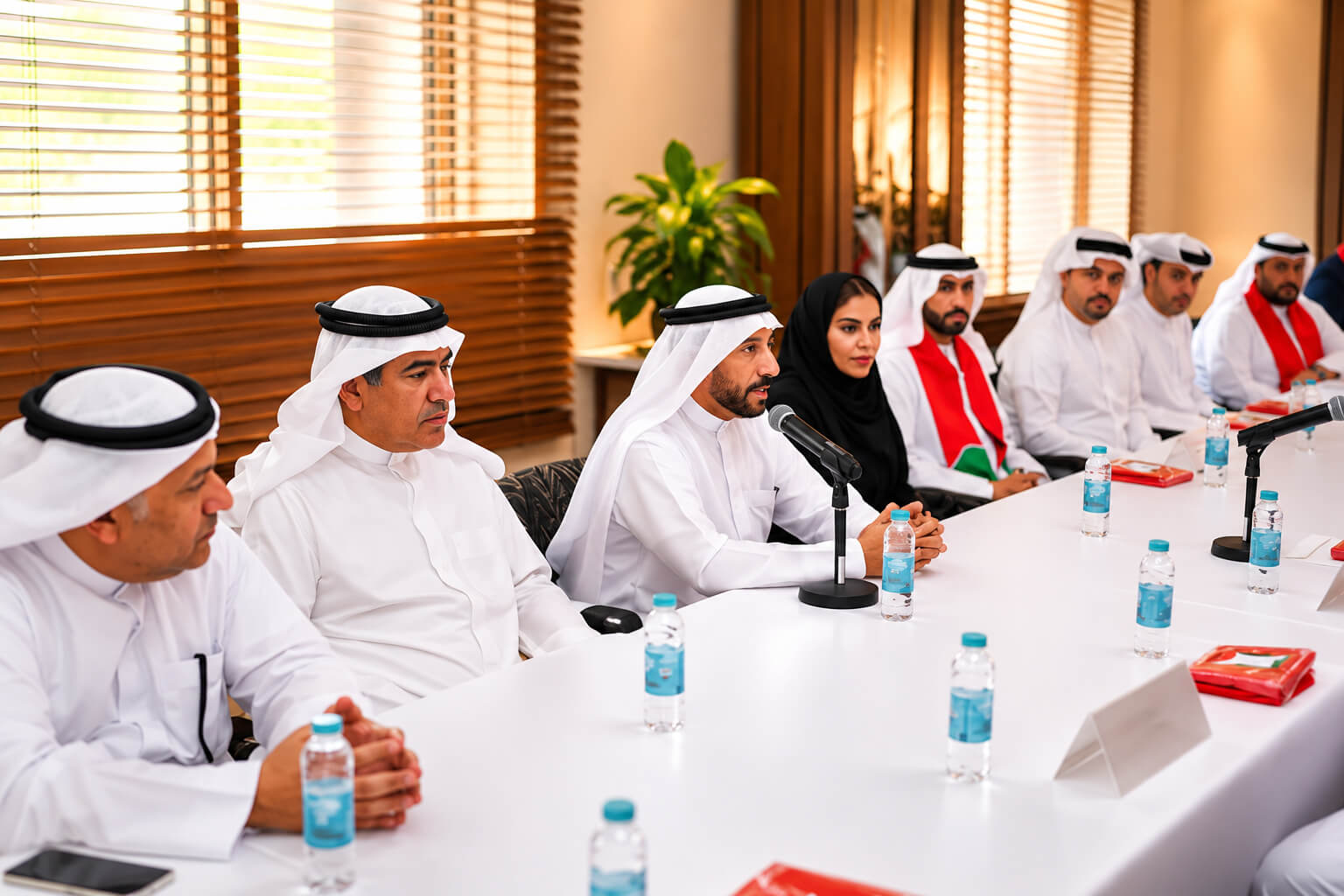
The proposals emerged during a meeting with representatives of the Chamber’s Sectoral Business Groups, where industry leaders discussed market performance, investment challenges and opportunities for expansion.
Rather than focusing on a single industry, Sharjah is taking a broader approach. Retail development, industrial infrastructure, property investment and hospitality operating costs are all part of the discussion. ZAWYA
Sharjah Chamber Plans to Bring More International Brands Into the Retail Market
Attracting international retailers is becoming a priority for Sharjah’s shopping mall sector.
Abdullah Al Blooshi, Head of the Shopping Mall Sector Business Group, reported strong growth in shopping centre visitors and sales, pointing to increasing commercial activity across the emirate.
The group is planning a dedicated exhibition that would connect international brands with local investment opportunities. The proposed event would give global retailers a closer look at Sharjah’s commercial market and potentially encourage new store openings and business partnerships.
For shopping mall operators, additional international brands could mean a more diverse retail offering and stronger competition. It could also help Sharjah strengthen its position as a shopping destination within the UAE.
The Chamber has not announced a confirmed date for the exhibition.
Real Estate Sector Looks Beyond the UAE for New Investors
Sharjah’s property sector is also seeking greater international exposure.
Hesham Saeed Khattab, a member of the Representative Committee of the Real Estate Sector Business Group, highlighted the stability of the emirate’s property market and the role of its regulatory framework in maintaining investor confidence.
The Sharjah Real Estate Exhibition, known as ACRES, remains an important platform for presenting property developments and connecting developers with prospective buyers.
Industry representatives now want to expand that reach through participation in international exhibitions.
The objective is to put more Sharjah property projects in front of overseas investors while strengthening the emirate’s reputation as a competitive real estate market.
Hospitality Businesses Receive Support Through Flexible Payment Plans
Operating expenses remain an important concern for hotels, particularly when managing utilities and other recurring costs.
Fadi Musharafieh, Head of the Hotel Sector Business Group, highlighted flexible payment arrangements introduced by Sharjah City Municipality and the Sharjah Electricity, Water and Gas Authority (SEWA).
These arrangements cover utility bills and parking-related fees, giving hospitality establishments greater flexibility in managing financial obligations.
Meanwhile, the Hotel Apartments Business Group called for stronger awareness campaigns to help accommodation providers understand and comply with existing regulations.
The focus is not simply on attracting more visitors. Sharjah also wants hospitality businesses to maintain service standards, operate efficiently and remain financially sustainable.
Industrial Zones and Food Security Projects Gain Attention
Industrial development formed another major part of the Chamber’s discussions.
Lalu Samuel, Head of the Industry Sector Business Group, outlined improvements to Sharjah’s industrial infrastructure and the expansion of facilities supporting manufacturing businesses.
New industrial projects are intended to help companies increase production capacity, improve operational efficiency and respond to changing market requirements.
Food security was also identified as an investment priority, with discussions covering industrial initiatives that could support the emirate’s food supply and production capabilities.
For manufacturers considering operations in Sharjah, the availability of suitable infrastructure and industrial facilities remains an important factor in investment decisions.
Sharjah Strengthens Its Position in the Used Automotive Parts Trade
Sharjah’s used automotive parts industry continues to serve international markets, including France, Spain and several African countries.
Khalid Batarfi, Head of the Used Car Trade Sectoral Business Group, discussed progress in addressing export-related challenges affecting automotive spare parts businesses.
The sector’s international trading relationships highlight Sharjah’s established role in automotive parts distribution and re-export activities.
Maintaining these connections could help local traders expand their customer networks and strengthen the emirate’s position in regional and international supply chains.
Business Groups Push for Stronger Government Coordination
The Chamber’s meeting brought together representatives from manufacturing, real estate, shopping malls, hotels, hotel apartments, food trade, legal services and the used car industry.
Government participants included the Sharjah Commerce and Tourism Development Authority, Sharjah Real Estate Registration Department and Sharjah Economic Development Department.
SCCI Chairman Abdallah Sultan Al Owais emphasised the importance of economic diversification, investment incentives and helping businesses expand into new markets.
Legal services also featured in the discussions. Mohamed Ali Al-Hammadi, Head of the Law Firms Sector Business Group, reported that the group had achieved 80% of its target for improving engagement between legal professionals and the Sharjah Judicial Department.
Closer coordination between these organisations could help businesses raise sector-specific concerns and contribute to improvements in the regulatory environment.
What Sharjah’s Investment Plans Mean for Free Zone Businesses
Although the Chamber’s latest initiatives are not exclusively focused on free zones, their potential impact extends to companies operating within Sharjah’s wider investment ecosystem.
Businesses established in Sharjah’s free zones could benefit indirectly from stronger retail demand, improved industrial infrastructure and additional international trade connections.
Manufacturers and trading companies, for example, may find opportunities as the emirate expands its industrial activities and attracts more commercial investment. Hospitality suppliers, logistics providers and business service companies could also benefit from increased economic activity.
However, the Chamber’s announcement does not introduce new free zone licensing rules, tax incentives or ownership regulations.
The immediate emphasis is on improving cooperation, supporting existing industries and creating opportunities for businesses seeking to enter or expand within Sharjah.
For investors, the next developments worth watching will be the proposed international retail exhibition, overseas property promotion activities and further industrial infrastructure projects.
Sharjah’s message is clear: attracting investment is only part of the equation. Keeping businesses competitive and giving them room to grow matters just as much.
