

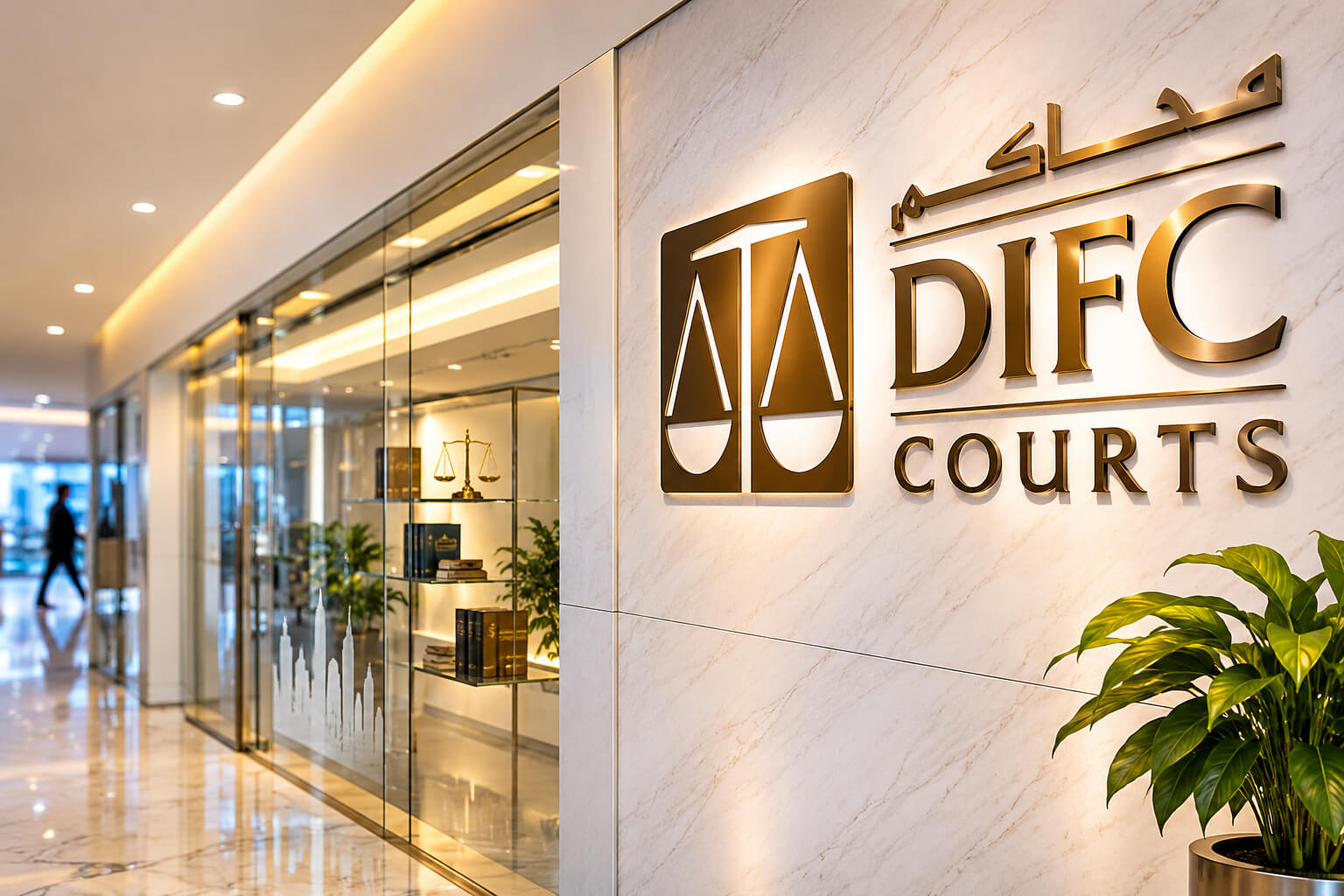
Dubai is taking another step toward strengthening its legal infrastructure for digital assets. The Dubai International Financial Centre (DIFC) Courts have proposed a new framework designed to make resolving blockchain-related disputes faster, clearer and easier to enforce.
The proposal introduces the Dispute Resolution Oracle (DRO), a system intended to connect traditional judicial decisions with blockchain networks. It could allow authorised courts and dispute resolution bodies to issue legally binding decisions that participating digital platforms can execute.
For businesses operating within the DIFC and the wider UAE digital economy, the initiative addresses a growing concern: how to enforce legal rights when financial assets exist on decentralised networks.
DIFC Courts Address Legal Challenges in Blockchain Transactions
Blockchain technology has transformed how digital assets move between individuals and businesses. Transactions can take place across borders without relying on conventional financial intermediaries. Yet when disagreements arise, recovering assets or enforcing ownership rights can become complicated.
Traditional courts can determine who legally owns an asset or whether a transaction violated an agreement. The difficulty often comes afterward, particularly when disputed assets remain controlled by smart contracts or decentralised applications that cannot automatically recognise judicial rulings.
The DIFC Courts want to bridge that gap. Their proposed framework would allow recognised legal authorities to communicate enforceable decisions to compatible blockchain systems. Instead of relying entirely on manual intervention, participating platforms could act on authenticated legal instructions.
The initiative does not seek to replace established judicial procedures. Courts would continue reviewing evidence, hearing arguments and determining legal outcomes. Blockchain technology would support the enforcement process rather than make judicial decisions.
How the Dispute Resolution Oracle Would Work
The Dispute Resolution Oracle would function as a connection between recognised legal institutions and blockchain-based financial systems. Businesses using compatible smart contracts could agree in advance on which court or dispute resolution authority would handle disagreements involving their digital assets.
When a dispute occurs, the system could temporarily restrict access to the specific assets involved, preventing their movement while the designated authority examines the case. This would help preserve the assets until the legal process reaches a conclusion.
After the court or authorised body issues its decision, the DRO would transmit an authenticated digital instruction to the participating blockchain application. Depending on the ruling and the system’s capabilities, the instruction could allow the disputed assets to be released, transferred or otherwise handled according to the legal outcome.
Security remains a central consideration. The proposal includes safeguards intended to prevent unauthorised interference, including cryptographic verification and controls over who can approve enforcement instructions. Any restrictions would need to follow the applicable legal procedures.
Why the Framework Matters for DIFC Businesses and Investors
For companies operating within the Dubai International Financial Centre, the proposal could reduce uncertainty surrounding digital asset transactions. Financial institutions, fintech startups and investment firms increasingly explore blockchain technology for payments, securities and other financial products, making reliable dispute resolution an important commercial consideration.
Tokenised real estate transactions provide one possible application. If investors disagree over ownership or contractual obligations involving property-backed digital tokens, a compatible dispute resolution system could help enforce a legally determined outcome without depending entirely on cooperation from the parties involved.
Digital escrow services and tokenised financial agreements could also benefit. Businesses would have a clearer understanding of how disputes might be handled before committing assets to blockchain-based transactions.
The proposal could strengthen investor confidence in Dubai’s digital financial ecosystem. However, its effectiveness will depend on whether businesses, blockchain developers and legal institutions adopt the framework and integrate it into their existing systems.
DIFC Courts Seek International Adoption of the Framework
The DIFC Courts are looking beyond Dubai with their proposed Dispute Resolution Oracle. The framework is intended to provide a model that qualified judicial institutions and dispute resolution bodies in other jurisdictions could eventually adopt.
Cross-border digital asset transactions often involve businesses operating under different legal systems. This creates complications when one party obtains a court judgment but the assets remain on a blockchain platform operating internationally.
A common technical framework could make it easier for participating institutions to communicate legal decisions to compatible digital systems. Courts, arbitration bodies and other recognised authorities could potentially use similar mechanisms while retaining their respective legal powers.
The DIFC Courts would initially provide a reference model for the system. Its established legal infrastructure and specialist Digital Economy Court offer a foundation for testing how blockchain-based enforcement could operate alongside conventional judicial processes.
International adoption is not guaranteed. Each jurisdiction would need to consider its own laws, regulatory requirements and judicial safeguards before implementing such a mechanism.
Blockchain Dispute Resolution Could Support AI-Powered Financial Transactions
The proposed framework could also become relevant as artificial intelligence takes on a larger role in financial transactions. AI-powered systems are increasingly being developed to execute payments, manage digital assets and carry out commercial activities under instructions from individuals or organisations.
These developments raise questions about responsibility when automated transactions produce unexpected outcomes or lead to contractual disputes. Determining liability is one challenge. Enforcing a legal decision against digital assets controlled by automated systems presents another.
The Dispute Resolution Oracle could provide a mechanism for handling enforcement once a recognised authority has resolved the underlying dispute. Its potential application to autonomous financial systems reflects the growing overlap between blockchain technology, artificial intelligence and digital commerce.
The proposal would not allow AI systems to independently determine legal outcomes. Judicial authority would remain with recognised institutions, while blockchain infrastructure would help implement their decisions.
DIFC Courts Outline a Phased Approach to Implementation
The proposed Dispute Resolution Oracle remains under development, with the DIFC Courts outlining a gradual implementation process rather than an immediate commercial launch. The initial stages would focus on validating the concept, consulting relevant stakeholders and examining the technical and legal requirements.
Testing on blockchain networks would be an important part of the process. Developers and participating institutions would need to demonstrate that the system can register disputes, apply appropriate restrictions and transmit authenticated enforcement instructions without creating additional security risks.
Later stages would examine regulatory integration, institutional participation and potential deployment in live digital asset environments. The Courts would also need to establish clear procedures for authorising enforcement actions and handling challenges to judicial decisions.
The phased approach reflects the sensitivity of connecting legal authority directly with blockchain infrastructure. Any operational system would need to balance effective enforcement with due process, asset security and the rights of affected parties.
Dubai Strengthens Its Position as a Digital Economy Hub
The initiative forms part of the DIFC Courts’ broader efforts to modernise legal services for businesses operating in technology-driven industries. Its Digital Economy Court already provides a specialised forum for disputes involving emerging technologies, digital assets and complex commercial arrangements.
Dubai has continued expanding its digital economy infrastructure through financial innovation, regulatory development and investment in emerging technologies. Within this environment, legal certainty has become increasingly important for companies considering blockchain-based business models.
The proposed framework could complement these efforts by addressing a problem that technical innovation alone cannot resolve. Blockchain networks may provide transparent transaction records, but they do not automatically determine how legal disagreements should be settled.
For the DIFC, developing credible enforcement mechanisms could become another factor attracting international fintech businesses and digital asset investors.
The Dispute Resolution Oracle is still a proposal, and its eventual impact will depend on successful testing and adoption. Nevertheless, it signals a shift in how financial centres are approaching blockchain regulation: not simply establishing rules for digital assets, but exploring how legal decisions can operate within the technology itself.
Sources
- Gulf News: DIFC Courts Plan New Way to Settle Digital Asset Disputes
- DIFC Courts: Official Website
- Entrepreneur Middle East: DIFC Courts Proposes Global Framework for Resolving Digital Asset Disputes
- Crypto Briefing: DIFC Courts Propose Dispute Resolution Oracle for Tokenized Assets
