
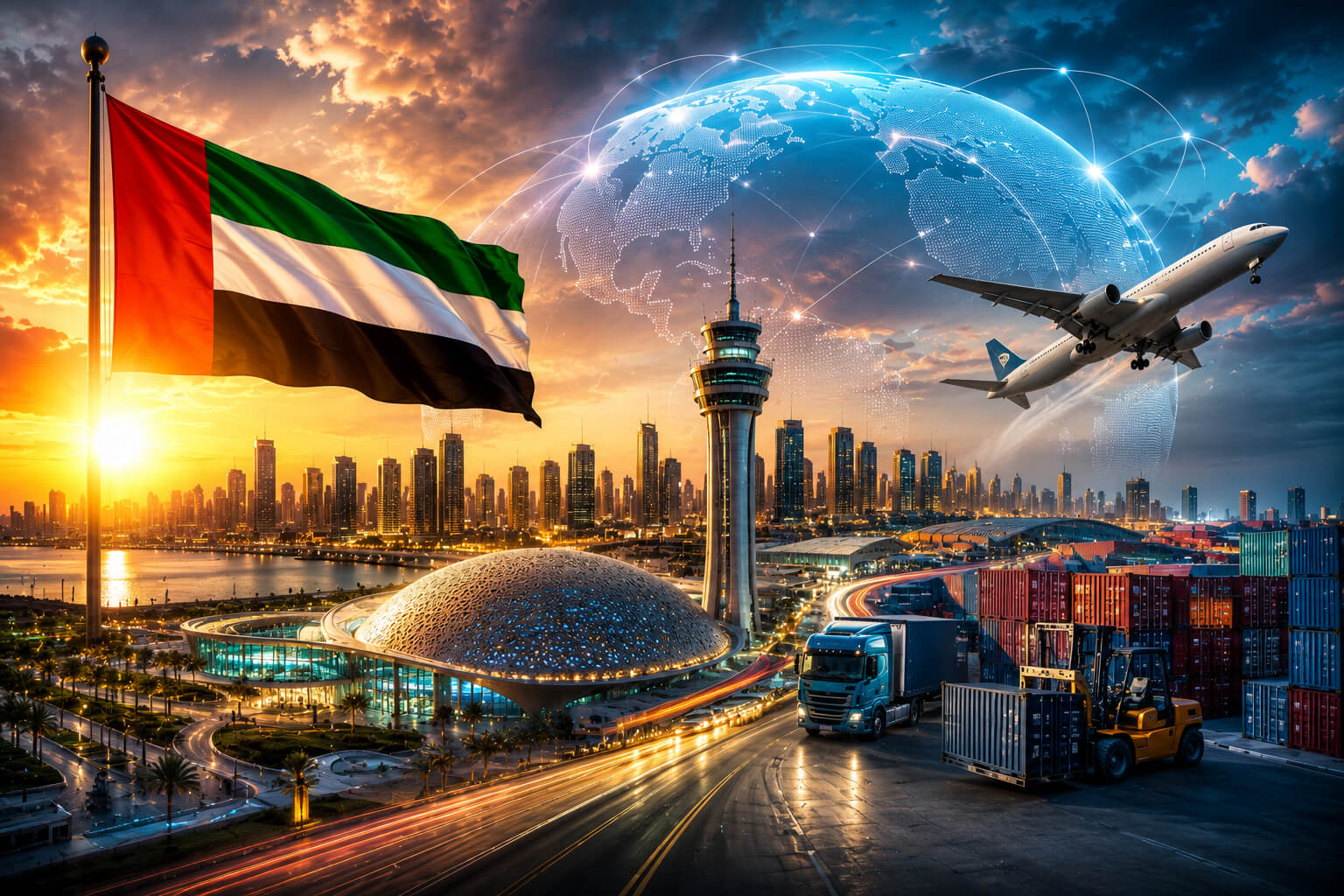
The United Arab Emirates has established itself as one of the world’s leading destinations for entrepreneurs, international investors, and companies looking to expand across the Middle East and beyond. Among the UAE’s established business hubs is the Sharjah Airport International Free Zone (SAIF Zone), a free zone offering a strategic location, business infrastructure, licensing options, and facilities for companies across a range of industries.
Established in 1995, SAIF Zone is located in the Emirate of Sharjah and is positioned adjacent to Sharjah International Airport. Its connectivity to airports, seaports, and major road networks makes it particularly attractive to companies involved in trading, logistics, manufacturing, distribution, and international commerce.
What Is SAIF Zone?
SAIF Zone, short for Sharjah Airport International Free Zone, is a UAE free trade zone designed to provide businesses with an efficient environment in which to establish and operate their companies.
Its location is one of its defining advantages. Businesses operating from SAIF Zone have access to air, sea, and land transportation networks, with Sharjah International Airport nearby and connections to other major airports and seaports across the UAE.
According to SAIF Zone, its business community includes more than 8,000 companies from 160 countries, highlighting its international reach and diverse investor base.
Why Set Up a Company in SAIF Zone?
Choosing the right free zone can influence a company’s operating costs, logistics capabilities, licensing requirements, and potential for expansion. SAIF Zone combines several advantages that can make it an attractive option for both new and established businesses.
1. Strategic Location
SAIF Zone’s proximity to Sharjah International Airport provides businesses with convenient access to international air cargo and passenger networks.
The free zone also benefits from connections to major highways, airports, and seaports, helping companies reach markets throughout the GCC, Middle East, Asia, Africa, and beyond.
For importers, exporters, manufacturers, logistics businesses, and distributors, this connectivity can be particularly valuable.
2. 100% Foreign Ownership
SAIF Zone promotes 100% foreign ownership, allowing international investors to fully own their free zone businesses without requiring a local shareholder. It also highlights the ability to repatriate funds without currency restrictions.
This gives entrepreneurs greater control over their businesses and investments.
3. Fast Business Setup
One of SAIF Zone’s prominent features is its streamlined company formation process.
The authority states that licenses and permits can be delivered within one hour as part of its quick business setup service. Its single-window approach is intended to reduce administrative complexity for investors.
SAIF Zone also provides a digital setup process through which investors can work with business advisors, submit documents online, make payments, and receive their licenses.
Types of Business Licenses in SAIF Zone
Businesses can select a license according to the activities they intend to conduct.
Trade License
A Trade License is intended for businesses engaged in activities such as:
- Importing and exporting
- Distribution
- Consolidation
- Storage
- Warehousing
SAIF Zone states that this license can cover up to three similar product lines.
Service License
A Service License allows a company to perform the specific service activities listed on its license, subject to restrictions imposed by UAE federal or local authorities.
Activities can include:
- Professional services
- Business consultancy
- Shipping and freight forwarding
- E-commerce
- Other approved service activities
Industrial License
Businesses involved in production or manufacturing can consider an Industrial License.
It can cover activities such as:
- Manufacturing
- Processing
- Assembly
- Packaging
- Importing raw materials
- Exporting finished products
- Jewelry manufacturing
Certain industrial activities may require additional clearance from SAIF Zone’s Health and Environment Department.
Company Structures Available
SAIF Zone accommodates different types of investors and corporate structures.
Free Zone Establishment (FZE)
An FZE is a limited liability establishment owned by a single natural or juridical person. It has its own legal identity and independent financial liability.
Free Zone Company (FZC)
An FZC is a limited liability company established by more than one shareholder and similarly operates as a separate legal entity with independent financial liability.
Branch of a UAE Company
Companies already registered elsewhere in the UAE may establish a branch within SAIF Zone.
Branch of a Foreign Company
International companies incorporated outside the UAE can also establish a branch in the free zone.
These options allow SAIF Zone to accommodate individual entrepreneurs, partnerships, UAE businesses, and international corporations.
Offices, Warehouses, and Land
SAIF Zone is more than a licensing jurisdiction. It also provides physical infrastructure for companies with different operational requirements.
Offices
A range of office solutions is available depending on the nature and scale of the business.
SAIF Zone also offers furnished executive office options with telecommunications and IT infrastructure.
Warehouses
For companies involved in manufacturing, trading, logistics, or distribution, SAIF Zone provides purpose-built warehouse facilities.
Some warehouse options include built-in office space, pantry and lavatory facilities, as well as power capacity suitable for industrial equipment.
Land
Businesses requiring larger facilities can choose land for custom-built warehouses or factories. The official SAIF Zone website states that plots are available from 2,500 square metres and above.
Jewelry Park
SAIF Zone also provides a specialized Jewelry Park designed for jewelry manufacturing businesses.
Business Support and On-Site Services
Operating a business involves much more than obtaining a license. SAIF Zone provides access to several services intended to support companies after incorporation.
Services highlighted by the free zone include:
- Client and investor services
- Visa services
- Lease, licensing, and legal affairs
- Sharjah Customs services
- Immigration and customs services
- Banking and financial services
The wider free zone environment also includes services such as money exchanges, telecommunications, international courier services, medical clinics, pharmacies, food and beverage outlets, and worker accommodation.
Having many of these services within or near the business community can simplify day-to-day administration for companies operating in the zone.
Tax Benefits of SAIF Zone
Tax treatment is an important consideration when establishing any UAE company.
SAIF Zone highlights benefits including 100% exemption from personal income tax and potential 0% corporate income tax in accordance with UAE corporate tax law, as well as exemptions from import and export duties within the applicable free-zone framework.
However, investors should not assume that simply establishing a free zone company automatically guarantees a 0% corporate tax rate on all income. UAE corporate tax treatment depends on factors including the company’s activities, transactions, qualifying income, and whether the relevant requirements under UAE tax legislation are satisfied.
Businesses should therefore obtain professional tax advice based on their individual circumstances.
Who Should Consider SAIF Zone?
SAIF Zone can be particularly attractive to companies that benefit from strong logistics infrastructure and international connectivity.
Potential users include:
- Import and export companies
- General trading businesses
- Logistics and freight-forwarding companies
- E-commerce businesses
- Consultants and professional service providers
- Manufacturers
- Packaging and processing businesses
- Warehousing and distribution companies
- Jewelry manufacturers
- International companies establishing a UAE branch
Companies requiring warehouses, manufacturing facilities, or direct access to transportation networks may find the free zone particularly relevant.
How to Set Up a Business in SAIF Zone
SAIF Zone has designed its setup process to be relatively straightforward.
The process generally involves choosing the appropriate license, selecting a suitable facility and company structure, submitting the required documents, making the necessary payments, and receiving the business license. The free zone also offers digital assistance from business advisors during the application process.
Exact requirements can differ depending on the shareholder structure, business activity, facility, visa requirements, and whether the applicant is establishing a new company or a branch.
For this reason, entrepreneurs should confirm the latest documentation, fees, activity approvals, and visa requirements directly with SAIF Zone before applying.
SAIF Zone: Connecting Businesses to Global Markets
SAIF Zone combines the UAE’s investor-friendly business environment with Sharjah’s position as an important industrial and logistics hub.
Its proximity to Sharjah International Airport, access to road and maritime networks, range of licenses, offices, warehouses, industrial land, and investor services make it a versatile option for businesses looking to establish a presence in the UAE.
For entrepreneurs focused on international trade, logistics, manufacturing, e-commerce, professional services, or regional expansion, Sharjah Airport International Free Zone offers a business ecosystem designed around connectivity and operational flexibility.
Before proceeding with incorporation, investors should compare their intended activities, facility requirements, visa needs, tax position, and overall operating costs to determine whether SAIF Zone is the best UAE free zone for their business.
Official website: SAIF Zone – Sharjah Airport International Free Zone
