

Abu Dhabi’s clean energy ambitions just moved into a much bigger phase.
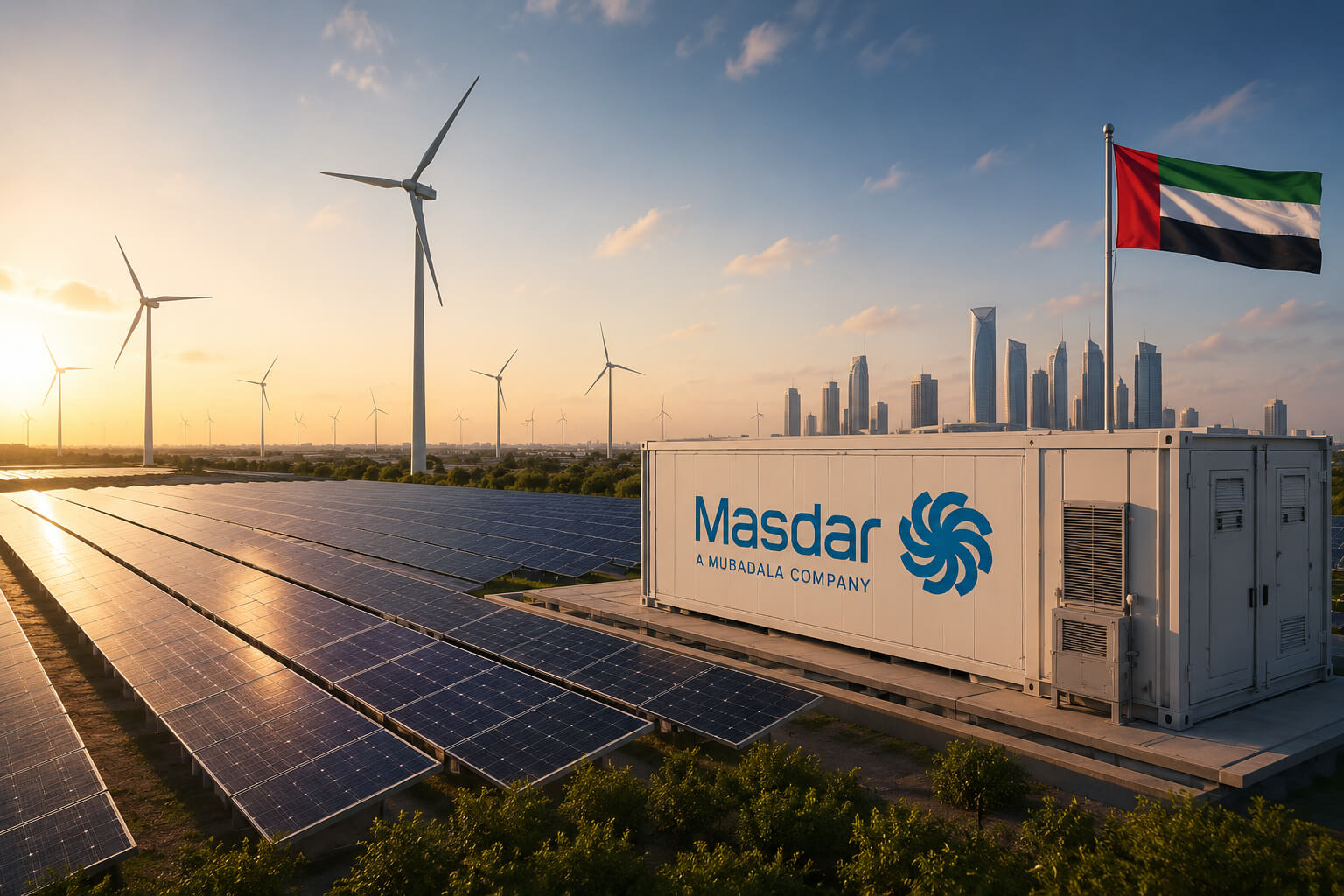
Masdar has secured $5.1 billion in financing for what is being described as the world’s first 24/7 gigascale renewable energy project. The project is not just another solar farm. It is being built around a bigger idea: renewable power that can run all day and all night, not only when the sun is out.
That is the part that matters.
For years, solar energy has carried one obvious weakness. It works when conditions allow it to work. Add large-scale battery storage, though, and the equation starts to change. Abu Dhabi is now trying to show that clean energy can behave more like traditional baseload power.
A Major Renewable Energy Project in Abu Dhabi
The project is being developed by Masdar, officially known as Abu Dhabi Future Energy Company, together with Emirates Water and Electricity Company.
It will combine a 5.2GW solar photovoltaic plant with a 19GWh battery energy storage system. That battery component is huge. It is what allows the project to store power during peak generation hours and release it later, helping deliver clean electricity on a round-the-clock basis.
Masdar has positioned the project as a global first at this scale. The aim is to deliver up to 1GW of continuous renewable power, which would make it a serious benchmark for other countries looking at how to balance rising electricity demand with lower-carbon energy supply.
Why the $5.1 Billion Financing Matters
The $5.1 billion financing is a major signal of confidence in Abu Dhabi’s renewable energy strategy.
Clean energy projects of this size need more than strong announcements. They need lenders, long-term planning, grid integration, construction execution, and serious institutional backing. Securing financing means the project is moving from ambition into delivery.
For the UAE, this also fits into a larger economic story. Renewable energy is no longer being treated only as a sustainability target. It is becoming infrastructure. It supports industry, future data centers, artificial intelligence growth, advanced manufacturing, and the wider push to make Abu Dhabi a competitive global energy and technology hub.
Solar Power That Works After Sunset
The biggest selling point here is simple: solar power after sunset.
That sounds basic, but it is one of the hardest problems in renewable energy. A solar plant can produce large volumes of electricity during the day, especially in a place like Abu Dhabi. But electricity demand does not stop when sunlight fades.
The battery storage system is designed to close that gap.
By storing solar energy and dispatching it later, the project could reduce the need for fossil fuel backup during non-solar hours. It also gives grid operators more flexibility, which becomes increasingly important as more renewables enter the power mix.
Abu Dhabi Pushes Its Clean Energy Position
Abu Dhabi has already built a strong clean energy identity through Masdar, which has renewable energy investments across several markets. This project adds something more visible and more technically ambitious.
It is not only about capacity. It is about reliability.
That is why the “24/7” label keeps appearing around the project. Governments and large industries want clean power, but they also need power they can depend on. If Abu Dhabi proves this model at gigascale, it could become a reference point for other energy markets.
There is also a free zone and business angle here. Large infrastructure projects like this usually create demand across engineering, logistics, project finance, legal services, technology, construction, operations, and specialist energy services. For companies already based in the UAE, especially those serving energy and infrastructure clients, this is the type of development that can create long-tail commercial opportunities.
A Clean Energy Project With Global Attention
Masdar’s project is being watched because it sits at the intersection of several fast-moving trends.
Energy demand is rising. AI and data center growth are putting pressure on power systems. Countries want lower emissions, but they also want energy security. Businesses want cleaner electricity, but not if it creates instability.
That is the tension this Abu Dhabi project is trying to answer.
It may not solve every challenge in renewable energy. No single project does. But it gives the UAE a strong case study in combining solar generation with massive battery storage at a scale that few markets have attempted.
What Comes Next
The next stage will be execution.
Financing is a major milestone, but delivery will determine the project’s real impact. Construction timelines, technology performance, grid integration, and operational reliability will all matter.
Still, the direction is clear. Abu Dhabi wants to be seen not only as an energy capital, but as a place where the next version of energy infrastructure is being tested and built.
Masdar’s $5.1 billion financing deal brings that vision closer to reality.
Sources:
- Economy Middle East: Abu Dhabi’s Masdar secures $5.1 billion financing for world’s first 24/7 gigascale renewable energy project
- Masdar: UAE President witnesses launch of world’s first 24/7 solar PV and battery storage project
- Emirates 24/7: Masdar secures financial close for world’s first $6.1 billion round-the-clock clean energy project
- PV Magazine: Masdar and EWEC break ground on 1GW baseload solar-plus-storage project
