

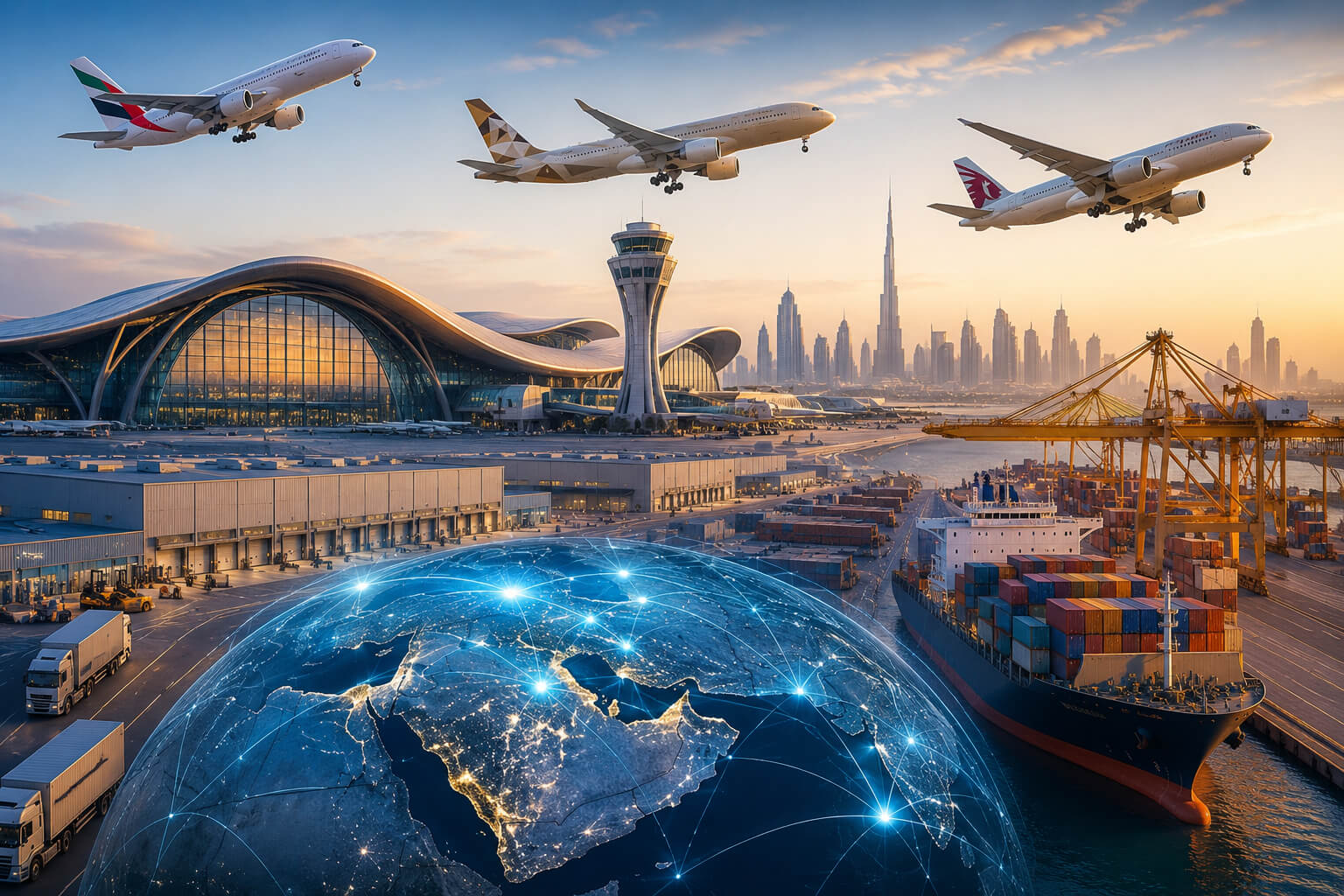
The Middle East is witnessing a major economic shift in 2026, with airport free zones linked to Emirates, Etihad Airways, and Qatar Airways playing a central role in driving investment, trade, logistics, and innovation across the region.
Cities such as Dubai, Abu Dhabi, and Doha have evolved far beyond traditional aviation hubs. They are now integrated business ecosystems where airports, airlines, free zones, and global trade infrastructure work together to attract multinational corporations, startups, investors, and skilled talent from around the world.
As Gulf economies continue reducing dependence on oil revenues, airport-linked free zones are becoming some of the region’s strongest engines for long-term economic diversification and growth.
Why Airport Free Zones Are Expanding Rapidly
Airport free zones continue gaining momentum because they provide businesses with several strategic advantages, including:
- 100% foreign ownership
- Corporate tax benefits
- Customs duty exemptions
- Fast and simplified company formation
- Access to global logistics infrastructure
- Direct proximity to international airports and cargo hubs
These free zones are specifically designed to support industries such as aviation, logistics, e-commerce, technology, AI services, manufacturing, healthcare, and international trade.
Dubai Airport Freezone Strengthens Emirates’ Business Network
Dubai Airport Freezone (DAFZ) remains one of the most influential economic zones in the Middle East in 2026. Positioned next to Dubai International Airport, DAFZ has become a major centre for global logistics, trade, and corporate operations.
The free zone hosts thousands of businesses across sectors including aerospace, pharmaceuticals, IT, e-commerce, and logistics. Its close integration with Emirates Airline provides companies with exceptional cargo connectivity and international reach.
Dubai’s role as one of the world’s busiest aviation centres continues strengthening its position as a strategic gateway connecting Europe, Asia, and Africa.
Abu Dhabi Expands Through Etihad and Airport Investment Zones
Abu Dhabi is also accelerating economic diversification through airport-linked zones connected to Etihad Airways and Zayed International Airport.
Etihad’s growing international network supports industries such as:
- Advanced manufacturing
- Financial services
- Aerospace
- Tourism
- Technology investment
- High-value logistics
The emirate’s investment-friendly environment and modern infrastructure continue attracting international firms looking to establish regional headquarters in the Gulf.
Qatar Expands Aviation-Led Economic Development
Qatar is similarly using its aviation ecosystem and Qatar Airways’ global reach to strengthen international trade and economic growth. Hamad International Airport remains one of the region’s key transit and cargo hubs, helping Doha attract multinational companies and global investors.
Qatar’s free zone strategy focuses heavily on:
- AI and technology
- Digital commerce
- International trade
- Smart logistics
- Supply chain operations
The country continues positioning itself as a major innovation and business destination in the Middle East.
Airport Free Zones Are Reshaping the Gulf Economy
The integration of airlines, airports, and specialised free zones is transforming the Gulf into one of the world’s most connected economic corridors. Emirates, Etihad, and Qatar Airways now play roles far beyond aviation by supporting:
- Global trade
- Tourism
- Cargo transportation
- Foreign direct investment
- Startup ecosystems
- Cross-border business expansion
This model allows Gulf nations to compete more directly with major business centres in Europe, Asia, and North America.
Strong Investor Confidence Continues
Despite occasional geopolitical disruptions affecting aviation routes, investors remain highly confident in the UAE and Qatar because of:
- Advanced logistics systems
- Strategic geographic positioning
- Stable infrastructure
- Government-led reforms
- Excellent international connectivity
These advantages continue making airport free zones among the world’s most attractive destinations for investment and expansion.
The Future of Gulf Airport Free Zones
The outlook for airport free zones across Dubai, Abu Dhabi, and Doha remains highly positive as governments continue investing in:
- AI-powered logistics
- Digital trade ecosystems
- Sustainable aviation
- Autonomous transportation
- Smart airport technologies
- Modern supply chain infrastructure
By combining aviation leadership with business-friendly policies and advanced free zone infrastructure, the Gulf region is preparing for its next stage of economic growth and global competitiveness.
