

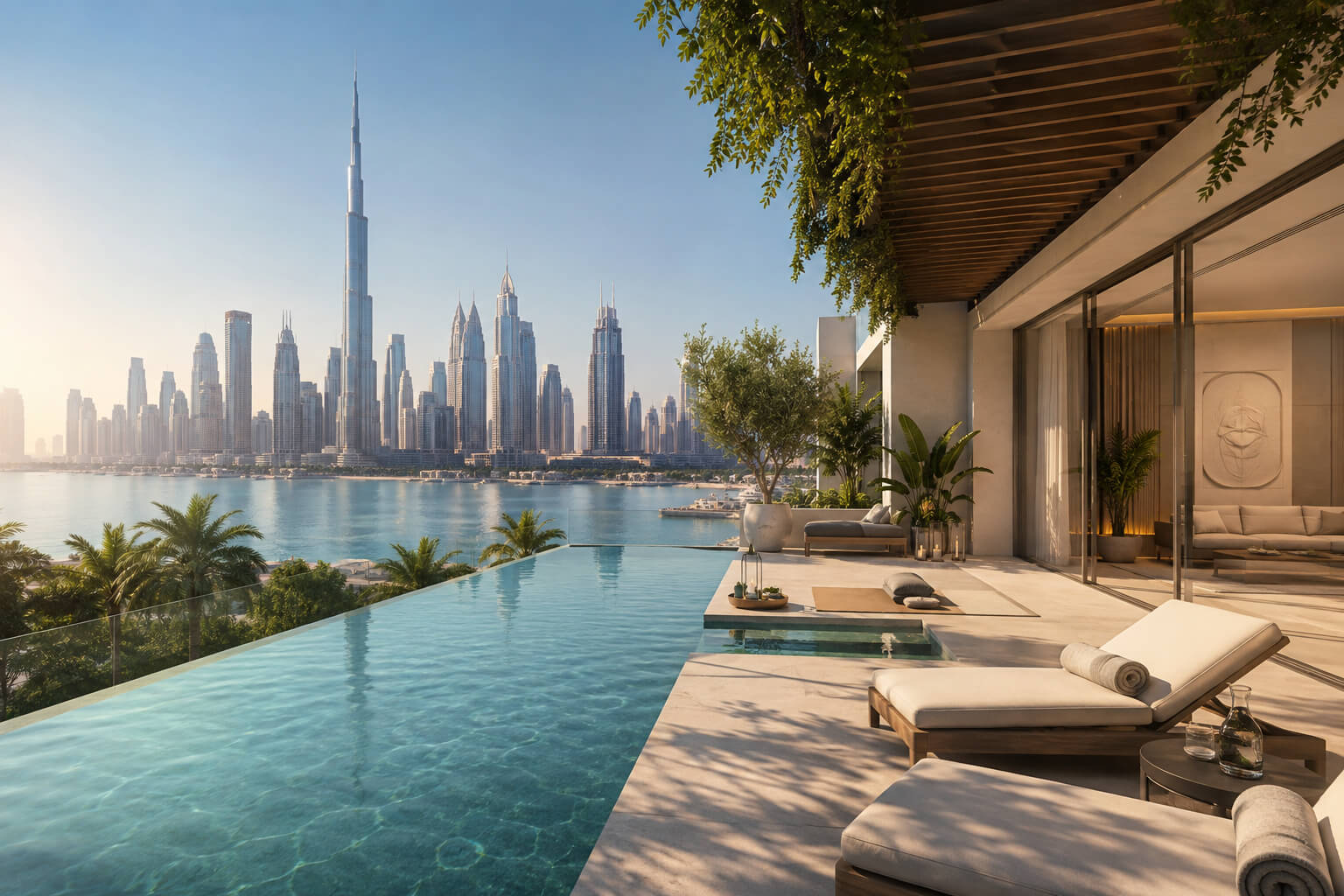
Luxury in Dubai used to be easy to define. Bigger penthouses, famous branded residences, waterfront views and impressive amenities usually topped the list. That checklist is changing.
Health, wellbeing and longevity are becoming major selling points in Dubai’s luxury property market, with developers designing homes that actively support how people sleep, recover, work and live. The latest findings suggest wellness is no longer an optional feature reserved for ultra-exclusive projects. It is quickly becoming the new benchmark for premium residential developments across the emirate.
Buyers Want Homes That Improve Daily Life
Luxury buyers are no longer looking only for prestige. They also want properties that improve everyday living.
Developments now place greater emphasis on cleaner indoor air, advanced water filtration, natural lighting, green surroundings and layouts that encourage movement rather than simply maximising floor space. These design choices reflect growing demand from international investors and high-net-worth residents who see wellbeing as part of long-term property value instead of an added bonus.
That shift has become especially noticeable in Dubai, where developers are competing by offering experiences rather than just square metres.
Wellness Real Estate Has Become Big Business
The numbers help explain why developers are paying attention.
According to Global Wellness Institute data highlighted by industry reports, the UAE’s wellness real estate market expanded to approximately $14.6 billion in 2025, up dramatically from $3.3 billion in 2017. The sector now accounts for more than 12 percent of all construction activity in the country, making the UAE one of the fastest-growing wellness real estate markets globally.
That kind of growth is difficult to ignore. Developers increasingly see wellness as a commercial advantage rather than a niche concept aimed at a small group of buyers.
Dubai Is Moving Beyond Traditional Luxury
Dubai’s premium property market has always embraced innovation, but wellness introduces a different kind of competition.
Instead of focusing purely on iconic architecture or luxury branding, projects are incorporating biophilic design, circadian lighting systems, dedicated recovery spaces, landscaped environments and technologies that support healthier indoor living. The result is a new generation of homes marketed around quality of life as much as exclusivity.
Industry leaders argue that this approach fits naturally with Dubai’s broader ambition to position itself as a future-focused global city where lifestyle, sustainability and innovation intersect.
Investors Are Looking Beyond Immediate Returns
The appeal is not limited to owner-occupiers. Property investors increasingly believe wellness-oriented developments may offer stronger long-term resilience because they align with changing buyer expectations. Homes that promote healthier living can attract a wider pool of affluent residents while supporting rental demand and resale values as lifestyle preferences continue to evolve.
That doesn’t mean every luxury project suddenly becomes a wellness destination. It does mean buyers are asking different questions than they did a few years ago.
Wellness May Soon Be Expected, Not Advertised
Luxury markets evolve by redefining what counts as standard. Private cinemas once felt exclusive. Smart home technology followed a similar path before becoming common. Wellness appears to be heading in the same direction.
As Dubai continues attracting global investors, entrepreneurs and wealthy families, developments that combine luxury with measurable wellbeing features are likely to become increasingly competitive. In many parts of the market, wellness is no longer the headline feature. It is simply what buyers expect.
Sources
- Economy Middle East – Wellness emerges as the new baseline in Dubai luxury real estate market
- Arabian Business – UAE wellness real estate market reaches $14.6bn
- Global Wellness Institute
