

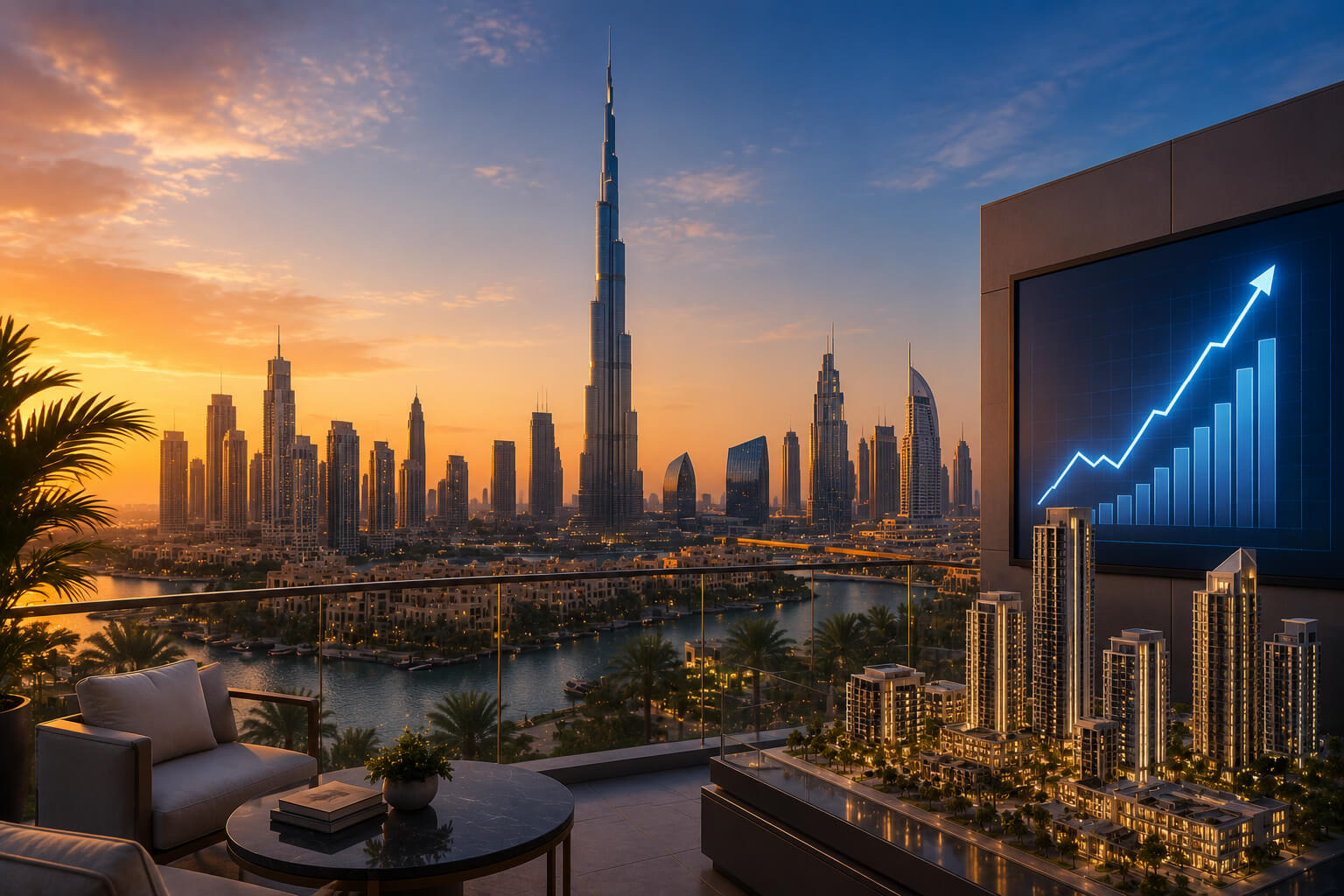
Dubai’s real estate market has not entered 2026 quietly. Not even close.
The emirate opened the year with a sharp rise in property activity, showing that investor appetite is still holding strong even while regional and global conditions remain a little unpredictable. According to Dubai Land Department data cited in the Gulf Business report, property transactions jumped 31% year-on-year in the first quarter of 2026, reaching Dhs252bn in total value.
That number matters because it says something beyond “Dubai property is busy again.” It shows that the market is becoming more structured, more data-led, and less dependent on short bursts of hype.
For investors, business owners, and free zone companies watching Dubai as a place to expand, the message is fairly direct: real estate is still one of the clearest signs of confidence in the emirate’s economy.
Investor Confidence Has Not Disappeared
One of the more interesting points from the report is not just the transaction volume. It is the stability of demand.
Bayut and dubizzle analytics showed that international investor confidence remained largely steady, with no major shift between local and overseas property seekers. That is important because Dubai’s property market has always relied on a broad mix of buyers, not just one country, one investor type, or one short-term trend.
The UK, Germany, and India continue to stand out as major sources of overseas interest. India and Germany were also noted for stronger resilience during early 2026 market volatility.
In simple terms, people are still looking. They are still enquiring. They are still comparing communities, prices, and long-term value. The panic that some expected did not really take over.
A More Careful Buyer Is Entering the Market
Dubai’s 2026 property story is not only about more buyers. It is about better-informed buyers.
The market appears to be moving away from impulse-driven decisions and toward more research-heavy investment behavior. Property seekers are looking at transaction data, service quality, community performance, infrastructure, and future demand before making decisions.
That is healthy. Maybe less flashy, but healthier.
For free zone investors, this shift matters. Companies setting up in Dubai or expanding across the UAE often look at property from two angles: where to live and where to place capital. A more mature market gives them more room to make calculated decisions instead of chasing noise.
Prime Communities Still Pull Attention
Established locations remain strong. Dubai Hills Estate, for example, saw ready-sale apartment view activity rise above baseline levels, according to the report. That suggests continued appetite for communities with stronger infrastructure, lifestyle appeal, and investor familiarity.
This is the part of Dubai real estate that feels almost predictable now. Buyers like areas that already have schools, parks, retail, roads, and a proven residential rhythm. They may still want capital appreciation, yes, but they also want comfort. They want something they understand.
That puts established master communities in a strong position for 2026.
Dubai South and MBR City Stay on the Investor Radar
The future-growth corridors are also worth watching.
Mohammed Bin Rashid City and Dubai South were highlighted in the report as emerging hubs that continued to show recovery in online property view activity. These areas matter because they speak to Dubai’s next phase, not only its current property hotspots.
Dubai South, in particular, is tied closely to logistics, aviation, business growth, and long-term urban expansion. For free zone businesses, that connection is hard to ignore. When infrastructure, commercial activity, and residential demand start moving together, real estate interest usually follows.
MBR City has a different pull. It is more lifestyle-led, more premium, and still evolving. Investors who missed earlier waves in Dubai’s more mature communities are paying closer attention to these expanding districts.
Villas Are Having Their Own Moment
The villa segment continues to attract serious attention, especially from end-users looking for more space and lifestyle-focused communities.
DAMAC Lagoons recorded a sharp rise in view activity, showing how suburban and themed residential developments are still attracting buyers. This is not surprising. Since the pandemic years, the demand for larger homes, outdoor space, and community-style living has not really disappeared.
Dubai buyers are no longer only asking, “Will this unit appreciate?”
Many are also asking, “Can I actually live here?”
That change is good for villa communities, townhouse projects, and family-focused developments across the emirate.
Emaar’s Q1 Numbers Add More Context
Emaar’s strong first-quarter performance adds another layer to the wider market picture.
The developer reported Dhs12.4bn in revenue for Q1 2026, up 23% year-on-year, while EBITDA rose 34% to Dhs7.2bn. Property sales reached around Dhs22.4bn, supported by demand across established communities and new launches.
Its backlog also increased to Dhs163.4bn as of March 31, 2026, giving the company long-term revenue visibility.
For investors, this matters because Emaar is often seen as a bellwether for Dubai’s real estate mood. When its sales, backlog, retail assets, and recurring income businesses remain strong, it usually reflects wider confidence in the city’s property and lifestyle economy.
What This Means for Free Zone Investors
For entrepreneurs, SMEs, and international firms entering Dubai through free zones, the property market is more than a side story. It affects office decisions, staff relocation, executive housing, investor confidence, and long-term planning.
A strong property market usually supports a broader business narrative. People move in. Companies expand. Retail demand increases. Hospitality improves. Infrastructure keeps getting funded. The cycle is not perfect, but in Dubai, real estate and business growth are deeply connected.
The key for investors in 2026 is not to treat the market as one single thing. Dubai Hills is not Dubai South. MBR City is not Downtown. Villas are not off-plan apartments. Commercial real estate is not the same as residential end-user demand.
The opportunity is still there, but the easy-money mindset is not the safest approach.
Dubai Real Estate Looks Strong, But Selectivity Matters
Dubai’s real estate market in 2026 looks resilient, active, and still globally attractive. The numbers are strong. The demand base remains international. Communities across both established and emerging areas are drawing attention.
Still, investors should be selective.
The better question is not whether Dubai property is growing. It clearly is. The smarter question is where that growth is sustainable, which communities have real end-user demand, and which assets match the investor’s actual timeline.
Dubai is no longer just selling a property boom. It is selling stability, infrastructure, business access, and long-term urban confidence.
That is why investors are still watching closely.
