

Dubai’s diamond trade just gained another international link.
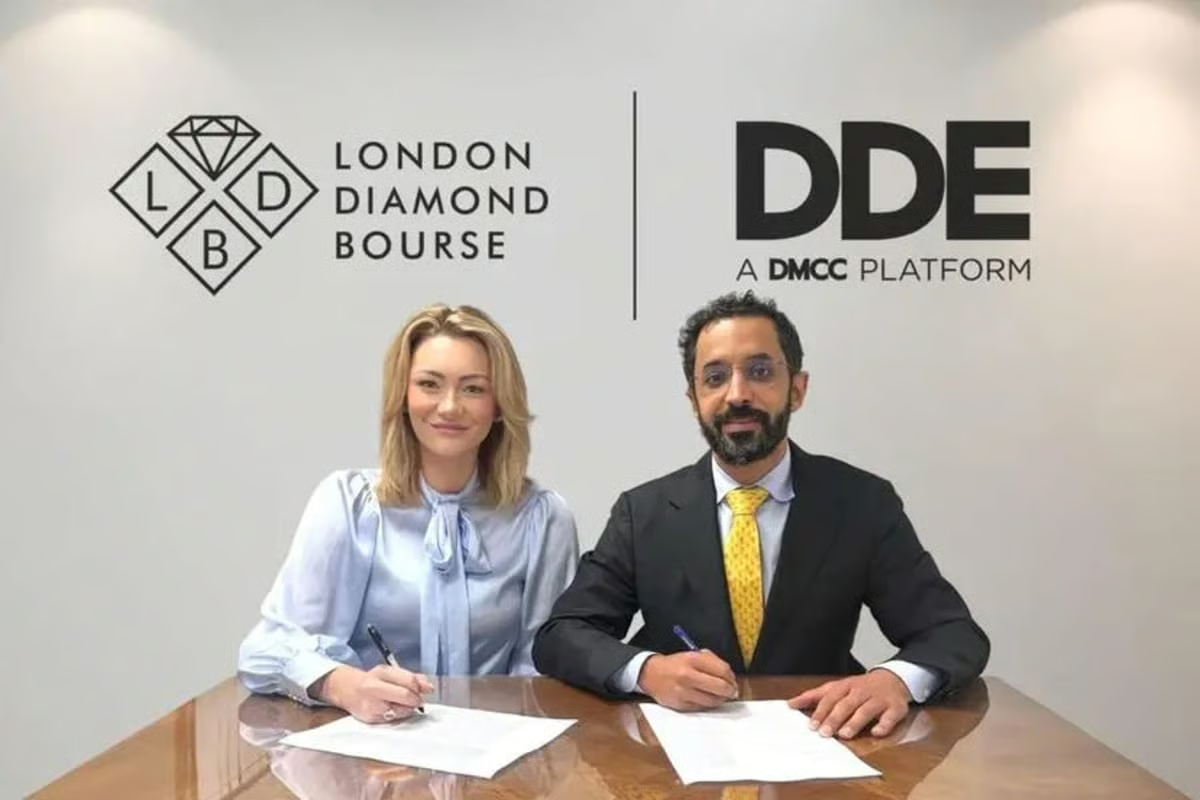
DMCC has signed a new Memorandum of Understanding between the Dubai Diamond Exchange and the London Diamond Bourse, creating a closer bridge between two major diamond trading centres. The deal is designed to expand business opportunities, support responsible trade, and strengthen cooperation across the global diamond and gemstone industry.
For Dubai, this is not a small side agreement. DMCC’s diamond ecosystem already includes more than 1,350 gem enterprises, while the Economy Middle East report placed the number at around 1,380 Dubai firms connected to the deal. That gives the partnership real weight, especially for companies already operating inside Dubai’s fast-growing commodities and free zone ecosystem.
Dubai and London Move Closer in Diamond Trade
The agreement brings together the Dubai Diamond Exchange, known as DDE, and the London Diamond Bourse, known as LDB.
Both are established names in the diamond business. Both also sit inside a wider global network of diamond bourses, where trust, standards, and member relationships still matter a lot. In this industry, deals are not only about price. Reputation matters. Access matters. So does knowing who sits on the other side of the table.
The MoU creates a framework for closer cooperation between the two organisations. It focuses on responsible trade, commercial opportunities, knowledge exchange, and stronger member-to-member links. It will also support wider dialogue on issues affecting the international diamond industry.
That sounds formal, because it is. But the practical meaning is simpler. Dubai-based diamond firms could gain better access to London’s trading network, while London members get a clearer route into Dubai’s expanding diamond marketplace.
Why This Matters for DMCC Firms
DMCC has spent years building Dubai into a serious diamond hub. The Dubai Diamond Exchange is described by DMCC as the largest diamond tender platform in the world and the only bourse in the GCC affiliated with the World Federation of Diamond Bourses.
That matters for companies based in the free zone.
A stronger connection with London can mean more visibility, more buyer-seller access, and potentially more structured cooperation between members. It also gives Dubai’s diamond sector another sign of international recognition at a time when trading centres are competing harder for relevance.
The diamond market is not exactly having a quiet period. Natural diamonds face pressure from lab-grown stones, changing consumer habits, and softer demand in some markets. Dubai’s answer seems to be connectivity. More routes. More partnerships. More reasons for traders to use the emirate as a base.
Ahmed Bin Sulayem and Charlotte Rose Sign the Agreement
The MoU was signed by Ahmed Bin Sulayem, Chairman of the Dubai Diamond Exchange, and Charlotte Rose, President of the London Diamond Bourse. It is also the first formal international partnership established under Rose’s presidency since she took office in June.
Bin Sulayem said the Dubai Diamond Exchange was built on the idea that connecting markets creates opportunity. That line fits the larger Dubai strategy quite neatly. The city rarely tries to win by staying local. It builds corridors.
Rose also described the Dubai Diamond Exchange as a natural partner for London, pointing to shared membership in the World Federation of Diamond Bourses and a common focus on trusted, well-governed trading.
A Free Zone Story, Not Just a Diamond Story
This deal also says something about Dubai’s free zone model.
DMCC is not only offering office space or licences. It is building sector-specific ecosystems, from commodities and precious stones to crypto, tea, coffee, gold, and other trade categories. For diamond firms, the value is not just being in Dubai. It is being inside a network that can connect them with international buyers, bourses, tender facilities, and industry standards.
That is why the London agreement matters beyond one sector. It shows how Dubai free zones continue to use partnerships as a growth tool.
A diamond trader in Dubai wants access. A London member wants reach. DMCC wants to keep Dubai at the centre of global commodity flows. This MoU sits right in the middle of those interests.
Dubai Strengthens Its Position in Global Diamond Trade
Dubai has become one of the main cities in the global diamond trade, helped by its location between producing markets, manufacturing centres, and consumer destinations. The Dubai Diamond Exchange gives that trade a formal home, while DMCC provides the business district around it.
The new deal with the London Diamond Bourse adds another layer.
It does not magically change the diamond market overnight. No agreement does that. But it gives Dubai-based firms another structured channel into one of the world’s long-standing diamond trading centres. For a market built on trust and access, that is important.
And for DMCC, it reinforces the message it has been pushing for years: Dubai is not just participating in global trade. It wants to organize more of it.
