
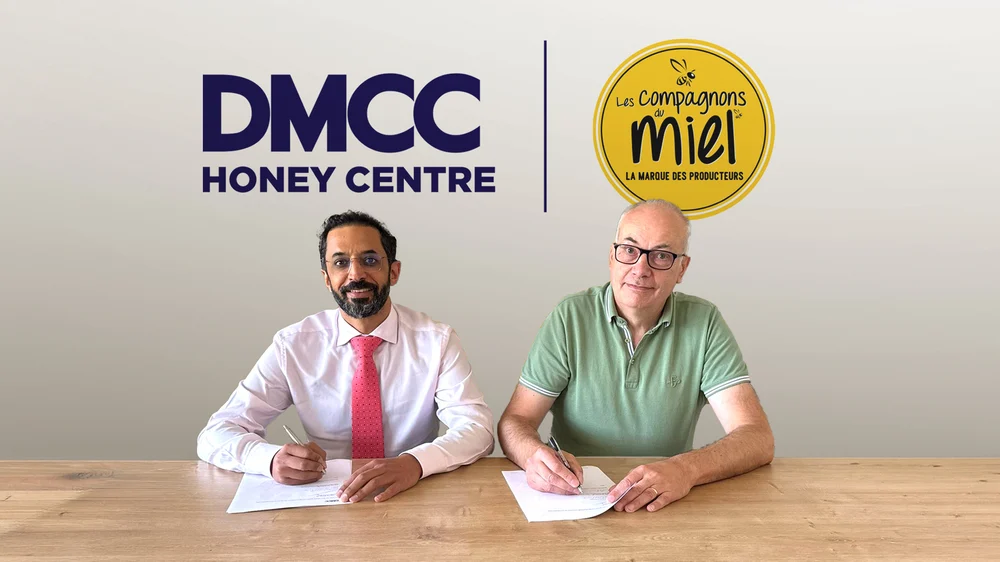
DMCC has signed a strategic Memorandum of Understanding with Naturalim France Miel, one of France’s leading honey production and processing companies, to support the next stage of development for the DMCC Honey Centre. The agreement was announced on July 2, 2026, and it points to a very specific ambition: make Dubai a stronger regional hub for honey trade, quality control, innovation, and exports. Not exactly the usual free zone headline, but that is what makes it interesting. This is not only about selling honey. It is about building the systems around it.
Why This Partnership Matters
The partnership brings together DMCC’s plan to build a more complete honey ecosystem with Naturalim France Miel’s technical experience in honey production, testing, processing, and market development. That combination matters because honey trade depends heavily on trust. Origin, quality, traceability, packaging, and testing all shape whether a product can compete in serious export markets. For Emirati honey producers, the deal could open the door to better standards and wider commercial access.
More Than a Trading Platform
DMCC is treating the Honey Centre as more than a marketplace. The partnership is expected to explore stronger quality systems, improved traceability, better local production capabilities, and new export opportunities for Emirati honey. That is the bigger play here. Dubai already has the trading infrastructure. What this agreement tries to add is technical depth, especially in areas where specialist knowledge makes a difference.
Support for the UAE Beekeeping Sector
A major part of the agreement focuses on transferring international apicultural best practices into the UAE market. That includes knowledge sharing around hive and colony management, harvesting techniques, packaging protocols, and the selection of melliferous plant species. It sounds technical, because it is. But for local producers, these details matter. Better practices at the farm and hive level can improve consistency, strengthen product quality, and help Emirati honey stand up better in competitive regional and international markets.
Honey Testing and Traceability Move Into Focus
One of the more practical pieces of the partnership is the possible establishment of a dedicated honey testing laboratory within the DMCC Honey Centre. If developed, the lab would support advanced quality assurance, analytical testing, and traceability standards. Naturalim France Miel is expected to contribute technical knowledge transfer, laboratory design support, personnel training, and audit practices. That is a lot of behind-the-scenes work, but it is exactly the kind of infrastructure that can make a commodity ecosystem more credible.
Packaging and Processing Could Add More Value
The collaboration also looks at advanced packaging capabilities and stronger value-added processing. Naturalim France Miel will share expertise in industrial process engineering to help optimise honey packaging operations. This is where the Honey Centre can move beyond basic trade facilitation. Better packaging, processing, and quality assurance can help producers sell into higher-value segments rather than staying locked into raw or low-margin supply chains.
Dubai’s Role in Specialised Commodity Trade
Ahmed Bin Sulayem, Executive Chairman and Chief Executive Officer of DMCC, said the future of commodities is not only about trading them, but also about building specialist ecosystems that support quality, innovation, provenance, and international market access. His point fits DMCC’s broader model: build sector-focused infrastructure, bring in commercial players, add services around them, and turn Dubai into a hub for more specialised trade flows. Honey may be a niche compared with gold, diamonds, or energy, but niche markets can still carry serious value when the infrastructure is built properly.
Opening Routes for Emirati Honey
The agreement will also explore commercial access for honey producers across regional and international markets. This includes distribution opportunities across the UAE and Gulf region, complementary sourcing of premium honey varieties such as Sidr and Samar, and future export possibilities for locally produced Emirati honey into European markets. Europe is not an easy market to enter. Quality, traceability, and regulatory requirements matter. That is why the partnership with a French honey specialist could be useful.
Fighting Fraud in the Honey Market
Naturalim France Miel’s General Manager, Xavier Turlin, also highlighted quality, traceability, and technical excellence across the honey value chain. One important detail in the announcement was the reference to strengthening market integrity and supporting efforts to combat fraud. Honey fraud is a real issue globally, especially when products are diluted, mislabelled, or sold with unclear origin claims. For Dubai’s Honey Centre, building stronger testing and traceability systems could help position the emirate as a more trusted point in the regional honey trade.
A Small Commodity With a Bigger Free Zone Story
At first glance, this may look like a narrow agriculture or food trade announcement. It is not. For Emirates Free Zone News, the bigger story is how Dubai’s free zone ecosystem keeps moving into specialised verticals. DMCC is not only offering licences and office space. It is trying to create industry clusters with technical services, standards, trade access, and export pathways attached.
The DMCC Honey Centre partnership with Naturalim France Miel shows that Dubai’s commodity strategy is becoming more granular. Not every hub has to be massive to matter. Sometimes it is honey, testing labs, packaging lines, beekeeping knowledge, and export credibility. Less flashy, maybe. But potentially very useful for the UAE’s food trade and local producer ecosystem.
