
Dubai is adding another piece to its industrial growth strategy.
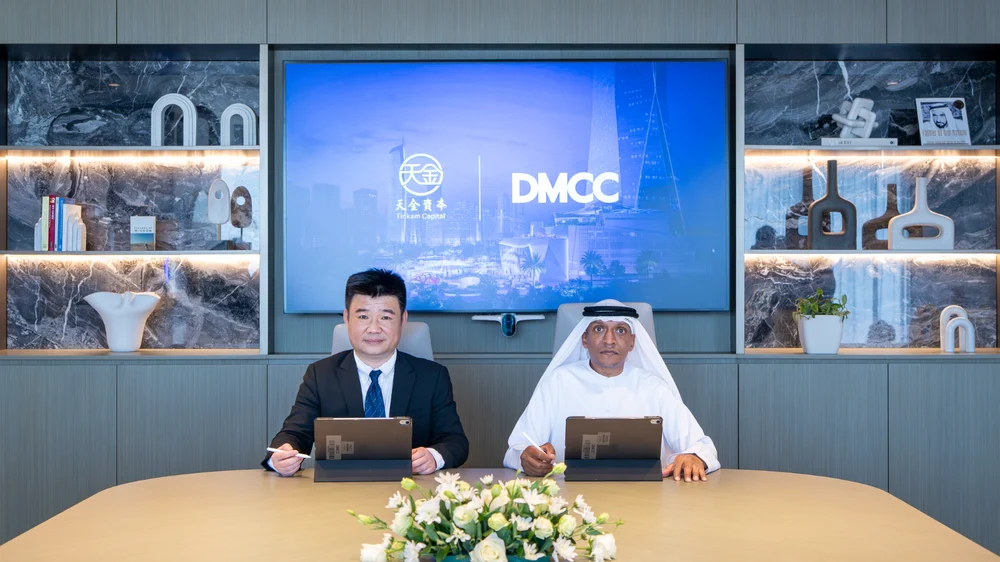
DMCC has signed a strategic Memorandum of Understanding (MoU) with Hong Kong Tinkam Capital (HKTC) to study the development of a power and energy equipment manufacturing park in Dubai. The proposed project aims to attract Chinese manufacturers, strengthen industrial cooperation, and reinforce Dubai’s position as a regional production and investment hub for advanced industries.
A Manufacturing Project That Goes Beyond Industrial Land
This agreement is not simply about allocating space for factories. Both organizations want to build an ecosystem that brings together manufacturers, suppliers, technology companies, and investors across the power and energy value chain.
The proposed manufacturing park would target industries including advanced manufacturing, green technology, and energy equipment production. If developed, it could encourage Chinese companies to establish regional operations in Dubai while serving markets across the Middle East, Africa, and beyond. The partnership also includes cooperation on investment opportunities, industry expertise, and business development initiatives.
China Continues to Expand Its Business Presence in DMCC
The partnership reflects a much broader trend. China has become one of DMCC’s most important international markets, with more than 1,000 Chinese companies already operating within the free zone. Registrations from Chinese businesses have also recorded double-digit growth over the past five years, making China one of the strongest sources of foreign business expansion for DMCC.
That existing community gives new investors a softer landing. Companies entering Dubai gain access to an established business network rather than starting from scratch, which can reduce barriers when expanding into regional markets.
Dubai Wants to Become a Bigger Manufacturing Hub
Dubai has traditionally been recognized for trade, logistics, and financial services. Manufacturing is becoming a larger part of the conversation.
The planned energy equipment park aligns with wider efforts to diversify the economy by attracting industries that produce higher-value goods instead of focusing solely on imports and distribution. Advanced manufacturing, renewable energy technologies, and industrial innovation are receiving increasing attention as the UAE pushes for long-term economic diversification.
Rather than replacing Dubai’s role as a global trading center, projects like this expand it. Goods can be manufactured, distributed, financed, and exported from the same business ecosystem.
Strengthening the UAE-China Investment Corridor
The agreement was signed during a high-level Chinese business delegation visit to DMCC, attended by representatives from advanced manufacturing, green technology, power, and energy industries.
For Hong Kong Tinkam Capital, the collaboration creates opportunities for Chinese manufacturers looking to establish operations in the UAE. For DMCC, it represents another step toward strengthening commercial ties with China while attracting new industrial investment into Dubai.
The partnership also supports knowledge exchange, enterprise engagement, and future industrial projects designed to contribute to Dubai’s growing manufacturing and energy ecosystem.
What Happens Next?
The memorandum does not immediately launch construction of the manufacturing park. Instead, it creates the framework for both organizations to identify investment opportunities, assess project feasibility, engage prospective companies, and develop future collaborations.
If those discussions translate into large-scale investment, the project could become another example of how Dubai is evolving from a global trading gateway into a destination for advanced industrial production, particularly in sectors linked to energy transition and next-generation manufacturing.
Sources
- Economy Middle East – DMCC, Hong Kong Tinkam Capital partner to explore building power and energy equipment manufacturing park in Dubai
- DMCC Official Announcement
