

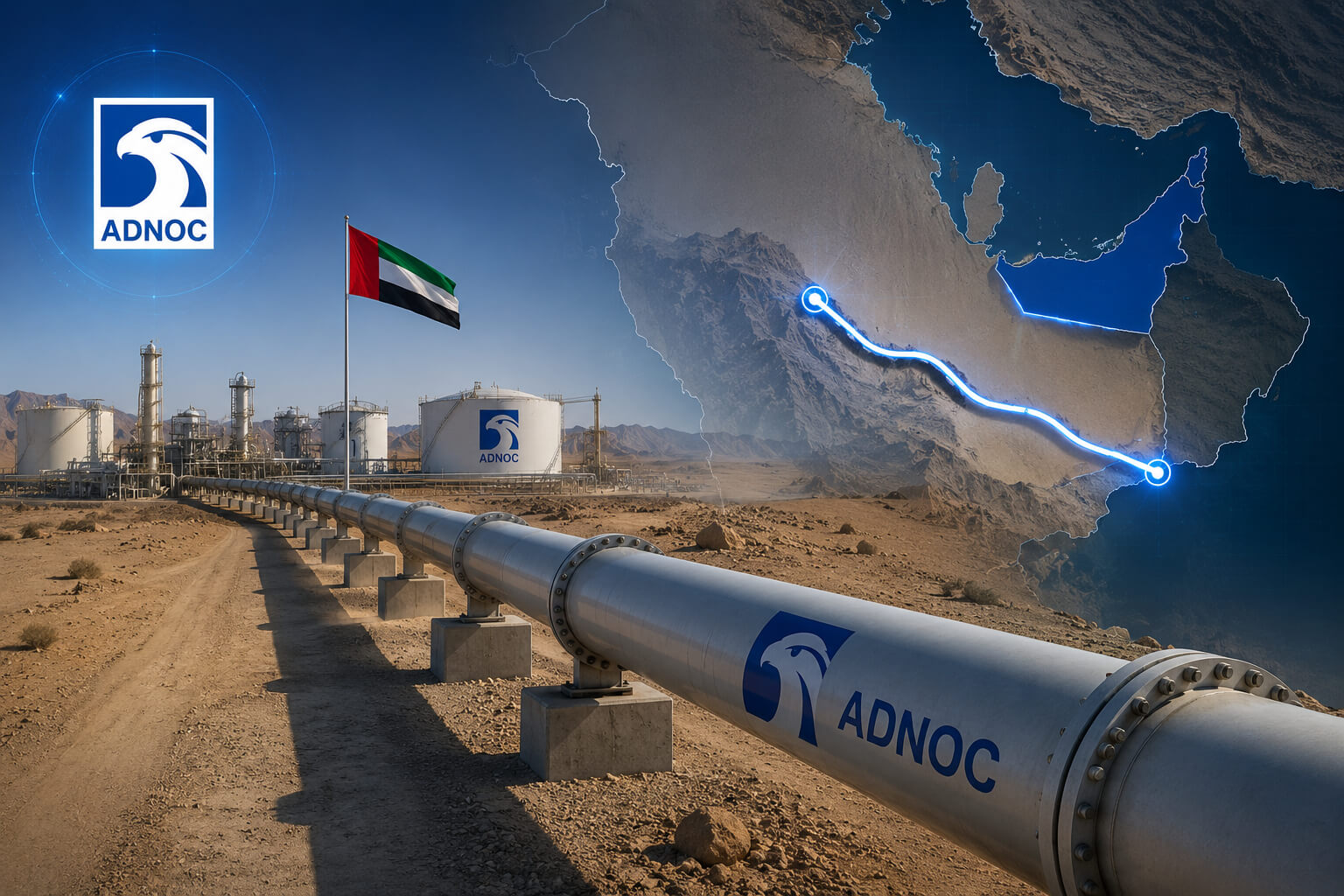
The Abu Dhabi National Oil Company, ADNOC, is planning a new pipeline in the UAE. This pipeline would allow exports of refined fuels to bypass the Strait of Hormuz, one of the world’s most important and sensitive energy shipping routes.
The proposed project would facilitate the export of gasoline, diesel and jet fuel through alternative routes. This supports the UAE’s objective to guarantee reliable energy supplies even in times of regional disruption. Additionally, the move underscores the UAE’s increasing emphasis on supply chain resilience, infrastructure investment and long-term trade security for the country’s energy, logistics and free zone sectors.
Why the Strait of Hormuz Matters
The Strait of Hormuz is a narrow waterway between the Arabian Gulf and the Gulf of Oman. It is a critical route for global oil and gas shipments. In fact, a major share of the world’s energy trade normally passes through it.
Any disruption in the strait can affect shipping schedules, energy prices, insurance costs and global supply chains. For Gulf producers, building infrastructure that reduces dependence on this route has become increasingly important.
The UAE already benefits from its strategic access to Fujairah, which sits outside the Strait of Hormuz on the Gulf of Oman. This location gives the country an important advantage. It allows some oil exports to move without passing through the strait.
New Pipeline Could Carry Multiple Fuel Products
The planned ADNOC UAE pipeline would reportedly be designed for refined oil products, including gasoline, diesel and aviation fuel. Unlike a crude-only pipeline, a multi-fuel pipeline can move different types of petroleum products at different times according to demand and export needs.
This would allow ADNOC more flexibility to serve global customers. Moreover, it could assist in reducing the risk of export delays during regional tensions.
For businesses operating in UAE free zones, especially those linked to energy trading, shipping, logistics, storage and industrial services, the project could create wider opportunities across the energy supply chain.
Fujairah’s Role in UAE Energy Security
Fujairah has become a key part of the UAE’s energy infrastructure. Its location outside the Strait of Hormuz makes it one of the country’s most valuable export and storage hubs.
The UAE already has a crude oil pipeline connecting Abu Dhabi’s onshore production areas to Fujairah. ADNOC is also working on additional pipeline capacity. This expansion is expected to increase the country’s ability to export crude through Fujairah.
By expanding pipeline routes and export options, the UAE is reinforcing Fujairah’s role as a major energy and logistics centre for regional and international markets.
What This Means for Trade and Free Zones in the UAE
The new ADNOC pipeline plan is not just important for the oil and gas sector. It also reflects a wider UAE strategy to protect trade flows and bolster infrastructure that underpins global commerce.
UAE free zones are vital hubs for logistics, energy services, maritime trade, warehousing, manufacturing and re-export activity. A stronger pipeline network could support these sectors by enhancing energy reliability and reducing exposure to maritime chokepoints.
Companies in free zones next to ports, warehouses and industrial parks could see more demand for support services, maintenance, engineering, compliance, customs, transportation and energy-related trading activity.
UAE continues to invest in strategic infrastructure
For years, the UAE has been developing infrastructure that supports energy security and economic diversification. Pipeline expansion, port development and investment in logistics corridors are all part of this wider strategy.
The planned ADNOC UAE pipeline comes at a time when global markets are paying closer attention to energy supply risks. The UAE aims to improve international market access by expanding export routes away from the Strait of Hormuz. In addition, it seeks to mitigate the impact of regional instability.
Outlook
ADNOC’s plan for a new UAE pipeline to bypass the Strait of Hormuz marks another step in the country’s effort. This effort aims to secure energy exports and support long-term trade resilience.
If completed, the project could improve the UAE’s ability to move refined fuels such as gasoline, diesel and jet fuel through safer and more flexible routes. It would also strengthen Fujairah’s position as a strategic energy hub. Furthermore, the pipeline could create new opportunities for logistics, maritime and free zone businesses across the country.
For investors and companies watching the UAE energy sector, the pipeline plan is a clear signal. It shows that infrastructure security remains a national priority.
