

Abu Dhabi’s business scene is getting busier. Not in a vague “things are improving” way, but in the hard-number sense.
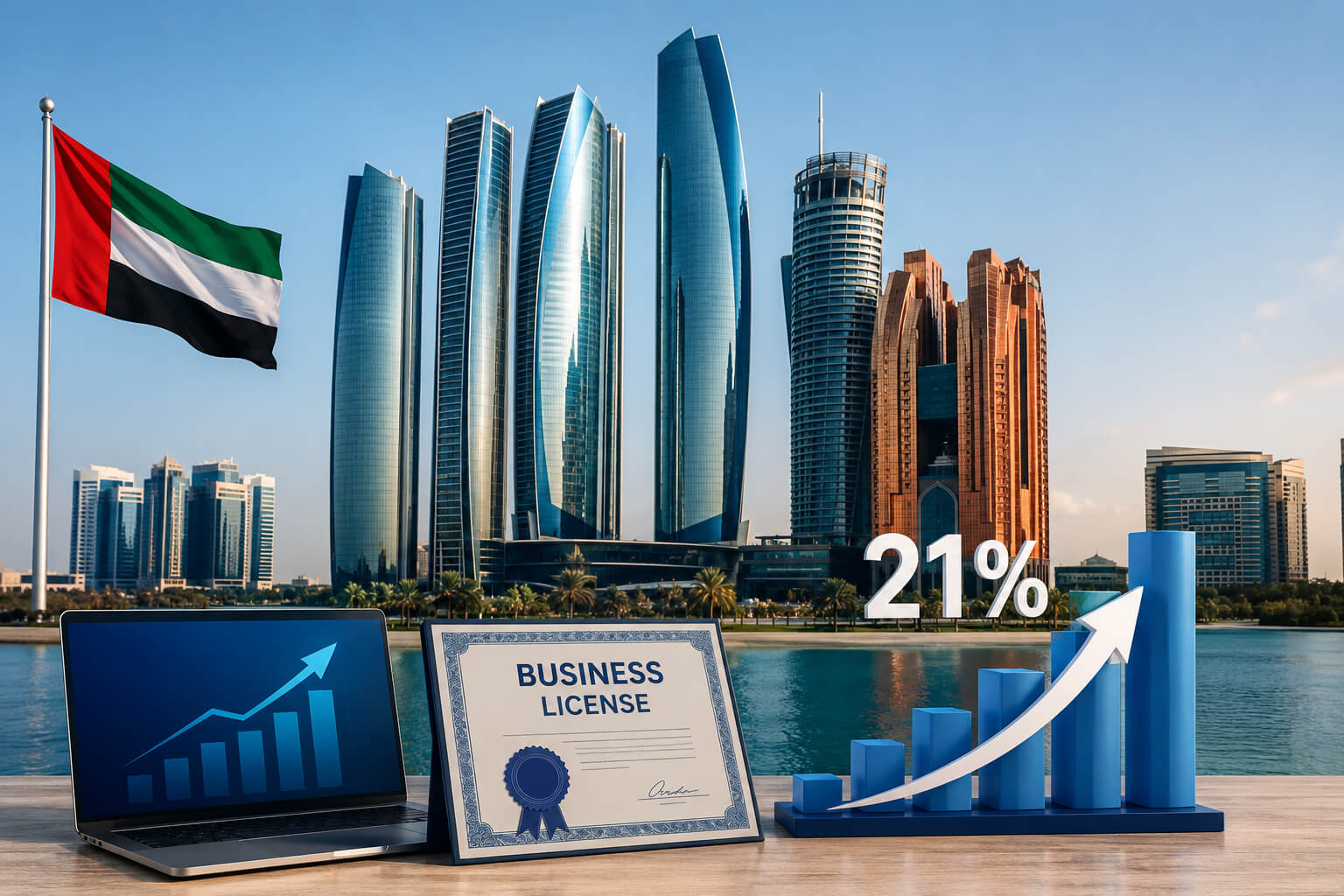
The Abu Dhabi Registration Authority reported a 21 percent increase in new economic licences issued during the first quarter of 2026, compared with the same period last year. That is a strong start for the emirate, especially at a time when businesses across the region are watching costs, regulation, talent movement, and market access very closely.
The bigger surprise sits inside the category breakdown.
Professional licences rose by 193 percent. Commercial licences increased by 20 percent. Agriculture, fisheries, and livestock-related licences also moved up by 5 percent. Not every number carries the same weight, of course, but that professional licence jump is hard to ignore.
Professional Licences Take the Lead
A 193 percent rise in professional licences says something about where business activity is shifting.
This is not only about shops, trading companies, or large corporate setups. It points to more service-led businesses entering the market. Consultants. Specialists. Freelancers. Small professional firms. People selling knowledge, technical skill, advisory work, digital services, and other expertise-based services.
That matters for Abu Dhabi’s wider business ecosystem because professional activity often grows around demand from bigger companies. When more firms enter the market, they need accountants, designers, legal consultants, IT providers, marketing support, engineers, trainers, and business advisers.
So the licence number is not just a licensing statistic. It hints at a deeper layer of activity building under the main economy.
Commercial Licences Also Keep Moving
Commercial licences grew by 20 percent in Q1 2026.
That is more expected, but still important. Commercial licences usually reflect trading and business activity tied to goods, services, retail, distribution, and general market operations. A rise in this category suggests that demand for company formation in Abu Dhabi is still active, not cooling off.
For investors looking at the UAE, this kind of growth supports Abu Dhabi’s position as more than a government and energy hub. The emirate has been working to strengthen private sector activity, industrial growth, entrepreneurship, and investment flows. These numbers fit that direction.
Al Ain Records the Strongest Regional Growth
Growth was not limited to Abu Dhabi city.
Al Ain recorded the strongest increase in new economic licences, rising by 58 percent. Al Dhafra followed with 28 percent growth, while Abu Dhabi city saw an 18 percent rise.
That spread is worth noting. It shows that business activity is not sitting in one urban centre only. Al Ain and Al Dhafra are also pulling more business registrations, which could support wider regional development across the emirate.
For free zone investors and mainland businesses, this may also signal more opportunity outside the most obvious commercial zones. Sometimes the next growth area does not look flashy at first. It just starts showing up in licensing data.
Active Licences Rise 12 Percent
The number of active licences in Abu Dhabi also increased by 12 percent during the first quarter of 2026 compared with Q1 2025.
That is an important detail because new licences alone do not tell the full story. A rise in active licences suggests more businesses are staying operational, renewing, or continuing to trade in the market.
Abu Dhabi officials linked the growth to the emirate’s business environment, investment appeal, and regulatory framework. The message is clear enough: the emirate wants to be seen as a place where companies can start, operate, and scale with less friction.
Industrial Activity Adds Another Signal
Industrial licences moving into the production phase also increased by 3 percent during Q1 2026, with 34 new industrial facilities entering full operations during the first three months of the year.
That part may not grab attention like the 193 percent professional licence surge, but it matters.
Industrial facilities entering production can support local supply chains, manufacturing capacity, and the goals of the Abu Dhabi Industrial Strategy. It also shows that the growth story is not only about paperwork or business registrations. Some companies are moving into actual operations.
Freelance Licences Surge 261 Percent
Another standout figure came from freelance licences, which surged by 261 percent in Q1 2026.
This fits the wider shift happening across the UAE. More people are choosing independent work, flexible business structures, and specialist service models. Abu Dhabi appears to be benefiting from that shift.
Tajer Abu Dhabi licences increased by 17 percent, while Mobdea licences grew by 15 percent. Promotional offers rose by 2 percent, and advertisements increased by 26 percent, showing more visible commercial activity in the market.
There is a pattern here. More licences. More freelancers. More promotions. More ads. That usually means companies are not only registering. They are trying to sell, reach customers, and compete.
What This Means for Abu Dhabi’s Business Environment
For entrepreneurs, investors, and companies watching the UAE market, Abu Dhabi’s Q1 numbers send a fairly direct message.
The emirate is still attracting business formation. Professional services are growing fast. Freelance activity is rising sharply. Commercial licences are climbing. Industrial activity is also moving forward, even if at a slower pace.
That combination gives Abu Dhabi a broader business profile. Not only corporate headquarters. Not only oil and government-linked activity. More small firms, service providers, independent professionals, traders, and industrial operators are entering the mix.
It is still early in the year, but Q1 2026 gave Abu Dhabi a strong opening.
Sources:
- Abu Dhabi Media Office: Abu Dhabi Registration Authority records 21% increase in new economic licences issued across the emirate in Q1 2026.
- Emirates News Agency: New economic licences in Abu Dhabi increase 21% in Q1 2026.
- Economy Middle East: Abu Dhabi business activity accelerates with 21 percent rise in new economic licenses in Q1 2026.
