
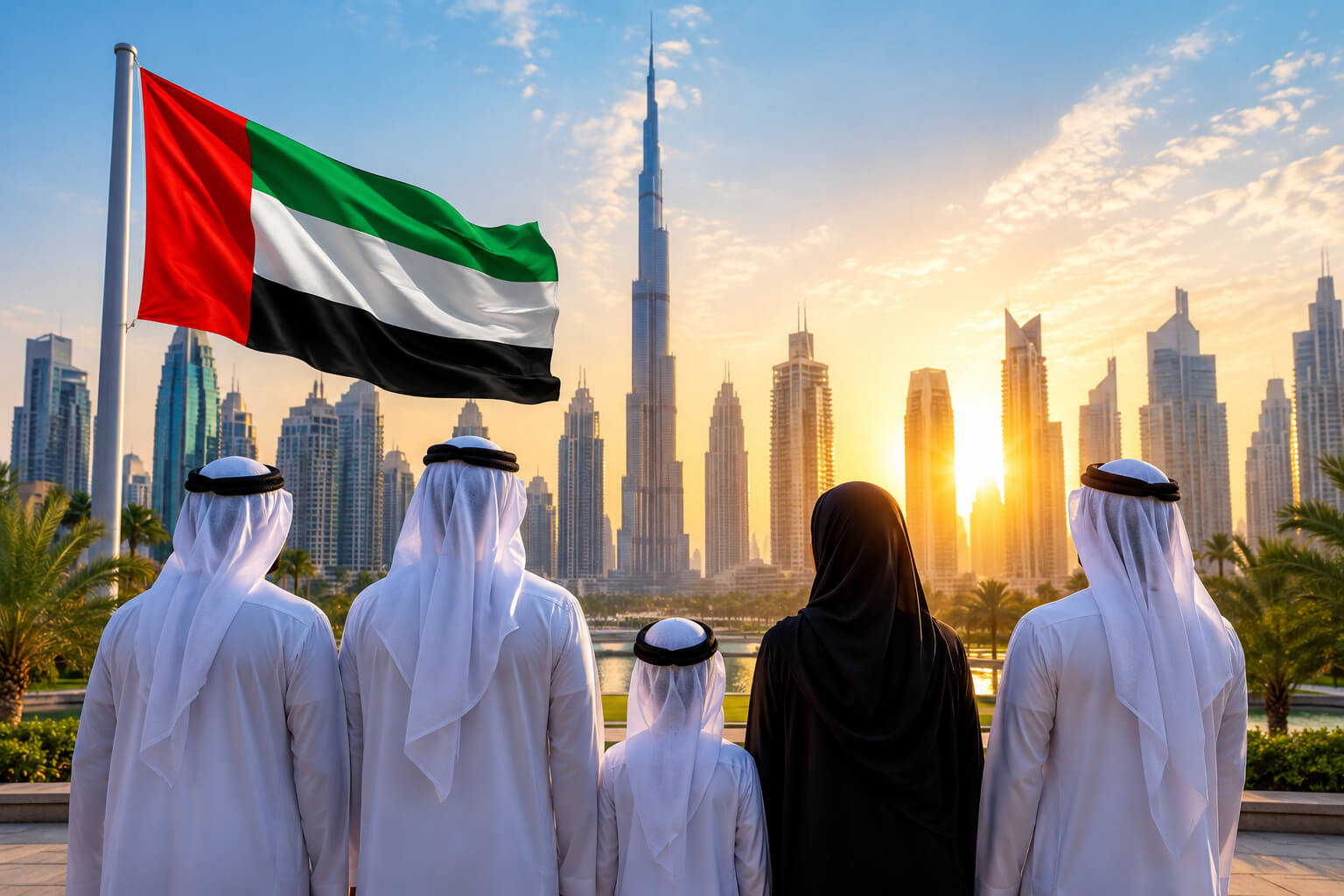
The UAE’s economic story did not begin with free zones, skyscrapers or global investment rankings. On UAE Union Pledge Day, economic growth is celebrated as a testament to the country’s ambitious vision.
It began with an agreement.
As the country marked Union Pledge Day, Minister of Economy and Tourism Abdulla bin Touq Al Marri said the values behind the UAE’s formation continue to influence its economic direction, sustainable development plans and growing position in international markets.
That connection between national unity and economic policy may sound ceremonial. It is not. The UAE’s federal structure has allowed the seven emirates to develop their own commercial strengths while still moving under a broader national strategy.
Free zones are part of that story. So are tourism, foreign trade, entrepreneurship and the steady push into technology-driven industries.
Union Pledge Day Remembers the Decision That Came Before the UAE
Union Pledge Day takes place on July 18 each year. It commemorates the signing of the Declaration of the Union and the UAE Constitution by the Founding Fathers in 1971.
The moment came before the UAE’s formal establishment on December 2, but it gave the federation its political and constitutional foundation.
President His Highness Sheikh Mohamed bin Zayed Al Nahyan approved Union Pledge Day as a national occasion to honour the vision of the late Sheikh Zayed bin Sultan Al Nahyan and the other Founding Rulers.
The occasion also asks the country to look forward, not simply backward. Loyalty, national cohesion and shared responsibility remain central themes, but they now sit beside goals involving economic diversification, global trade, technology and sustainability.
Abdulla Bin Touq Connects Unity With Economic Competitiveness
Bin Touq described Union Pledge Day as a reminder of how unity transformed the ambitions of the Founding Fathers into a prosperous and globally competitive country.
The economic meaning is fairly direct.
Individual emirates compete for investment, businesses and talent, yet they also benefit from operating inside one national market with common federal institutions and increasingly connected economic policies.
That balance has helped the UAE build specialised commercial centres across the country. Dubai developed major finance, trade and logistics clusters. Abu Dhabi expanded into energy, investment and advanced technology. Sharjah strengthened manufacturing, education and publishing. Other emirates have built positions in tourism, industry, ports and emerging business sectors.
The models differ. The wider direction does not.
Free Zones Turn the UAE’s Federal Vision Into Business Infrastructure
For international companies, the UAE’s economic strategy becomes visible through its free zones.
These jurisdictions offer businesses access to sector-specific ecosystems, simplified company formation, international ownership structures and links to regional markets. Some focus on finance. Others concentrate on logistics, media, technology, manufacturing, healthcare or professional services.
Their growth reflects the same principle highlighted during Union Pledge Day: different parts of the country can develop their own strengths while contributing to a larger national economy.
This matters because investors rarely choose the UAE for one reason alone. They may enter through a free zone, recruit international talent, use local ports, serve customers across the Gulf and later expand into the mainland market.
It is an interconnected setup. That did not happen by accident.
The UAE Is Trying to Build Growth That Survives Global Disruption
The phrase “sustainable growth” often gets used loosely. In the UAE’s case, it increasingly refers to an economy that can keep functioning when oil prices shift, supply chains tighten or global politics become more difficult.
The country has expanded its focus on non-oil trade, tourism, financial services, entrepreneurship, artificial intelligence, clean energy and advanced manufacturing.
Recent economic policy has also placed more attention on flexible legislation, cooperation between federal and local authorities and stronger support for small and medium-sized enterprises.
The Ministry of Economy and Tourism has said these policies helped strengthen the UAE’s business environment and attract companies from around the world. The ministry also cited the country’s high positions in international indicators for ease of doing business, future growth opportunities and economic stability.
That is where the Union Pledge Day message becomes more than a national reflection. Coordination between government bodies affects licensing, investment rules, commercial data, startup support and how quickly new industries can develop.
Businesses feel the result.
Global Competitiveness Is Becoming a Bigger Part of the National Story
The UAE ranked fifth globally in the 2026 World Competitiveness Report and remained the regional leader for the tenth consecutive year, according to figures reported during Union Pledge Day coverage.
It also ranked first in economic performance, led 21 global indicators and placed within the top five across 67 indicators.
Those rankings are useful, although rankings alone do not build an economy.
The harder work happens through legislation, infrastructure, trade agreements, digital government services and investment platforms. It also happens through the competition between economic zones and emirates, which keeps pressure on authorities to improve services rather than simply rely on the UAE’s geographic position.
That competitive tension is part of the system.
Non-Oil Trade Shows How Far the Economic Model Has Moved
The UAE’s non-oil foreign trade exceeded AED3.8 trillion in 2025, rising by nearly 27 percent from the previous year. Non-oil exports passed AED813 billion, representing growth of 45.5 percent.
These numbers point to a country that wants to operate as a producer, exporter and global business platform—not only as a market for imported goods.
Free zones support that ambition by helping companies connect production facilities, warehouses, ports, airports and professional services under one commercial environment.
The next stage will be more complicated. The UAE must continue attracting investment while dealing with competition from Saudi Arabia, Qatar and other rapidly developing business markets. Companies now compare incentives, costs, access to talent and long-term regulatory stability across the region.
The UAE can no longer rely on being the obvious choice.
Union Pledge Day Carries a Business Message Too
Union Pledge Day is fundamentally about the country’s formation and the people who made it possible.
Still, there is an economic message inside it.
The UAE built much of its commercial position by allowing different emirates, institutions and business centres to grow without losing sight of a shared national direction. That structure has supported free zones, international trade and a private sector that operates across increasingly diverse industries.
Bin Touq’s remarks suggest the government sees those founding values as practical tools for the future.
Unity, in this context, is not just about national identity. It is also about keeping policy, infrastructure and economic ambition moving in roughly the same direction.
That becomes harder as the economy grows.
It also becomes more important.
Sources
- Economy Middle East: UAE Economy and Tourism Minister says Union Pledge Day inspires country’s sustainable growth, global competitiveness
- UAE Ministry of Economy and Tourism: Economic Integration Committee discusses mechanisms to enhance cooperation
- Gulf Today / WAM: UAE marks Union Pledge Day, celebrating 55 years of achievement
