


The UAE’s relationship with Syria is entering a more active phase, with trade rising sharply and government cooperation moving beyond diplomatic discussions. The two countries are now working across areas such as institutional development, investment, digital transformation and private-sector engagement.
Non-oil trade between the UAE and Syria reached approximately $1.4 billion in 2025, representing a 132.4% increase year on year. That surge has made the commercial relationship increasingly significant, particularly as UAE companies begin exploring opportunities linked to infrastructure, logistics, energy, technology and reconstruction.
For companies operating from UAE free zones, the shift is worth watching. Stronger trade flows between the two markets could create fresh opportunities for exporters, re-exporters, logistics companies, industrial businesses and service providers looking for new regional growth.
UAE Shares Government Modernization Experience With Syria
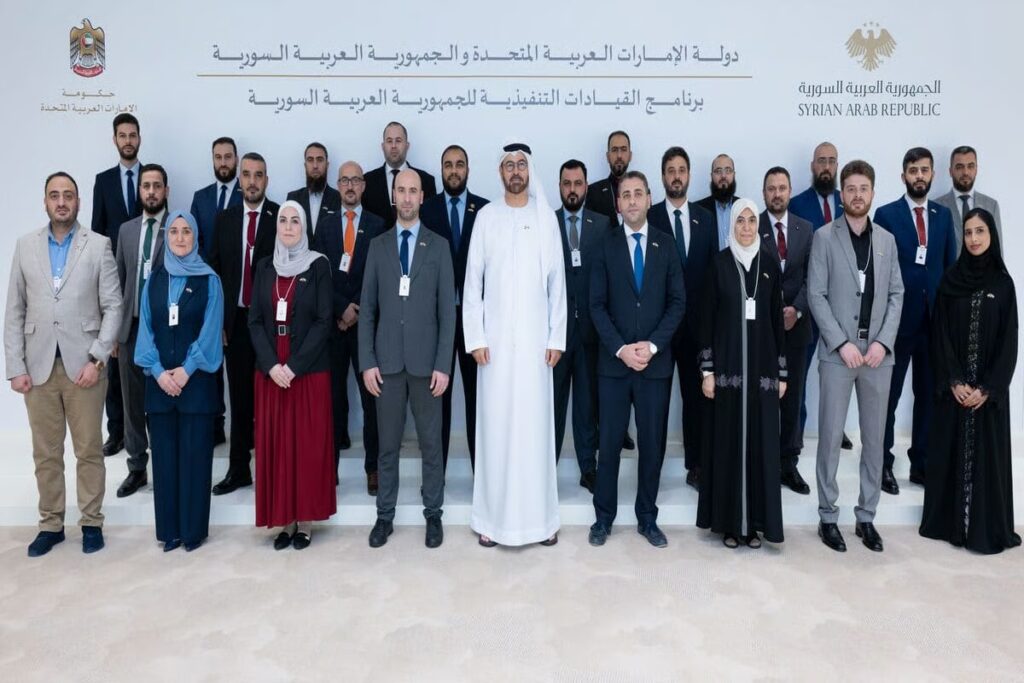
The UAE has expanded its cooperation with Syria by sharing its experience in government modernization and public-sector development. Syrian officials and executives have taken part in programmes organised through the UAE Government Experience Exchange Office, gaining direct exposure to how UAE government entities approach digital services, policy development and institutional reform.
The programme covered areas such as artificial intelligence, legislation, human resources, communications, strategy, data and digital transformation. Participants also examined how the UAE has approached reducing bureaucracy and simplifying government procedures through its Zero Bureaucracy initiative.
The cooperation reflects a wider UAE strategy of exporting government expertise alongside economic and commercial partnerships. For Syria, the programme offers practical exposure to public-sector systems that could support future institutional development and administrative reform.
Why the UAE Government Model Matters
The UAE has invested heavily in digital government over the past decade, turning many services into online or app-based processes while gradually introducing artificial intelligence into government operations. That experience makes the country an increasingly important reference point for governments looking to modernize services and improve efficiency.
Federal entities in the UAE completed more than 308 million digital transactions in 2025 across more than 1,600 digital services. Hundreds of digital transformation projects were also delivered, while customer satisfaction with priority government services remained high.
The UAE has also moved deeper into AI-powered government, including new systems designed to support policy analysis, legislation and decision-making. For Syria, this means the expertise being shared is not limited to basic digitization. It involves a broader model that combines technology, data, administrative reform and institutional planning.
UAE-Syria Non-Oil Trade Reaches $1.4 Billion
Trade between the UAE and Syria has expanded at a remarkable pace. Non-oil trade reached around $1.4 billion in 2025, up 132.4% compared with the previous year, reflecting a sharp increase in commercial activity between the two countries.
The scale of the growth suggests that businesses are already responding to improving economic links rather than waiting for future agreements. The rise also comes as the UAE continues to strengthen its role as a regional trade hub linking companies with markets across the Middle East, Africa and Asia.
For UAE businesses, Syria is becoming a market that deserves closer attention. While challenges remain, the increase in trade shows that commercial flows are already moving in a clear upward direction.
UAE Companies Explore Opportunities in Syria
UAE companies are also beginning to assess opportunities directly inside Syria. During a business and government delegation visit to Damascus, UAE representatives met with Syrian officials to discuss cooperation across investment, transport, agriculture, energy, technology and communications.
The delegation included more than 140 representatives from government and the private sector, giving the visit a strong commercial focus. UAE companies used the opportunity to examine potential areas for investment and longer-term business partnerships.
The first UAE-Syria Business Forum also gave companies from both countries a platform to discuss trade, investment and private-sector cooperation. This type of direct engagement could become increasingly important as businesses look for early-mover opportunities in sectors tied to infrastructure, logistics and economic rebuilding.
What This Could Mean for UAE Free Zone Companies
The rapid increase in UAE-Syria trade could create opportunities for companies operating from the UAE’s free zones. Many free zone businesses already use the Emirates as a base for regional trade, re-exporting, logistics, consulting, technology and industrial activity.
If trade with Syria continues to rise, free zone companies could become an important part of the supply chain. Businesses dealing in construction materials, machinery, food products, technology, transport services and professional support may find opportunities as commercial activity expands.
Free zones in Dubai, Sharjah, Abu Dhabi and the Northern Emirates could all benefit in different ways. Logistics-focused zones may support movement of goods, while industrial and technology zones could attract companies targeting specific sectors in the Syrian market.
Companies will still need to conduct careful due diligence. Banking restrictions, sanctions exposure, customs requirements and compliance obligations remain important considerations. Even so, the overall direction of trade suggests that the market is becoming more relevant for UAE-based businesses.
Economic Cooperation Goes Beyond Trade
The relationship between the UAE and Syria is not developing through trade alone. Senior officials from both countries have continued to discuss development, investment and broader economic cooperation throughout 2026.
Meetings between UAE President Sheikh Mohamed bin Zayed Al Nahyan and Syrian President Ahmed Al-Sharaa have included discussions around bilateral relations and economic development. Similar themes have also appeared in subsequent talks between officials from both governments.
When these discussions are viewed alongside the rising trade figures, business delegations and government modernization programmes, the relationship looks increasingly structured. The focus is shifting toward practical cooperation rather than diplomatic engagement alone.
UAE Positions Itself as a Regional Knowledge and Business Hub
The UAE’s role in the region is expanding beyond trade, aviation, finance and logistics. It is increasingly positioning itself as a source of government expertise, technology knowledge and institutional development.
Through its Government Experience Exchange Programme, the UAE has worked with numerous countries to share expertise in government services, strategic planning, digital transformation and public-sector innovation.
Syria’s participation in this type of programme reinforces the UAE’s wider position as both a commercial and knowledge hub. Businesses come to the UAE for market access and infrastructure, while governments increasingly study its approach to digital transformation and institutional reform.
That combination could strengthen the UAE’s influence across both public and private sectors in the region.
What Comes Next for UAE-Syria Trade?
The biggest question now is whether the sharp rise in trade can continue. A 132.4% increase in one year is significant, but sustaining that momentum will depend on economic conditions, financial access, investment confidence and regulatory developments in Syria.
There are still risks, particularly around sanctions, banking, compliance and cross-border transactions. These factors will continue to influence how quickly companies expand their involvement.
Even so, the commercial direction is becoming clear. UAE companies are showing interest, government cooperation is increasing and bilateral trade has already accelerated sharply.
For the UAE’s free zone ecosystem, that creates a market worth following closely. If commercial activity continues to grow, UAE free zones could play an increasingly important role as a base for companies entering or expanding into Syria.
Sources
Economy Middle East:
https://economymiddleeast.com/news/uae-shares-government-modernization-model-with-syria-non-oil-trade-surges-132-4-percent-to-1-4-billion/
Emirates News Agency (WAM):
https://www.wam.ae/en/article/c06bxfg-syrian-president-receives-thani-zeyoudi-discusses
https://www.wam.ae/en/article/bzuf99l-uae-and-syrian-presidents-discuss-bilateral
https://www.wam.ae/en/article/c103loq-uae-president-receives-phone-call-from-syrian