


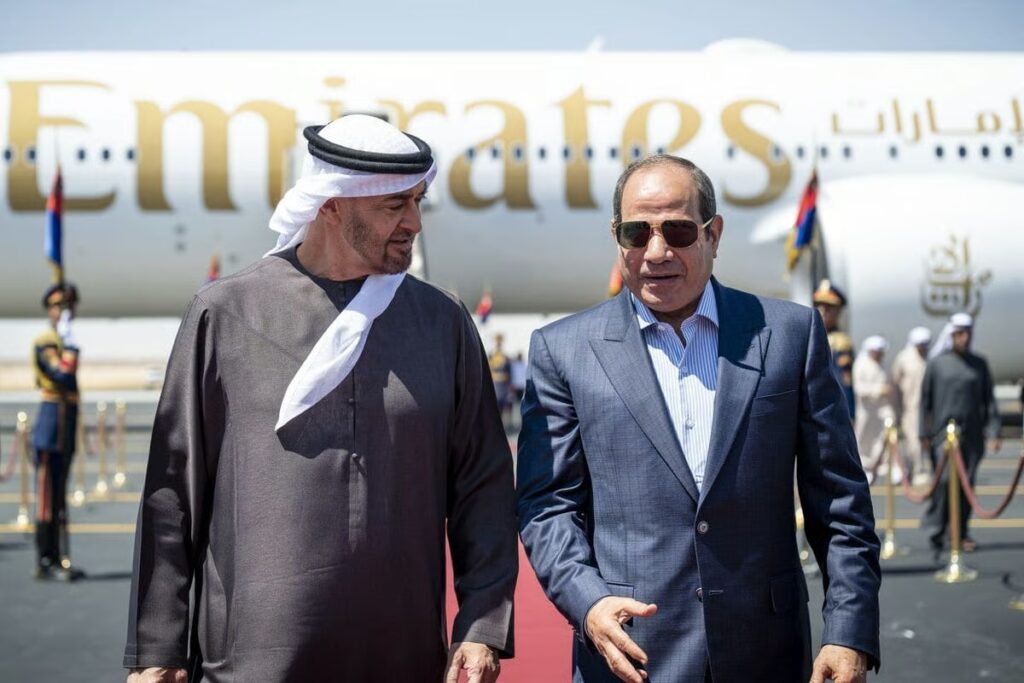
UAE President Sheikh Mohamed bin Zayed Al Nahyan and Egyptian President Abdel Fattah El-Sisi have held talks focused on strengthening relations between the UAE and Egypt, with both leaders looking at ways to expand cooperation across key sectors.
The meeting took place in Cairo and came at a time when regional coordination is becoming more important for both countries.
This was not just another diplomatic photo opportunity. The conversation centered on development, shared interests, regional stability, and the long-running partnership between Abu Dhabi and Cairo.
UAE and Egypt Look to Deepen Bilateral Ties
The UAE and Egypt have maintained close political and economic relations for years, and this latest meeting pushed that relationship further into practical cooperation.
Sheikh Mohamed and President El-Sisi discussed the strong ties between the two countries and reviewed areas where cooperation can grow. Development-related sectors were a key part of the conversation, especially projects and partnerships that could support both economies.
For the UAE, Egypt remains an important regional partner. For Egypt, the UAE continues to be one of its major allies in investment, diplomacy, and wider Arab cooperation.
That relationship matters because both countries often move together on regional issues, economic development, and stability across the Middle East.
Development Cooperation Takes Center Stage
A major focus of the talks was cooperation in sectors linked to development.
That sounds broad, but it is important. Development cooperation can include investment, infrastructure, trade, energy, logistics, technology, food security, and other areas that directly affect economic growth.
The two leaders reviewed opportunities to strengthen these ties in a way that supports their shared interests. In plain terms, both sides want the relationship to deliver results, not just statements.
The UAE has been expanding its regional investment footprint, while Egypt continues to work on large-scale development projects and economic reforms. Stronger cooperation between the two countries could help support both strategies.
Regional Challenges Were Also Discussed
The meeting also touched on regional developments and shared challenges facing the Middle East.
This part of the discussion is especially important right now. The region continues to deal with political tension, humanitarian crises, security risks, and economic pressure. For countries like the UAE and Egypt, constant consultation is not optional. It is part of how they protect their interests and coordinate positions.
Both leaders reaffirmed the importance of continued dialogue on regional issues. That signals that Abu Dhabi and Cairo want to keep their communication lines active as events across the region continue to shift.
Why This Meeting Matters
The UAE-Egypt relationship is not new, but meetings like this show how active it still is.
Both countries have influence beyond their borders. Egypt carries historic political weight in the Arab world, while the UAE has become one of the region’s strongest economic and diplomatic players. When their leaders meet, the discussion usually goes beyond bilateral matters.
It can affect investment flows, regional diplomacy, development partnerships, and coordination on major Middle East issues.
This latest meeting reinforces one thing clearly: the UAE and Egypt are still treating their partnership as strategic, not symbolic.
UAE-Egypt Relations Continue to Strengthen
The talks between Sheikh Mohamed and President El-Sisi show that both countries are looking for more cooperation at a practical level.
Development, regional stability, and shared prosperity were all part of the discussion. The message was simple enough: the UAE and Egypt want to keep building on their relationship while staying closely aligned on regional matters.
In a region where alliances are constantly being tested, that kind of steady partnership still carries weight.
Sources:
- Economy Middle East: UAE President Sheikh Mohamed and Egypt’s El-Sisi discuss bilateral ties, cooperation across key sectors
- Emirates News Agency: UAE President discusses bilateral ties and regional developments with Egyptian President
- Gulf News: UAE President discusses bilateral ties and regional developments with President Sisi