


Trade between the United Arab Emirates and the Eurasian Economic Union has reached a record level. Non-oil trade between the two surpassed $33.3 billion in 2025. These new figures highlight the growing significance of the UAE as a global trade center. Moreover, they show its continued initiatives to strengthen economic partnerships around the world.
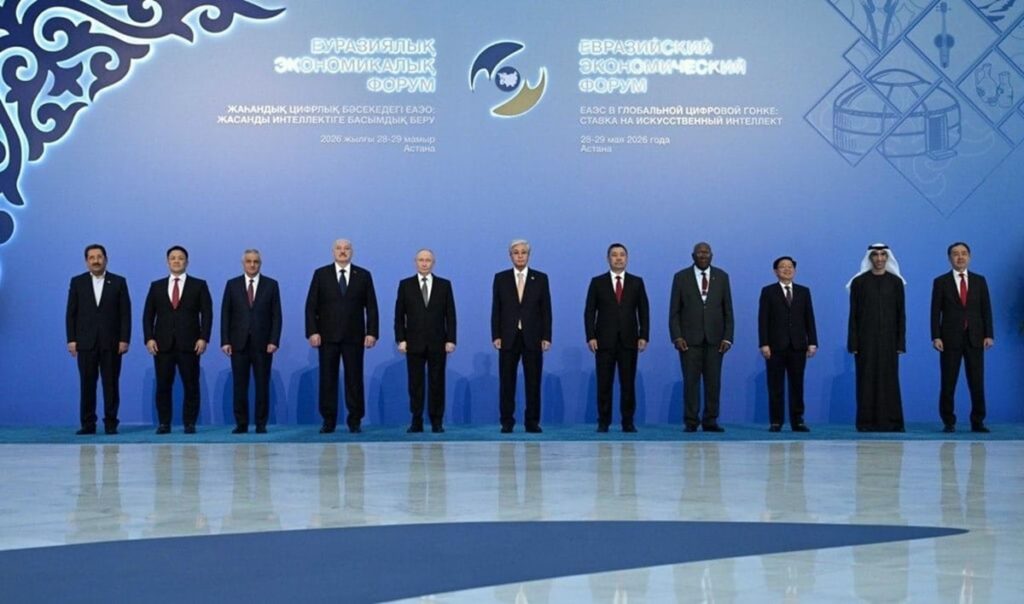
The development comes as UAE Minister of Foreign Trade Dr Thani bin Ahmed Al Zeyoudi participated in the Eurasia Economic Forum 2026. At the forum, he reiterated the UAE’s commitment to deeper trade, investment and logistics cooperation with Eurasian markets.
The growing cooperation is especially important for UAE-based exporters, investors, logistics firms and free zone companies. They are looking to tap into new markets across Eurasia.
UAE Broadens Trade Ties With Eurasian Economic Union
The Eurasian Economic Union, or EAEU, is comprised of Armenia, Belarus, Kazakhstan, Kyrgyzstan and Russia. These countries make up a sizable consumer and industrial market. There are significant opportunities in trade, manufacturing, food security, energy, logistics, technology and infrastructure.
As part of its broader strategy to diversify non-oil trade and establish greater ties with high-growth global markets, the UAE has been steadily expanding its trade ties with the bloc.
The EAEU is a strategic bridge between the Middle East, Central Asia and Eastern Europe for the UAE. For the EAEU members, the UAE is a gateway to one of the most developed logistics, aviation, maritime and free zone ecosystems in the world.
Trade between UAE and EAEU is important for Free Zone Businesses
The increasing trade between the UAE and the EAEU is creating new opportunities for companies operating within UAE free zones. These companies benefit from the UAE’s world-class infrastructure, business-friendly regulations, advanced ports and international connectivity.
Trade links to Eurasian markets are continuing to grow. As a result, there may be a rising demand for free zone companies engaged in import-export, re-export, warehousing, e-commerce, manufacturing, commodities, food products, industrial supplies and professional services.
Key opportunities include:
- Re-export of goods through UAE ports and airports
- Logistics and warehousing services for trade flows between the Eurasian Economic Union and the UAE
- Food and agricultural trade between the UAE and EAEU markets
- Supply of industrial and construction materials
- Professional, financial and business consulting services
- Technology, fintech and digital trade partnerships
As the UAE continues to sign and develop international trade agreements, free zones are central. They support foreign companies wanting to establish a regional base for expansion.
CEPA and Trade Agreements Drive Long-Term Growth
The UAE has been working to increase its economic engagement with the EAEU through trade and investment deals. These agreements are meant to break down barriers, encourage private sector growth and increase market access for goods and services.
A robust UAE-EAEU trade regime could help businesses cut costs, streamline supply chains and tap into new customer bases across both regions.
This provides increased opportunities for UAE-based companies to export products and services into Eurasian markets. For companies from the EAEU, the UAE provides a gateway to the Gulf, Africa, South Asia and wider global markets.
UAE’s Global Trade Strategy Dr Thani Al Zeyoudi
Dr Thani Al Zeyoudi’s participation in the Eurasia Economic Forum 2026 is a reflection of the UAE’s broader focus on building future-ready international partnerships. Additionally, the UAE has remained a strong advocate of open trade, economic diversification and cross-border investment.
The UAE’s non-oil trade strategy is a key pillar of its long-term economic agenda. By strengthening ties with the EAEU, the UAE is expanding its range of global trade partners. This strategy also creates more opportunities for companies in Dubai, Abu Dhabi, Sharjah, Ras Al Khaimah, Ajman, Fujairah and Umm Al Quwain.
UAE free zones to profit from Eurasian trade growth
UAE free zones are expected to play an important role in supporting the next phase of UAE-EAEU trade growth. Their flexible company formation options, tax advantages, customs benefits and sector-specific ecosystems make them attractive to international investors.
EAEU businesses are able to use UAE free zones as a basis for regional expansion. In turn, UAE companies may use the infrastructure of free zones for scaling exports and distribution to Eurasian markets.
The UAE-EAEU relationship, with trade volumes already exceeding $33.3 billion, is becoming increasingly important for companies looking to grow across borders.
UAE-EAEU Economic Outlook
Trade between the UAE and the EAEU will continue to grow strongly, reflecting robust momentum for long-term cooperation. As trade deals are implemented and private sector connections strengthen, both sides will see benefits from increased flows of investment. Furthermore, they will gain better access to markets and new commercial partnerships.
The partnership supports the UAE’s ambition to be one of the world’s most connected trade and investment hubs. For the free zone businesses, it opens new opportunities across one of the world’s most strategically important economic regions.
UAE free zone companies are well placed to profit from the next wave of trade growth. This comes as the UAE further engages with Eurasian markets.