


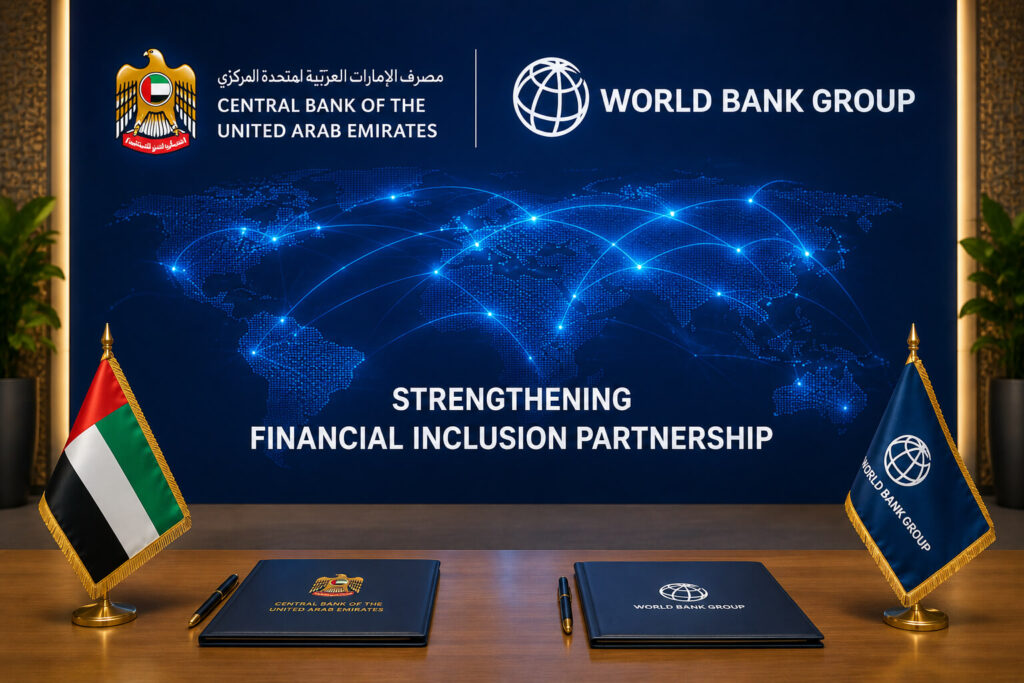
The Central Bank of the UAE has strengthened its cooperation with the World Bank Group through a new agreement to promote financial inclusion, financial literacy, consumer protection and financial dispute resolution in the country.
This agreement supports the UAE’s broader efforts to build a more inclusive, open and resilient financial ecosystem and the country’s ambition to remain a regional leader in responsible financial development, digital finance and consumer-centric banking services.
The move is a sign of ongoing progress toward a more inclusive and trusted financial environment for businesses, investors, and entrepreneurs operating in free zones across the UAE. Enhancements in financial education, more robust consumer protections and improved dispute resolution mechanisms can help bolster confidence among companies, SMEs, workers and individual consumers.
Agreement supports UAE Financial Inclusion objectives
The new partnership between the Central Bank of the UAE and the World Bank Group focuses on several priority areas. These include financial inclusion initiatives, financial literacy programs, financial consumer protection and mechanisms for resolving financial disputes.
Financial inclusion means that individuals and businesses have access to useful and affordable financial products and services that meet their needs. These services include access to payments, credit, insurance, savings tools and other regulated financial services such as bank accounts.
Financial inclusion in the UAE is becoming more connected to the broader economic objectives of the country. With the continuing attraction of foreign investment, entrepreneurs, skilled professionals and SMEs, accessible financial services are becoming a key part of long-term growth.
The partnership also supports the development of the UAE’s National Financial Literacy Strategy which aims to improve financial knowledge among individuals and businesses, allowing them to make better decisions about money management, borrowing, saving, payments and financial planning.
The Importance of Financial Literacy for UAE Businesses
SMEs and free zone companies in particular need financial literacy. Entrepreneurs entering the UAE market often need to understand local banking rules, credit facilities, payment systems, compliance requirements, and how to manage financial risks.
A stronger national financial literacy framework can also help businesses better navigate the financial system. It can also help individuals, including employees and residents, understand digital payments, fraud risks, banking services and consumer rights.
Better financial literacy can mean better planning and access to formal financial services, especially for startups, freelancers, e-commerce businesses and small firms that depend on secure payment channels and banking support for free zone businesses in the UAE.
Focus on Consumer Protection and Dispute Resolution
The deal also emphasizes the importance of financial consumer protection. This is the set of rules, standards and safeguards that protect individuals and businesses when they use financial products and services.
As digital banking, online payments and fintech services grow across the UAE, protecting consumers is increasingly important. Clearer rules and greater awareness can help cut risks from fraud, unclear terms, unfair practices and financial disputes.
The Central Bank of the UAE and World Bank Group also discussed banking and insurance dispute resolution. Better systems can help consumers and businesses resolve complaints more efficiently. As a result, they can build trust in the wider financial sector.
That is good news for companies operating in the UAE. A strong financial system depends on access to services. It also depends on fair and transparent dispute resolution.
Digital Fraud Prevention Among Top Priorities
The other key area discussed by the two sides was digital fraud prevention. As the UAE continues to accelerate digital transformation across banking, payments and business services, fraud prevention remains a key priority.
Digital fraud is not confined to big companies – individuals, SMEs and investors are also potential targets. Common risks are phishing, payment scams, identity theft, fake investment scams and unauthorized transactions.
As more companies embrace online banking, digital wallets, cross-border payment tools and fintech platforms, the UAE is trying to increase confidence in its financial infrastructure by focusing on digital fraud prevention principles.
UAE Bolsters Status as Regional Financial Hub
The new pact reflects the UAE’s push to become a regional financial hub in the Middle East. The country has invested heavily in financial innovation, regulation, digital payments, fintech, and consumer protection.
The UAE’s partnership with the World Bank Group also strengthens its role in regional financial dialogue. The Central Bank of the UAE will host the second Regional Summit on Financial Health and Inclusion in Abu Dhabi in September 2026.
The summit will focus on financial inclusion, financial wellbeing, digital transformation, and responsible access to financial services.
Implications for UAE Free Zone Companies
For companies that are based in UAE free zones, the enhanced collaboration between the Central Bank of the UAE and the World Bank Group may bring about a number of long-term benefits.
First, better financial inclusion policies can lead to easier and more responsible access to financial services. This is important for SMEs, startups and international investors that rely on banking, payment, credit and insurance products.
Second, improved financial literacy can assist business owners in making more informed financial decisions . This includes understanding banking procedures, managing cash flow, minimizing fraud risks, and selecting appropriate financial products.
Third, better consumer protection and dispute resolution systems can help build trust in the UAE financial sector. This will help to create a more stable environment for companies and individuals.
The focus on preventing digital fraud also supports the UAE’s burgeoning digital economy. As more free zone companies depend on online transactions and digital platforms, robust financial systems are key.
UAE financial inclusion drive supports sustainable growth
The agreement between the Central Bank of the UAE and the World Bank Group highlights the UAE’s commitment to building an inclusive, safe, and sustainable financial ecosystem.
The UAE is laying the foundations for a modern financial sector. Its priorities include financial inclusion, literacy, consumer protection, dispute resolution, and digital fraud prevention.
These developments point to a more transparent and supportive financial environment. Entrepreneurs, investors, residents, and free zone businesses could all benefit. As a result, financial inclusion will likely remain a key part of the UAE’s long-term economic strategy as the country grows as a global business destination.