
Saudi Arabia’s merchandise exports recorded strong annual growth in April 2026, supported by higher oil shipments and a wider trade surplus. The latest figures underline the Kingdom’s continued role as a major regional trade hub. They also highlight important opportunities for logistics, re-export, and free zone businesses across the UAE and wider GCC.
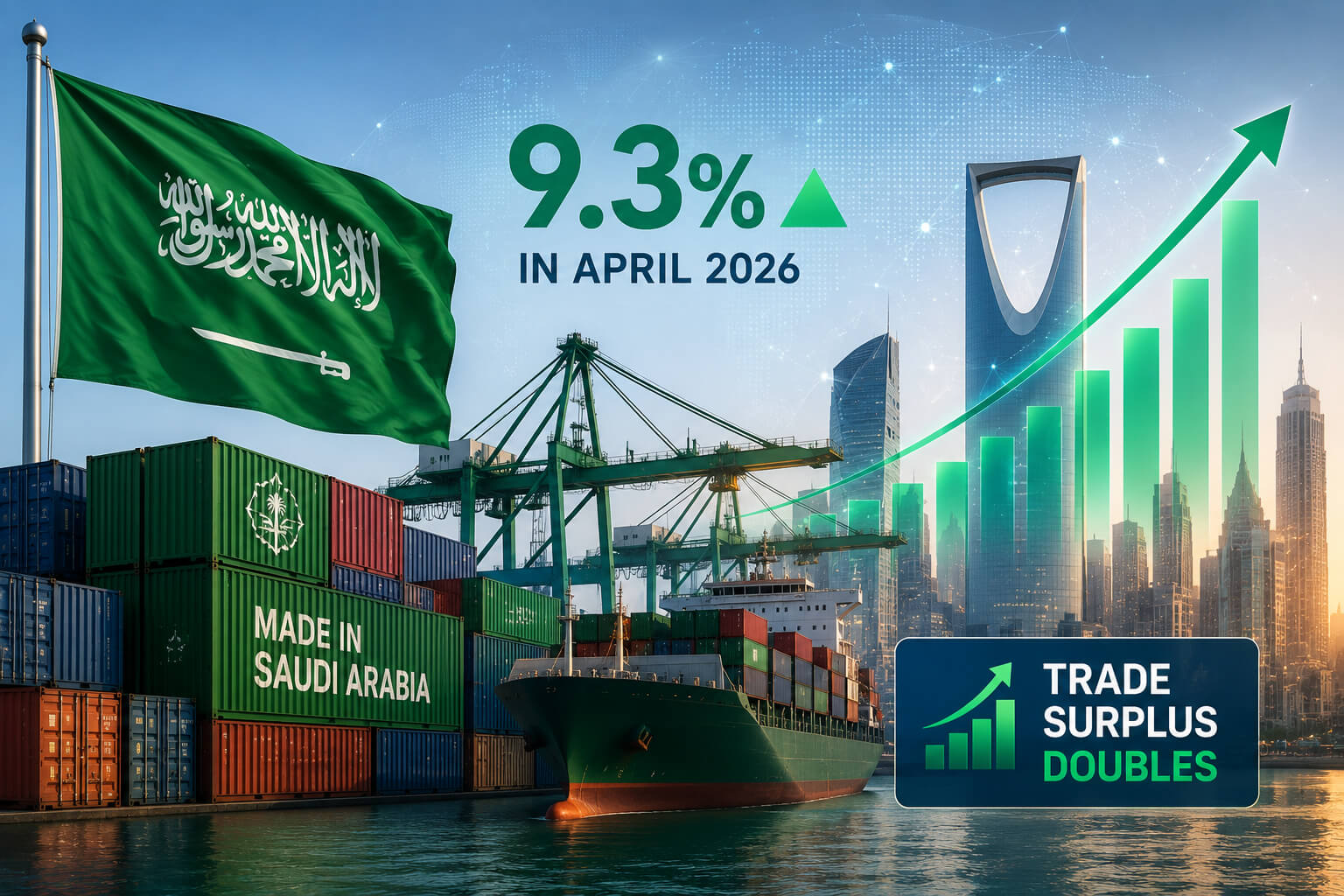
Total merchandise exports from Saudi Arabia reached around SAR101.2 billion in April 2026. This figure rose 9.3 percent compared with the same month last year. The increase was mainly supported by oil exports.
Oil Exports Remain the Main Growth Driver
Oil exports increased by 11.7 percent year-on-year to approximately SAR69.6 billion in April 2026. This means oil accounted for nearly 68.8 percent of Saudi Arabia’s total exports during the month.
The strong performance reflects the continued importance of energy exports to the Kingdom’s trade balance. Meanwhile, Saudi Arabia continues to advance its Vision 2030 diversification agenda through industrial development, logistics expansion, mining, manufacturing, and non-oil export growth.
For regional businesses, especially those operating from UAE free zones, Saudi Arabia’s export performance points to continued demand for trade support services. These include cross-border logistics, warehousing, customs solutions, and regional distribution networks.
Saudi Trade Surplus Jumps 100.8%
Saudi Arabia’s merchandise trade surplus more than doubled in April 2026, rising 100.8 percent year-on-year to reach about SAR25.4 billion. The improvement was supported by stronger exports and a decline in imports.
Total imports fell by 5.2 percent to around SAR76 billion during the month. This is compared with approximately SAR80 billion in April 2025. The combination of higher exports and lower imports helped widen the Kingdom’s trade balance significantly.
This stronger surplus is important for the wider Gulf economy because Saudi Arabia is one of the region’s largest import and export markets. As a result, a healthier trade position can support investment confidence, infrastructure development, and regional supply chain activity.
Non-Oil Trade Still Central to Vision 2030
Although oil remained the dominant export category in April 2026, non-oil trade continues to be a key priority for Saudi Arabia’s long-term economic transformation.
Saudi Arabia has been investing heavily in industrial zones, logistics corridors, ports, airports, and manufacturing capacity as part of its effort to reduce reliance on hydrocarbons. As a result, these developments are expected to support future growth in sectors such as chemicals, plastics, mining, machinery, automotive, food processing, and advanced manufacturing.
For UAE free zone companies, this shift creates opportunities in areas such as:
- Re-export services between the UAE, Saudi Arabia, and global markets
- Warehousing and distribution for industrial goods
- Customs brokerage and cross-border freight
- Regional headquarters and branch expansion
- Machinery, electrical equipment, and construction-related supply chains
China and UAE Among Key Trade Partners
China remained Saudi Arabia’s largest merchandise trading partner in April 2026. The country accounted for a major share of both exports and imports. The UAE also remained one of the Kingdom’s leading trade partners. This reflects the strong commercial links between the two GCC economies.
The UAE’s role as a regional logistics and re-export hub makes it especially important for companies serving the Saudi market. Moreover, businesses based in Dubai, Abu Dhabi, Sharjah, Ras Al Khaimah, and other UAE free zones are well positioned to support Saudi Arabia’s demand for industrial inputs, consumer goods, machinery, technology products, and logistics services.
What This Means for UAE Free Zone Businesses
Saudi Arabia’s export growth and stronger trade surplus signal continued momentum in regional trade. For companies operating from UAE free zones, the Kingdom remains one of the most important nearby markets for expansion.
Free zone businesses can benefit from Saudi Arabia’s growing import needs, infrastructure projects, industrial diversification, and rising demand for specialized logistics and supply chain services. In addition, companies involved in shipping, freight forwarding, e-commerce fulfillment, manufacturing inputs, industrial equipment, and re-export operations may find new opportunities as Saudi trade activity continues to expand.
Outlook
Saudi Arabia’s April 2026 trade data shows that the Kingdom’s export sector remains resilient. Oil continues to provide strong support while non-oil sectors remain central to long-term growth plans.
As Saudi Arabia expands its industrial base and strengthens its logistics network, UAE free zone companies are likely to play an important role in connecting suppliers, manufacturers, and distributors across the Gulf. Furthermore, the strong trade relationship between Saudi Arabia and the UAE is expected to remain a key driver of regional business activity in 2026 and beyond.
