
Private-label products are becoming a bigger part of retail strategy across the Middle East, and Dubai is positioning itself at the centre of that shift.
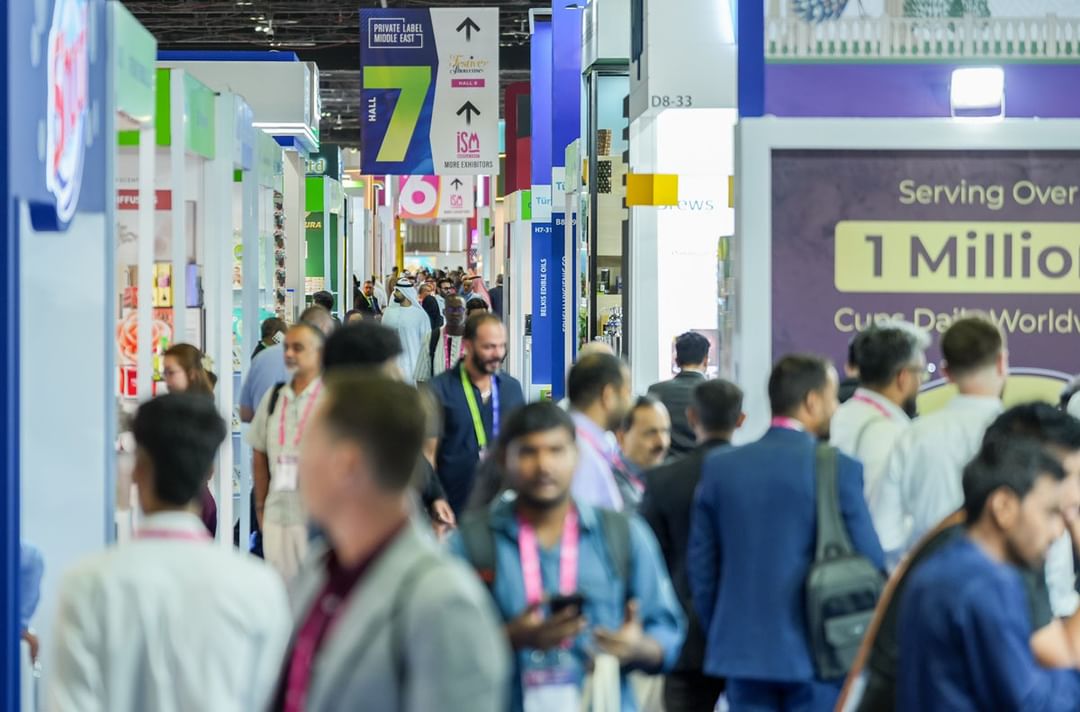
Private Label Middle East 2026 will bring retailers, manufacturers, distributors, brand owners and sourcing professionals together at Dubai World Trade Centre from 3 to 5 November 2026. The event will focus on private-label development, contract manufacturing, product sourcing and the growing demand for retailers to build stronger brands of their own.
For the UAE, the opportunity reaches beyond supermarket shelves. Private-label growth also creates demand across manufacturing, packaging, logistics, warehousing, product development and distribution. Many of those activities sit closely alongside the country’s expanding free zone and trade ecosystem.
Private Label Moves Beyond the Budget Shelf
Private label was once associated mainly with lower-cost alternatives to established brands. That picture has changed. Retailers are now developing products around quality, health, convenience, premium positioning and changing consumer preferences. In many cases, a retailer’s own product line has become part of its wider brand identity rather than simply a cheaper option.
That shift means suppliers are being judged on more than price. Retailers now look closely at product consistency, formulation, packaging, compliance, production capacity and how quickly manufacturers can respond to changing demand. Private Label Middle East reflects that broader relationship between buyers and producers.
Dubai Becomes a Meeting Point for Manufacturers and Buyers
Dubai’s role as a regional trade and logistics hub gives the event a natural advantage. Retailers searching for new product ranges may need manufacturers from one market, packaging from another and logistics partners capable of serving several countries across the Gulf.
Private Label Middle East gives buyers the chance to meet manufacturers directly and compare production capabilities, customisation options and potential commercial partnerships. The exhibition spans food and beverages, beauty and personal care, household products, wellness, packaging and other fast-moving consumer categories.
For international suppliers, Dubai also provides access to one of the region’s most connected business environments. Manufacturers can meet buyers from the UAE while also exploring wider opportunities across the Middle East, Africa and South Asia.
Contract Manufacturing Creates a Faster Route to Market
Contract manufacturing has become an increasingly practical route for companies that want to introduce new products without building their own production facilities. A retailer or entrepreneur can focus on product positioning, branding, sales and distribution while relying on specialist manufacturers to handle production.
That model can reduce the amount of capital required to test a new product category. It can also give companies more flexibility when entering a new market or experimenting with different product lines before committing to larger-scale operations.
Manufacturers are also taking on broader roles. Many private-label customers now expect support with formulations, ingredients, packaging, production planning and regulatory requirements. Minimum order quantities, lead times and manufacturing flexibility can become just as important as the finished product itself.
Why the Opportunity Matters to UAE Free Zones
The private-label market connects naturally with the UAE’s free zone economy because bringing a new consumer product to market usually involves much more than manufacturing alone.
A company may need a UAE business licence, import and export capabilities, warehousing, fulfilment services, e-commerce support, packaging, marketing and regional distribution. Free zones across Dubai and the wider UAE already support many of those activities, giving foreign manufacturers and brand owners different routes into the local and regional market.
For international companies, setting up a UAE operation can also provide a base for serving customers across the Gulf. A manufacturer attending Private Label Middle East may initially arrive looking for buyers but later identify the need for local warehousing, a distribution office or a regional headquarters.
The event therefore has relevance beyond exhibition-floor sales. Commercial conversations can lead to new companies, logistics partnerships, warehousing agreements and longer-term investment in the UAE.
Supply Chains Become Part of the Brand
As private-label products become more important to retailers, supply-chain performance becomes closely connected to brand reputation. A retailer selling products under its own name has more to lose if quality drops, stock runs out or packaging fails.
That creates pressure to work with manufacturers that can maintain standards while responding quickly to changes in demand. Retailers increasingly need production partners that can manage volume fluctuations, product reformulation, packaging adjustments and shorter product cycles without losing consistency.
Private Label Middle East brings those sourcing conversations into one place. The event also sits alongside major industry exhibitions including Gulfood Manufacturing, creating a broader environment for businesses involved in food production, packaging, hospitality and related industries.
Retailers Want More Control Over Their Product Mix
The appeal of private label is also tied to control. Retailers can develop products that fit their own pricing strategy, customer profile and brand positioning instead of relying entirely on third-party manufacturers.
That can help companies differentiate themselves in increasingly competitive retail markets. A successful private-label line can give shoppers another reason to remain loyal to a particular supermarket, pharmacy, e-commerce platform or specialty retailer.
For businesses operating in the UAE, this also creates room for smaller manufacturers and emerging brands. A company does not necessarily need to become a household name if it can secure production agreements with large retailers or distributors looking for exclusive products.
Dubai Strengthens Its Position in Regional Product Sourcing
Dubai has spent years building itself as a bridge between international producers and fast-growing consumer markets. Private-label sourcing fits comfortably into that model.
Not every product sold across the Gulf needs to be manufactured in Dubai for the emirate to benefit commercially. Companies still require logistics providers, regional offices, warehouses, distributors, financial services and marketing support.
That creates opportunities for free zones, mainland companies and specialised service providers across the UAE.
Private Label Middle East 2026 adds another layer to that ecosystem. Manufacturers arrive looking for new buyers. Retailers arrive looking for products. Entrepreneurs arrive looking for ideas and potential suppliers. What follows those meetings may eventually include new distribution agreements, regional operations or entirely new brands.
Private Label Middle East 2026 Brings Global Suppliers to Dubai
Private Label Middle East 2026 is scheduled to take place from 3 to 5 November 2026 at Dubai World Trade Centre. The event is designed for retailers, distributors, brand owners, sourcing specialists, manufacturers and companies involved in private-label development and contract manufacturing.
Its product categories extend across food and beverages, beauty, personal care, household products, health and wellness, packaging and related services. That broad mix gives buyers the chance to explore several product segments during the same event rather than treating private label as a single retail category.
For manufacturers, the event offers access to businesses actively searching for new products and production partners. For retailers, it creates a concentrated sourcing environment where they can compare suppliers and explore new commercial relationships.
Private Label Growth Creates Wider UAE Business Opportunities
The significance of Private Label Middle East is not limited to retail. Growth in private-label products can generate activity across manufacturing, logistics, packaging, warehousing, e-commerce and distribution.
That makes the sector particularly relevant to the UAE’s wider economic strategy, where trade, manufacturing and business services continue to play a major role in diversification.
For companies looking at the Gulf, Dubai offers a combination of market access, logistics infrastructure and business setup options. Private Label Middle East 2026 gives those companies another entry point into the region.
The product may begin on a supermarket shelf. The business opportunity behind it can stretch much further.
Sources
Emirates News Agency (WAM)
https://www.wam.ae/en/article/c2ia1ew-private-label-middle-east-2026-accelerates-next
Private Label Middle East
https://www.prime-expo.com/
Private Label Middle East – About the Event
https://www.prime-expo.com/about/aboutprivatelabel
Dubai World Trade Centre
https://www.dwtc.com/
