
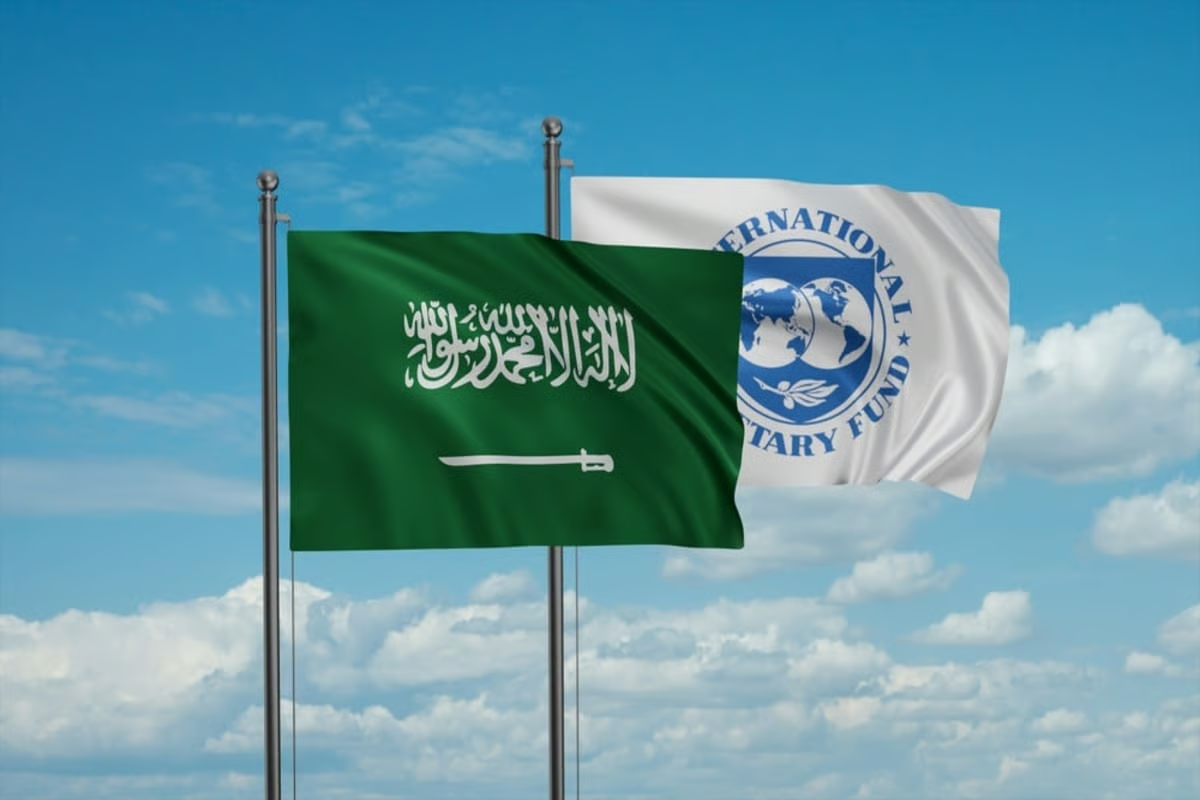
The International Monetary Fund has lowered its Saudi growth forecast for 2026, trimming expectations for the Kingdom’s economy as oil market pressures, geopolitical risks, and global uncertainty continue to weigh on crude-exporting countries.
According to the IMF’s latest outlook, Saudi Arabia’s economy is now expected to grow by 1.7 percent in 2026. That is a sharp downgrade from its previous projection, with the Fund cutting the estimate by 1.4 percentage points. But the picture changes quickly in 2027. The IMF now expects Saudi growth to rebound to 5.5 percent, raising that forecast by 1.0 percentage point.
Saudi Arabia Faces a Slower 2026
The lower 2026 projection does not mean Saudi Arabia’s economy is standing still. It points more to the uncomfortable timing around oil markets and the wider global economy.
Saudi Arabia remains deeply linked to energy prices, production policy, and demand from major markets. When those pieces shift, growth forecasts move with them. The IMF’s revision reflects expectations around crude output, geopolitical tensions, and the broader global slowdown affecting energy exporters.
For businesses watching the Gulf, this matters. A slower Saudi economy can affect investment flows, supply chains, regional trade confidence, and expansion planning across the GCC. Free zone companies, exporters, logistics firms, consultants, and service providers all tend to feel those changes in different ways.
A Bigger Rebound Expected in 2027
The stronger 2027 forecast is the more interesting part.
The IMF expects Saudi Arabia’s growth to rise to 5.5 percent in 2027, suggesting that the slowdown may be temporary rather than structural. A rebound of that size would likely depend on firmer oil activity, stronger domestic momentum, and continued progress in non-oil sectors tied to Vision 2030.
Saudi Arabia has spent years trying to reduce its dependence on crude revenue. Tourism, logistics, finance, technology, manufacturing, entertainment, and real estate have all become larger parts of the national economic story. The non-oil economy is not just a side note anymore. It is the part investors keep watching, especially when oil forecasts become less predictable.
Why the IMF Revision Matters for the UAE and Free Zone Investors
Saudi Arabia’s outlook is not only a Saudi story. It matters across the region.
The UAE and Saudi Arabia are two of the Gulf’s biggest business hubs, and many companies operating from UAE free zones use the Emirates as a base to serve Saudi clients, partners, and projects. When Saudi growth slows, some companies may become more cautious. When a rebound is expected, others may prepare early.
That is where free zones come in. UAE free zones offer international businesses a flexible setup for regional operations, cross-border trade, professional services, e-commerce, consulting, and logistics. A projected Saudi rebound in 2027 could encourage companies to position themselves now rather than wait until demand fully returns.
The practical question for investors is simple: do they prepare during the slower year, or enter later when competition is already louder?
Oil, Geopolitics, and Global Growth Still Set the Mood
The IMF’s latest Saudi revision also sits inside a wider global backdrop. The Fund has warned that geopolitical risks, inflation pressure, and trade uncertainty continue to affect the world economy. Its April 2026 outlook said downside risks still dominate, especially if conflicts widen, trade tensions return, or financial markets are shaken by sudden changes in expectations around technology and productivity.
For oil-producing economies, the pressure can be even more direct. Energy prices influence budgets, investment confidence, and project timing. Saudi Arabia has enough scale and fiscal strength to keep pushing major transformation plans, but short-term GDP numbers can still swing when oil output and global demand shift.
Saudi Economy Remains a Long-Term Regional Magnet
A 1.7 percent growth forecast for 2026 may sound soft, especially compared with the 5.5 percent expected in 2027. But the Kingdom remains one of the most important markets in the Middle East.
Its population, infrastructure spending, mega-project pipeline, and consumer market continue to attract regional and international companies. For UAE-based firms, Saudi Arabia is often the next major expansion target after establishing a base in Dubai, Abu Dhabi, Sharjah, Ras Al Khaimah, or other free zone jurisdictions.
The IMF’s forecast gives businesses a mixed signal, but not a negative one. 2026 may require caution. 2027 may reward companies that planned early.
What Businesses Should Watch Next
The next few months will be important for companies tracking Saudi Arabia’s growth path. Oil production decisions, global demand, geopolitical developments, inflation trends, and Saudi non-oil sector performance will all shape whether the IMF’s rebound forecast holds.
For free zone investors, the message is not to panic over one downgraded year. The better move is to read the forecast as a timing signal. Saudi Arabia may move slower in 2026, but the IMF still sees a much stronger expansion coming in 2027.
That gives regional businesses a window. Not a guarantee. A window.
