


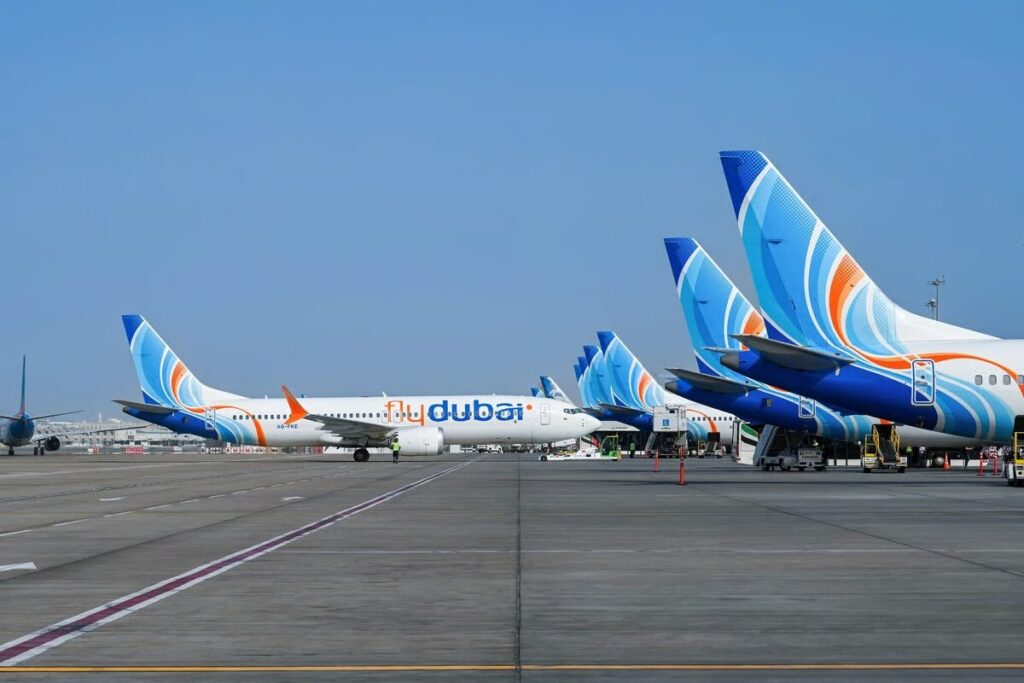
flydubai is putting more weight behind its sustainability agenda, and the timing is not accidental. The Dubai-based airline has been ranked among the top 20 most fuel-efficient airlines globally, a recognition that gives its five-year sustainability strategy a sharper business edge.
For an airline operating out of one of the world’s busiest aviation markets, this is not just a green branding exercise. Fuel efficiency matters. It affects operating costs, emissions, long-term competitiveness, and how seriously an airline can speak about responsible growth.
flydubai has grown quickly over the years, but the latest focus shows something more measured. The airline is trying to prove that expansion and efficiency can sit in the same sentence, even if the aviation industry still has a long way to go.
Fuel Efficiency Becomes a Business Advantage
Aviation sustainability often gets discussed in big, polished language. Net zero. Future fuels. Industry transformation. All true, but also a little distant.
Fuel efficiency is more immediate. It shows up in daily operations, aircraft performance, route planning, maintenance, and fleet choices. For flydubai, being placed among the top 20 most fuel-efficient airlines globally strengthens its case that sustainability is not being treated as a side project.
It also comes at a time when airlines are under growing pressure to reduce emissions while still meeting strong travel demand. That is the uncomfortable part of the aviation story. People want to fly more, not less. Airlines want to grow. Governments want tourism, trade, and connectivity. Sustainability has to work inside that reality.
A Five-Year Strategy With Practical Pressure Behind It
flydubai’s five-year sustainability strategy appears to be built around practical operational gains rather than distant promises alone. That matters because aviation cannot simply switch overnight to cleaner fuels or new aircraft technologies at scale.
The airline’s approach is likely to be judged by what happens across the everyday parts of the business: fuel burn, aircraft utilization, operational efficiency, digital systems, waste reduction, and how the company manages growth without adding unnecessary environmental pressure.
It is not the loudest kind of sustainability story. No dramatic reinvention. No perfect answer. But in aviation, small efficiency gains repeated across thousands of flights can become meaningful.
Dubai’s Aviation Sector Is Also Changing
This update also fits into a wider Dubai aviation story. The emirate has been investing heavily in aviation growth, airport capacity, logistics, tourism, and global connectivity. That growth comes with a harder question: how does Dubai keep expanding as an aviation hub while also responding to climate and sustainability expectations?
flydubai sits directly inside that question. Its network, fleet, and passenger volumes make it an important part of Dubai’s aviation ecosystem. So when the airline talks about fuel efficiency and sustainability, it is not only speaking for itself. It reflects the pressure on the wider sector to modernize how aviation growth is managed.
For businesses, investors, free zone companies, and logistics operators connected to Dubai’s aviation economy, this shift matters. Greener aviation is not just about airlines. It affects tourism, cargo, airport services, supply chains, and the broader business environment around Dubai.
Fleet Efficiency Still Matters Most
One of the clearest parts of flydubai’s sustainability position is its reliance on a younger, more efficient fleet. Newer aircraft generally help airlines reduce fuel consumption compared with older models, and that directly supports both cost control and emissions reduction.
flydubai has previously highlighted the role of its Boeing 737 MAX aircraft in improving fuel efficiency, with the aircraft offering reduced carbon emissions compared with earlier-generation aircraft. That kind of fleet decision becomes especially important when an airline is scaling across regional and international routes.
The bigger picture is simple enough. Airlines that operate more efficient aircraft have a better starting point. They still face emissions challenges, but they are not carrying the same drag as older fleets.
Sustainability Is Now Part of Airline Competitiveness
There was a time when sustainability sat mostly in annual reports and corporate responsibility pages. That era is fading. For airlines, sustainability is becoming part of competitiveness.
Passengers are paying more attention. Regulators are paying more attention. Corporate travel buyers are paying more attention. Investors are watching too, especially as aviation faces rising pressure over emissions and fuel use.
For flydubai, the top 20 fuel-efficiency ranking gives the airline a stronger position in that conversation. It can point to measurable performance, not only future ambition. That does not solve every issue, but it gives the airline a clearer story to tell.
Growth Will Be the Real Test
The difficult part begins now. flydubai is still growing, and growth always tests sustainability claims. More destinations, more passengers, more aircraft, and more flights can easily increase environmental impact if efficiency does not keep pace.
That is why the five-year sustainability strategy matters. It gives the airline a framework for managing the next stage of expansion with more discipline. The real measure will be whether flydubai can continue improving efficiency while serving more markets and supporting Dubai’s role as a global aviation hub.
No airline gets a free pass just because it has a strategy. But ranking among the world’s most fuel-efficient carriers gives flydubai a useful signal that its current direction is gaining attention.
flydubai’s Sustainability Push Adds Weight to Dubai’s Green Aviation Plans
flydubai’s latest sustainability update shows how quickly aviation priorities are changing in the UAE. Growth still matters, of course. Dubai’s aviation sector is built on movement, access, and global reach. But the next phase is no longer only about adding routes and aircraft.
Efficiency now has to be part of the story.
By spotlighting its five-year sustainability strategy and its place among the top 20 most fuel-efficient airlines globally, flydubai is positioning itself as a carrier that wants to grow with more control over its environmental footprint. Not perfectly. Not with all the answers already solved. But with enough progress to make the industry pay attention.
For Dubai, that matters. A more efficient airline sector supports the emirate’s wider ambitions around sustainable transport, business resilience, and long-term economic growth.