
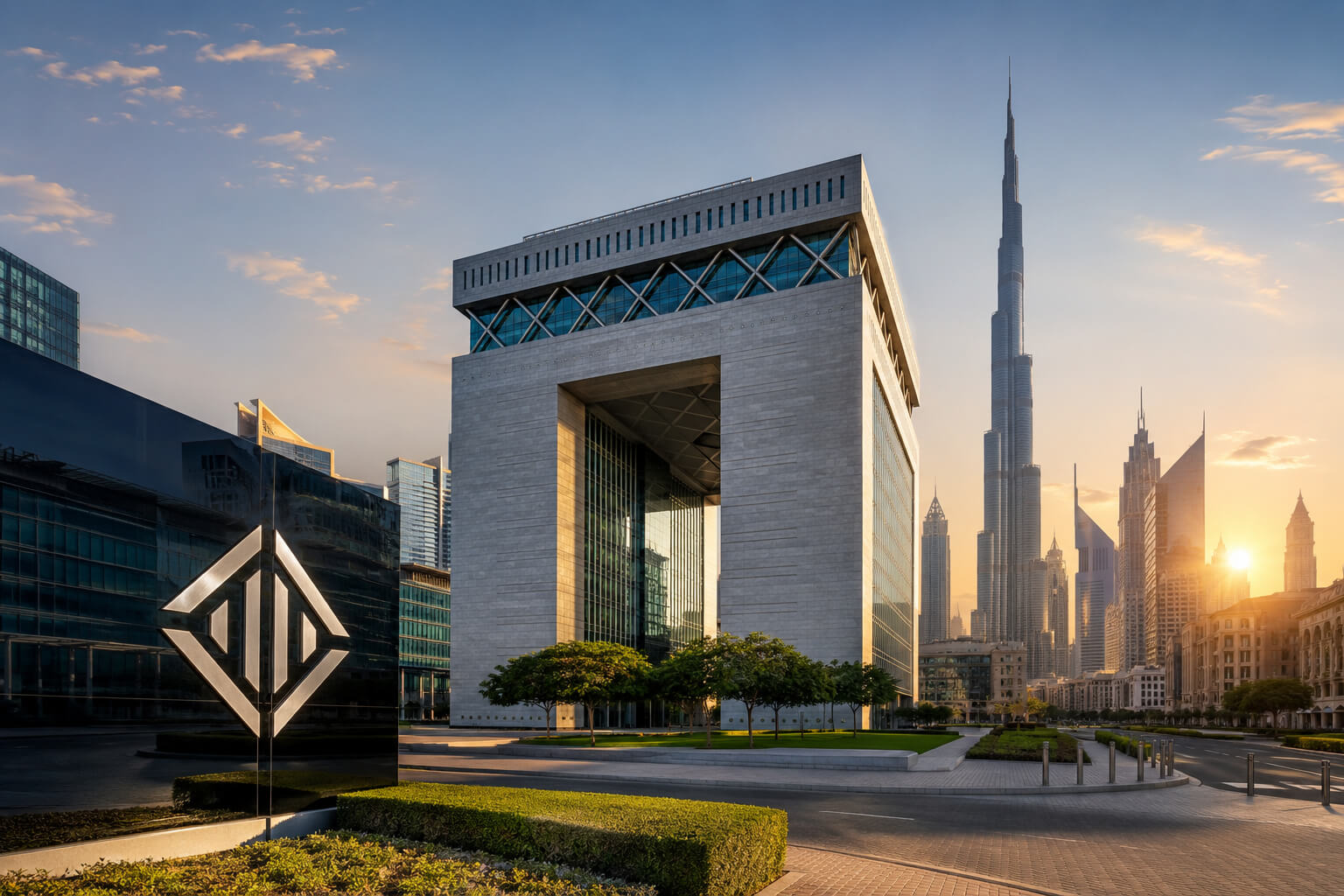
Dubai International Financial Centre (DIFC) has crossed a milestone that reflects far more than a simple increase in business registrations. The latest data on DIFC active registered companies H1 2026 demonstrates significant growth in the financial free zone. For the first time since its establishment, the financial free zone is home to more than 10,000 active registered companies, highlighting the continued appeal of Dubai as a destination for global investors, financial institutions, technology firms and multinational businesses.
At the end of the first half of 2026, DIFC reported 10,018 active registered companies. That represents organic growth of 30 percent over the previous 12 months after adding 2,318 businesses, including 1,506 companies established during the first six months of the year. Moreover, these numbers demonstrate the ongoing progress associated with DIFC active registered companies H1 2026.
A Record That Reflects More Than Company Registrations
Crossing the 10,000-company mark carries symbolic value, but the underlying figures reveal why the milestone matters. Businesses continue choosing DIFC because it offers an internationally recognised legal framework, an independent regulator, access to regional and global markets, and an ecosystem that supports finance, innovation and professional services under one roof.
The latest growth suggests that global companies are still looking toward Dubai despite economic uncertainty in many parts of the world. Instead of slowing expansion, firms appear to be increasing their regional presence through the emirate’s financial centre. It is also clear that DIFC active registered companies H1 2026 is becoming an important benchmark for performance in the region.
Financial Services Continue to Expand Across the Centre
Traditional financial services remain a major driver of DIFC’s expansion. The number of regulated financial firms climbed to 1,134, marking a 16 percent increase from a year earlier. Private banking, wealth management, insurance, asset management and capital markets all continued to attract new participants into the ecosystem. Notably, DIFC active registered companies H1 2026 include a wide range of participants from these sectors.
Wealth-related businesses also posted strong gains. Family-related entities increased by 36 percent to 1,408, while foundations surged 67 percent to 1,409, reinforcing Dubai’s growing reputation as a preferred destination for family offices and long-term wealth planning.
AI and FinTech Continue to Shape DIFC’s Growth Story
The expansion was not driven solely by conventional finance. DIFC’s Innovation Hub, which supports fintech, artificial intelligence, venture capital and technology startups, continued its rapid development during the first half of the year.
The innovation ecosystem expanded by 39 percent compared with the previous year, reflecting growing interest from companies building AI applications, financial technology platforms and digital services. Dubai has steadily positioned AI and advanced technology as central pillars of its economic strategy, and DIFC remains one of the main gateways for those businesses entering the region.
New Commercial Developments Support Future Expansion
Physical growth is keeping pace with business demand. DIFC highlighted the launch of the Zabeel District as another step in expanding commercial capacity, while DIFC Square reached full pre-leasing before completion, demonstrating continued demand for premium office space inside the financial centre.
Strong occupancy levels indicate that businesses are committing to long-term operations rather than maintaining only representative offices. As a result, DIFC active registered companies H1 2026 reflect a commitment to sustainable growth for the region.
Dubai’s Global Standing Continues to Rise
DIFC’s performance also reinforces Dubai’s broader ambitions to become one of the world’s leading financial centres. The centre currently ranks among the top global financial hubs and continues working toward its long-term objective of reaching the world’s top four financial centres by 2033.
For companies considering expansion into the Middle East, Africa and South Asia, the latest figures send a clear signal. Demand for operating within Dubai’s financial ecosystem continues to rise, and businesses across finance, AI, technology, consulting and professional services remain confident enough to invest for the long term.
What This Means for Businesses Entering the UAE
The record number of active companies demonstrates that free zones are no longer serving only as registration centres. They have evolved into business ecosystems where finance, technology, regulation and investment intersect.
For international companies exploring regional headquarters, fintech startups seeking regulated environments, or AI firms targeting Middle East expansion, DIFC’s latest performance reinforces its position as one of the UAE’s most influential business destinations. The momentum recorded during the first half of 2026 suggests that demand for high-value commercial operations in Dubai remains strong heading into the rest of the year.
