

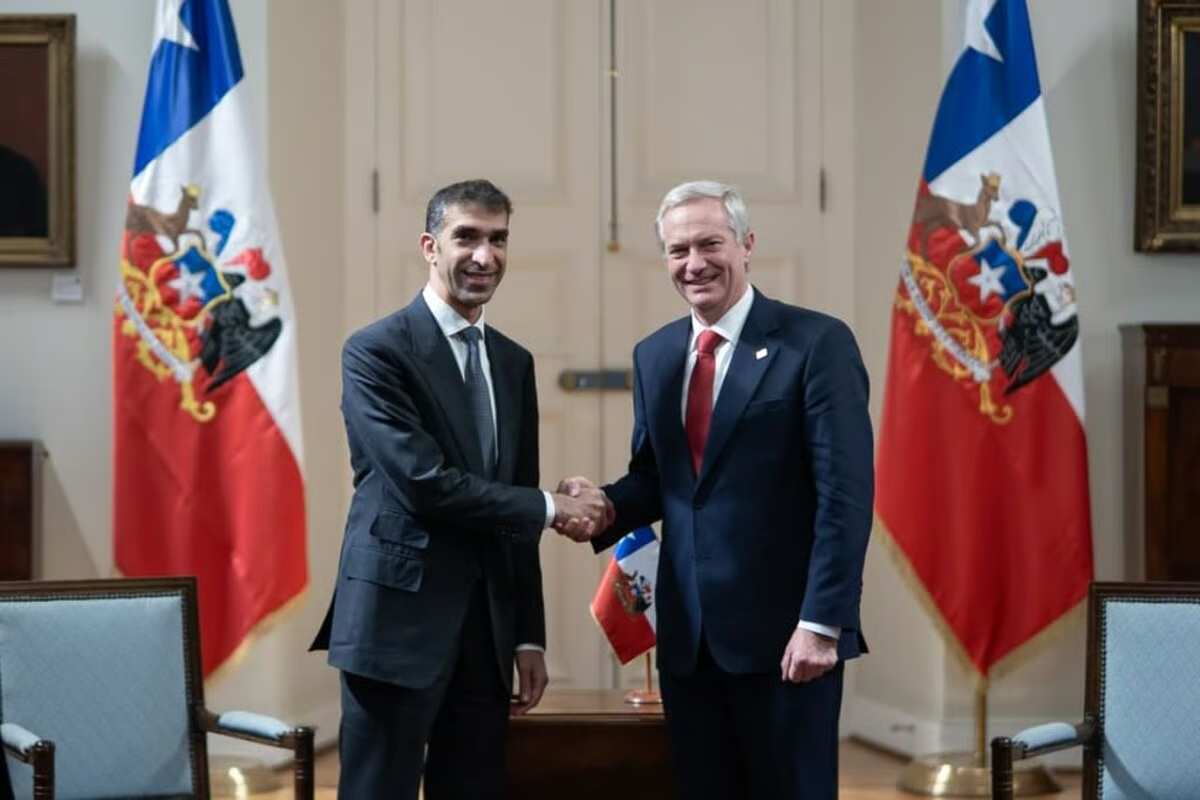
Chile and the UAE are not treating their economic relationship as a side conversation anymore. The recent meeting between Chilean President Gabriel Boric Font and UAE officials, including Dr. Thani bin Ahmed Al Zeyoudi, UAE Minister of State for Foreign Trade, placed trade, investment, and private-sector cooperation firmly at the center of the discussion.
The timing matters. The UAE has been widening its global trade network through its Comprehensive Economic Partnership Agreement program, while Chile is looking to deepen links with fast-growing markets beyond its traditional trade routes. For both sides, this is not just diplomacy. It is about opening doors for companies, investors, exporters, logistics players, and strategic industries that can benefit from stronger UAE-Chile trade and investment ties.
Why Chile Matters to the UAE
Chile gives the UAE something valuable: a serious gateway into South America. The country has strong potential in sectors such as minerals, food, agriculture, renewable energy, tourism, manufacturing, and mining. Those are not random sectors. They sit close to the UAE’s own priorities around food security, clean energy, industrial growth, supply chain resilience, and global investment expansion.
Dr. Al Zeyoudi previously highlighted areas of mutual interest between the UAE and Chile, including minerals, renewable energy, infrastructure, hospitality, and lithium. Chilean officials also pointed to opportunities in food and minerals, which remain key parts of the Chilean economy.
For UAE businesses, this creates a wider map. Chile is not only a distant market on the other side of the world. It is becoming part of the UAE’s broader plan to build trade corridors with high-potential economies.
CEPA Gives the Relationship More Structure
The UAE-Chile Comprehensive Economic Partnership Agreement gives this relationship more than good intentions. The agreement aims to stimulate non-oil trade by reducing or eliminating customs duties, removing trade barriers, and simplifying customs procedures. It also creates a platform for investment flows and private-sector partnerships between the two countries.
That is important because trade agreements are often where big political statements become practical. Tariff cuts, faster customs processes, better market access, and clearer investment pathways can make a difference for companies deciding whether to enter a new market.
The UAE and Chile are aiming to triple their non-oil trade by the end of 2030. Non-oil trade between the two countries reached $306 million in 2023, according to reports from the agreement signing.
Private Sector Links Are Getting More Attention
One of the more interesting parts of the UAE-Chile relationship is the role of companies. During President Boric Font’s UAE visit, he met with representatives of major UAE companies, with officials and business leaders from both sides taking part in the discussions. Representatives of 20 Emirati companies operating across key sectors were also present at one of the meetings.
That detail says a lot. This is not only a government-to-government relationship. The private sector is being pulled into the conversation early, which matters for free zones, exporters, investors, and international business service providers in the UAE.
For Emirates free zones, stronger UAE-Chile ties could eventually mean more interest from companies looking for regional headquarters, logistics support, trading licenses, commodity-linked operations, technology services, and investment vehicles. The UAE already positions itself as a global business hub. A deeper relationship with Chile adds another route into Latin American markets.
Food, Minerals, Technology and Investment Stand Out
The sectors being discussed are practical. Food security is one. Chile’s agricultural strength can support UAE priorities around reliable food supply chains. Minerals are another. Chile is globally important in mining, especially in areas linked to future industries and clean energy technologies.
There is also room for cooperation in information technology, space research, agrifood investment, and mining. Several memoranda of understanding were announced during the Chilean President’s visit, covering areas such as food security and agrifood investment, cooperation in investment and information technology, peaceful space research and activities, and a declaration of intent in mining.
This mix is very UAE-style. Trade, logistics, energy, technology, food, and investment all moving together. Not perfectly neat, but very strategic.
A Bigger South America Strategy
The UAE-Chile CEPA is also part of a wider pattern. It became the UAE’s second Comprehensive Economic Partnership Agreement with a South American country, following a similar agreement with Colombia.
That gives the agreement a larger meaning. The UAE is not only signing one deal with one country. It is building a wider trade bridge with South America, and Chile gives that bridge more weight because of its minerals, agriculture, sustainability potential, and regional trade position.
For Chile, the UAE offers access to the Gulf, the Middle East, Africa, South Asia, and wider international markets through one of the world’s most connected business environments. For the UAE, Chile offers a stable and resource-rich partner in Latin America.
What This Means for UAE Business
For UAE companies, the message is simple: Chile is becoming more relevant. Not overnight. Not in a hype-driven way. But steadily.
Businesses in free zones, logistics, food trade, commodities, mining services, renewable energy, hospitality, fintech, investment advisory, and technology may find new openings as the CEPA framework moves forward. The strongest opportunities will likely come from companies that understand both sides of the corridor: Chile’s export strengths and the UAE’s role as a regional trade and investment platform.
The meeting between President Boric Font and UAE officials showed that the relationship is moving past formal language. The two countries are building the machinery for more trade, more investment, and more business movement.
And for Emirates free zones, that is the part worth watching.
