

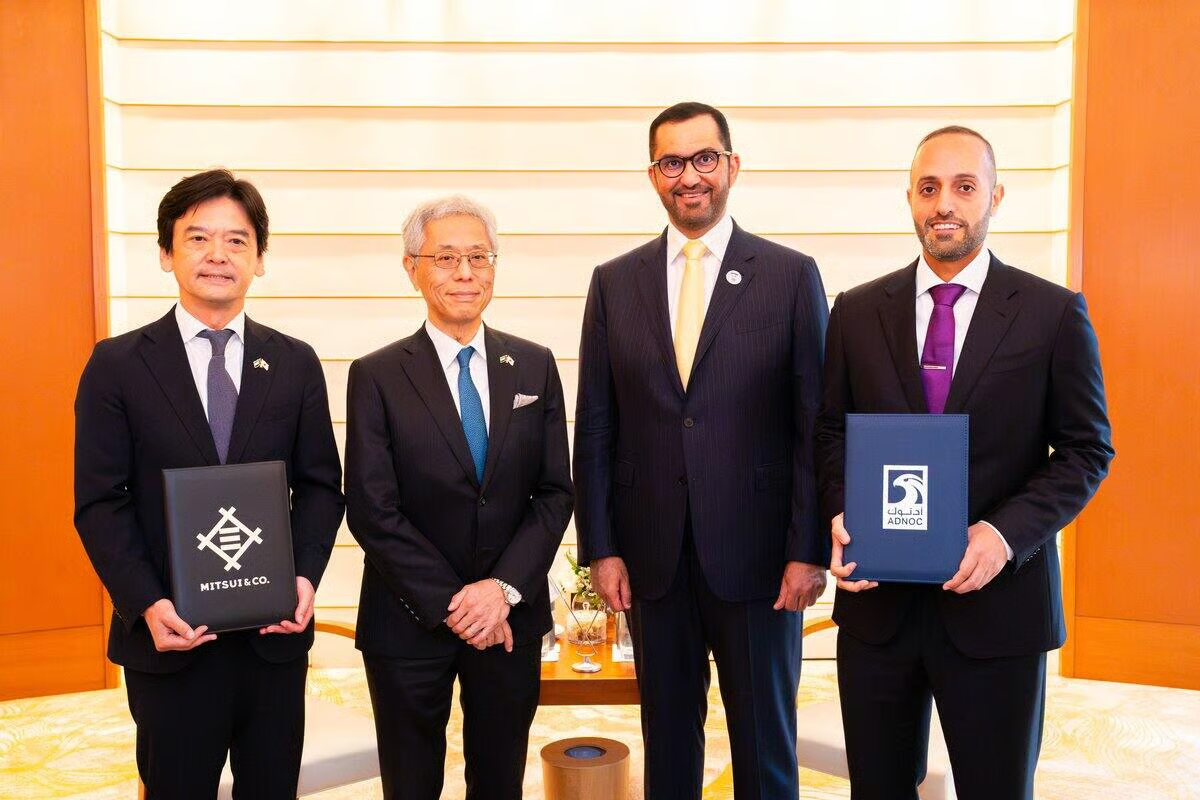
ADNOC and XRG are widening their long-running energy relationship with Japan’s Mitsui, and this is not just another handshake agreement between major corporations. The new ADNOC XRG Mitsui energy partnership represents a significant step forward for the companies involved.
The companies have signed a Strategic Collaboration Agreement to explore new opportunities across the energy value chain, covering LNG, crude oil, sulfur, shipping, chemicals, and international energy investments. For the UAE, the deal strengthens one of its most important energy relationships in Asia. For Japan, it supports long-term energy security at a time when global supply routes, pricing, and cleaner fuel strategies are all under pressure.
The agreement was signed during the visit of Dr. Sultan Al Jaber to Japan. He serves as UAE Minister of Industry and Advanced Technology, UAE Special Envoy to Japan, Managing Director and Group CEO of ADNOC, and Executive Chairman of XRG.
A Wider Energy Deal, Not a Narrow Supply Agreement
What stands out here is the range of the agreement.
ADNOC, XRG and Mitsui are not only looking at crude oil supply or LNG sales. The partnership also points to shipping solutions, sulfur procurement and logistics, chemical projects, and broader international investments. That gives the deal a much larger commercial shape.
LNG remains one of the key parts. Japan has relied heavily on imported energy for decades, and ADNOC has become a major supplier to the market. The UAE energy company already supplies around one-third of Japan’s crude imports, making the relationship more than symbolic. It is built into Japan’s energy system.
Now the companies want to see where that relationship can go next.
XRG Gives the Partnership a Global Investment Angle
XRG’s role makes this agreement more interesting.
The ADNOC-backed international energy investment company is being used as a platform to evaluate new opportunities beyond traditional supply. Through XRG, ADNOC and Mitsui will look at investments across the wider energy value chain, including lower-carbon fuels and chemicals.
That could include methanol and other projects connected to TA’ZIZ, the chemicals and industrial growth hub in Abu Dhabi. It also fits with the UAE’s wider plan to grow in energy, chemicals, and industrial exports while still keeping strong ties with major Asian markets.
This is where the deal starts to matter for business watchers in the UAE. It is not only about selling energy abroad. It is also about building investment channels, industrial partnerships, and long-term trade links that can support the country’s broader economic agenda.
Japan Remains a Key Market for ADNOC
Japan has long been one of ADNOC’s most important strategic markets. That relationship is not new, but it keeps getting deeper.
Energy buyers today want reliability, flexibility, and cleaner options where possible. Suppliers want stable demand, trusted partners, and access to future growth areas. The ADNOC-XRG-Mitsui agreement sits right in the middle of that.
Nasser Al Muhairi, Acting CEO of ADNOC Downstream Industry, Marketing & Trading, and Chairman of Ruwais LNG, said Japan is a cornerstone market for ADNOC and described Mitsui as a longstanding and trusted partner. He said the agreement broadens cooperation from LNG, crude oil and sulfur to shipping and chemicals, while opening new opportunities for international investment and lower-carbon growth.
That wording matters. It shows ADNOC is not treating Japan only as a buyer. It is treating Japan as a partner in the next stage of energy and industrial expansion.
Lower-Carbon Fuels Are Part of the Conversation
The agreement also includes possible cooperation in lower-carbon fuels and chemicals.
That does not mean oil and gas disappear from the picture. Far from it. Crude oil, LNG and shipping remain central to the deal. But the inclusion of lower-carbon fuels shows where major energy companies are trying to position themselves: still serving current demand, while preparing for markets that may shift over time.
Methanol, chemicals, ammonia-related shipping solutions, and LNG optimization all sit inside that wider transition space. Some of these markets are still developing. Some already matter commercially. The smart play is to keep options open.
ADNOC and Mitsui appear to be doing exactly that.
Why This Matters for the UAE Economy
For the UAE, this agreement supports several priorities at once.
It strengthens energy exports. It deepens ties with Japan. It gives XRG more room to pursue international deals. It also links Abu Dhabi’s industrial ambitions with global demand for energy, fuels, chemicals, and logistics.
That combination is important for the UAE’s non-oil and industrial growth story. Energy remains the foundation, but the country is also pushing into higher-value industrial activity, chemicals, advanced logistics, and international investment.
The ADNOC, XRG and Mitsui partnership may look like an energy deal on the surface. It is bigger than that. It is a trade relationship, an investment framework, and a signal that UAE-Japan energy cooperation is moving into a wider phase.
